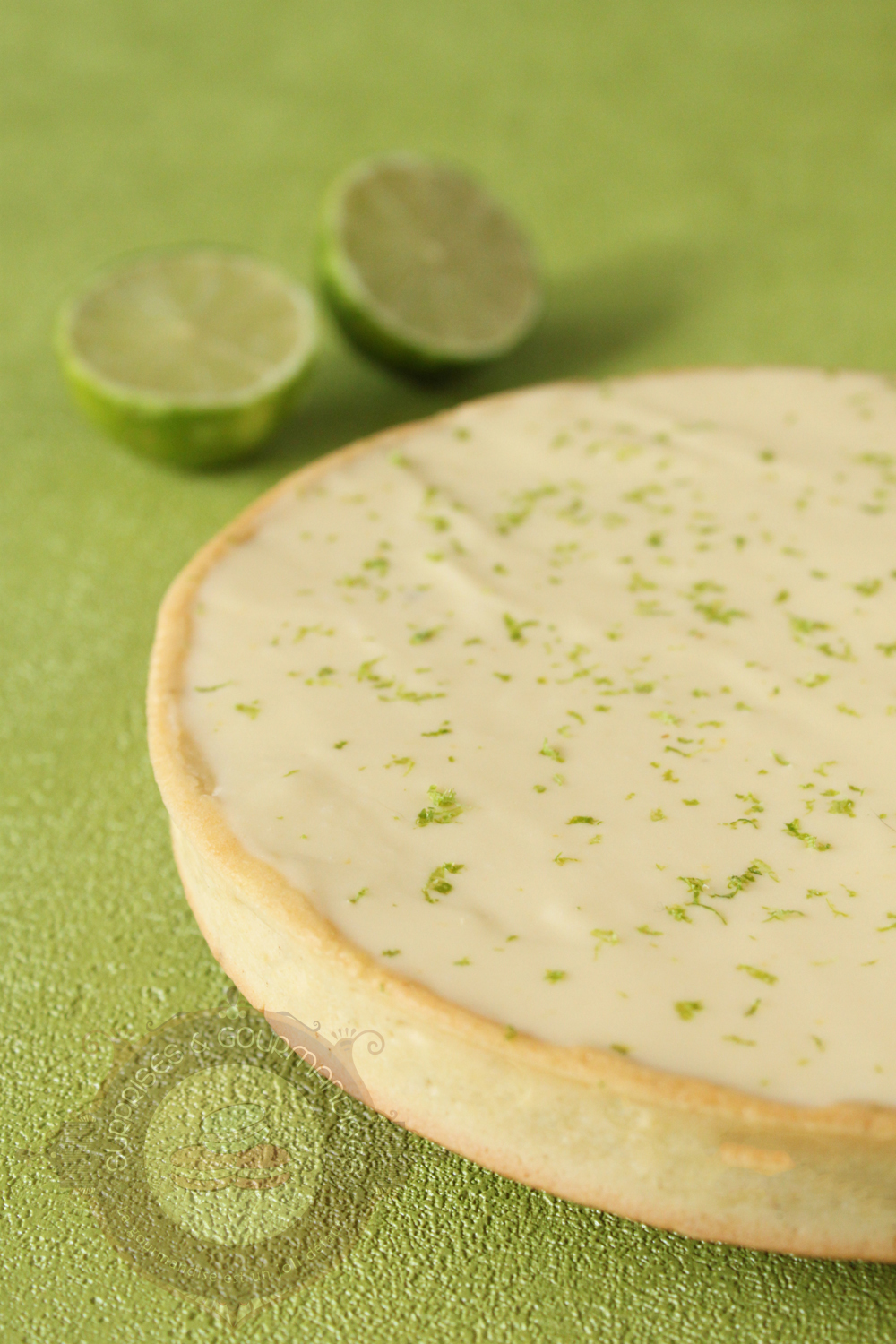



I discovered the lemon and basil combination recently and I must say I love it. And yet, I don’t like lemon and I’m not particularly a fan of basil. That says it all! Jacques Génin’s lemon basil tart is very renowned and I inevitably wanted to try it.
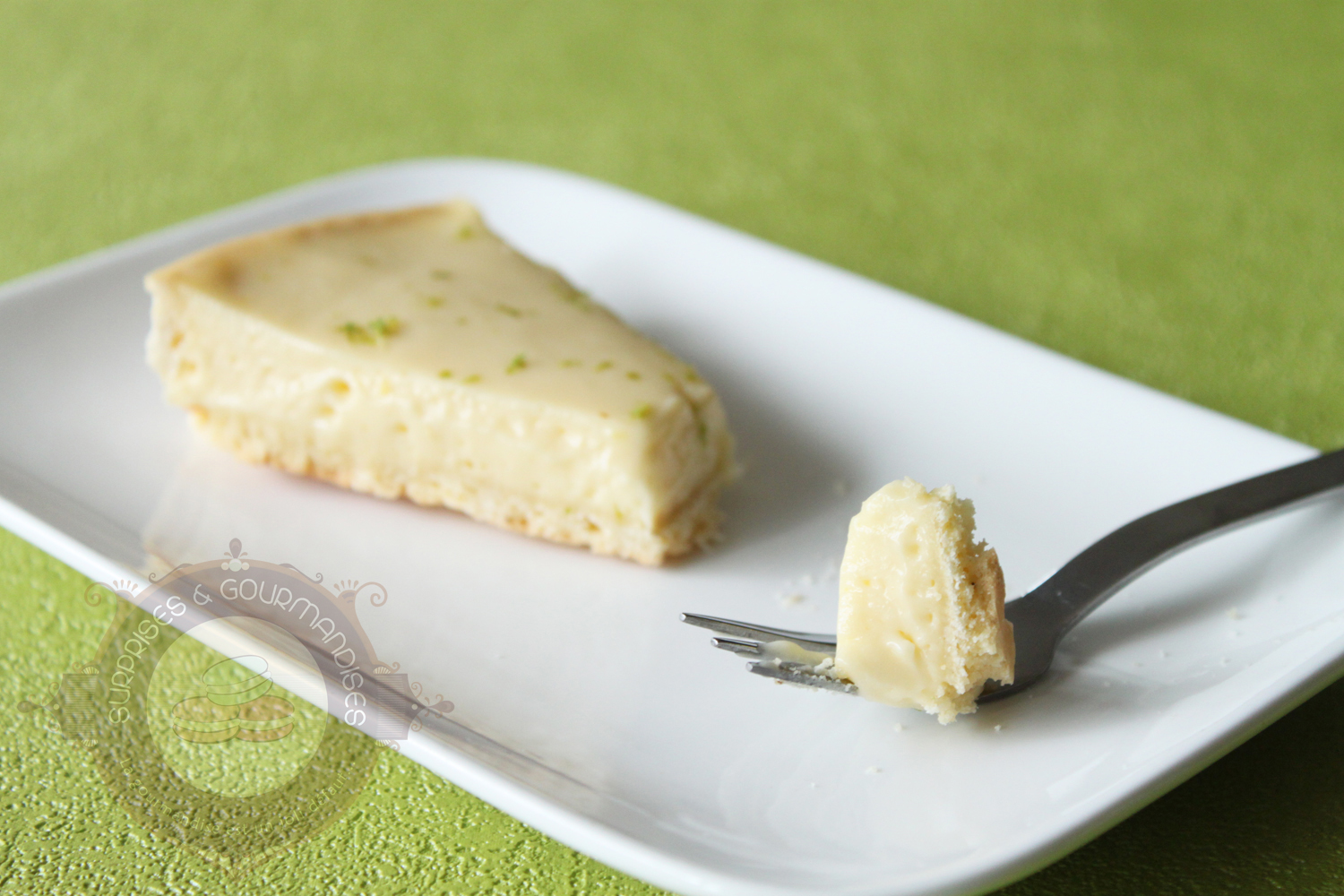
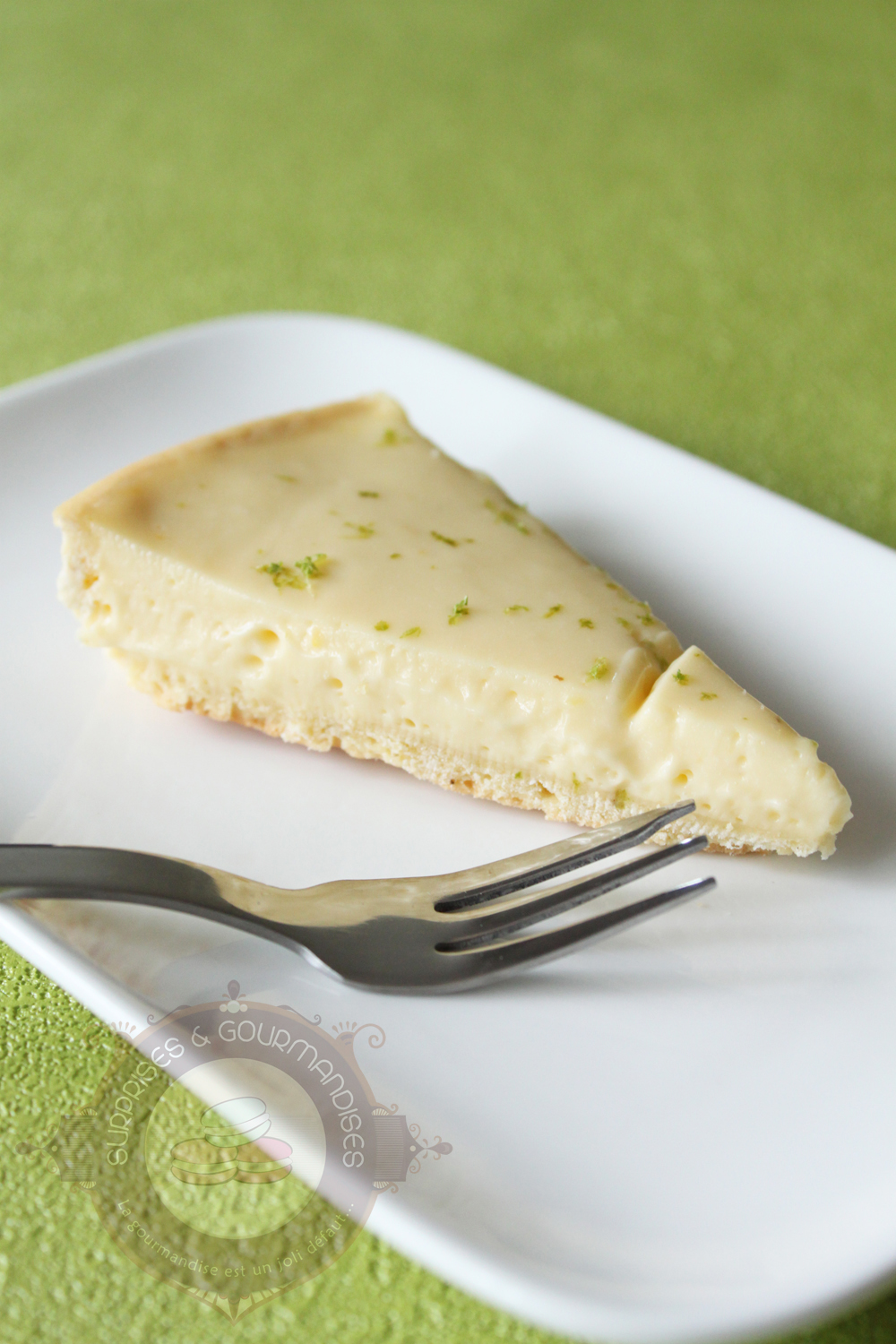
I had some pâte sucrée left in the freezer, so I didn’t make his recipe, but I’ve given it further down so that you can make it. As for the lemon cream, I found the lemon and basil balance perfect. The basil is clearly present without overpowering the lemon and these two flavours go together wonderfully. Jacques Génin doesn’t put gelatine in the lemon cream but when cutting, I found that the cream didn’t hold up very well. If I made it again, I would add a tiny bit. In any case, I found it really very good!
I made a small tart (20 cm in diameter) so I adapted the quantities of the original recipe. If you want to make a bigger tart, you just need to do a few calculations (a chance to revise cross-multiplication :P) and use 3 or 4 eggs.
Ingredients & Method
3 components · Full recipe
Lemon Basil Cream
Ingredients
- 2 eggs
- 120 g (4.2 oz) lime juice
- 113 g (4 oz) sugar
- 133 g (4.7 oz) unsalted butter
- zest of 2 lemons (I used bergamots)
- 13 g (0.5 oz) fresh basil
- ½ gelatine leaf (optional)
Method
1
Soak the gelatine leaf in cold water (this is optional — I didn’t use it and I regretted it. The cream wasn’t runny by any means, but I found it lacked a little structure).
2
Rinse the basil leaves, then chiffonade or finely chop them.
3
Pour the lime juice into a saucepan, then add the lemon zest and the chopped basil.
4
Add the eggs and sugar, then whisk everything together.
5
Heat to 85°C / 185°F, stirring constantly. The cream will thicken. Like a crème anglaise, be careful not to exceed this temperature. If you don’t have a thermometer, here’s Chef Michalak’s tip: whisk the mixture briskly, then stop — if the “whirlpool” halts immediately, the cream has reached the right temperature.
6
Add the squeezed-out gelatine (if you’re using it), then leave to rest for a few minutes until the cream cools slightly.
7
Pass through a fine-mesh sieve to remove the zest and basil.
8
When the cream has cooled to around 35°C / 95°F, pour it into a tall jug. Add the butter in one go, then blend with a stick blender until smooth and homogeneous. The cream will lighten slightly in colour.
9
Transfer the cream to a wide, shallow dish for quicker cooling. Cover with cling film and refrigerate for at least 2–3 hours.
Sweet Pastry (you’ll have some left over)
Ingredients
- 125 g (4.4 oz) icing sugar
- 30 g (1.1 oz) ground almonds
- 175 g (6.2 oz) butter
- 2 g (0.1 oz) salt
- 60 g (2.1 oz) eggs
- 310 g (10.9 oz) flour
- ½ vanilla pod
Method
1
In the bowl of a stand mixer fitted with the paddle attachment, combine the icing sugar, ground almonds, softened butter (cut into small pieces), and the vanilla seeds.
2
Add the eggs and mix.
3
In a separate bowl, mix together the salt and flour, then add to the mixer bowl. Mix at high speed.
4
At this stage, you can divide the dough in two and freeze one half for a future recipe (flatten it slightly before wrapping in cling film).
5
Place the other half of the dough on a sheet of baking parchment and cover with a second sheet. Roll out to a thickness of about 3–4 mm. Refrigerate for at least 1 hour.
6
Lightly prick the dough with a fork, then cut out a circle slightly larger than your tart ring (I used a 20 cm (7.9 in) ring, so I cut a 26 cm (10.2 in) circle of dough).
7
Grease the tart ring and lay the dough inside (with the fork holes facing down).
8
A few tips for lining a tart ring: bring the dough in against the inside of the ring and, using your index finger, create a right angle all the way around. Form a slight lip on the inside, then roll the rolling pin over the top to trim the excess. Pinch the dough upwards to form a neat edge (video tutorial available).
9
Return to the fridge for at least 1 hour (like Jacques Génin, I left mine overnight and baked it the next morning).
10
Preheat the oven to 160°C / 325°F.
11
Line the tart base with baking parchment and fill with ceramic baking beans or dried pulses.
12
Bake for 15–20 minutes.
13
Remove from the oven and leave the tart base to cool on a wire rack.
14
Once the tart base is baked and cooled, use a Microplane grater to smooth any imperfections.
Assembly
Ingredients
- lime zest for finishing
Method
1
Using an offset spatula, fill the tart base with the lemon basil cream and smooth the surface.
2
Grate lime zest over the top. Refrigerate until ready to serve.
Gallery