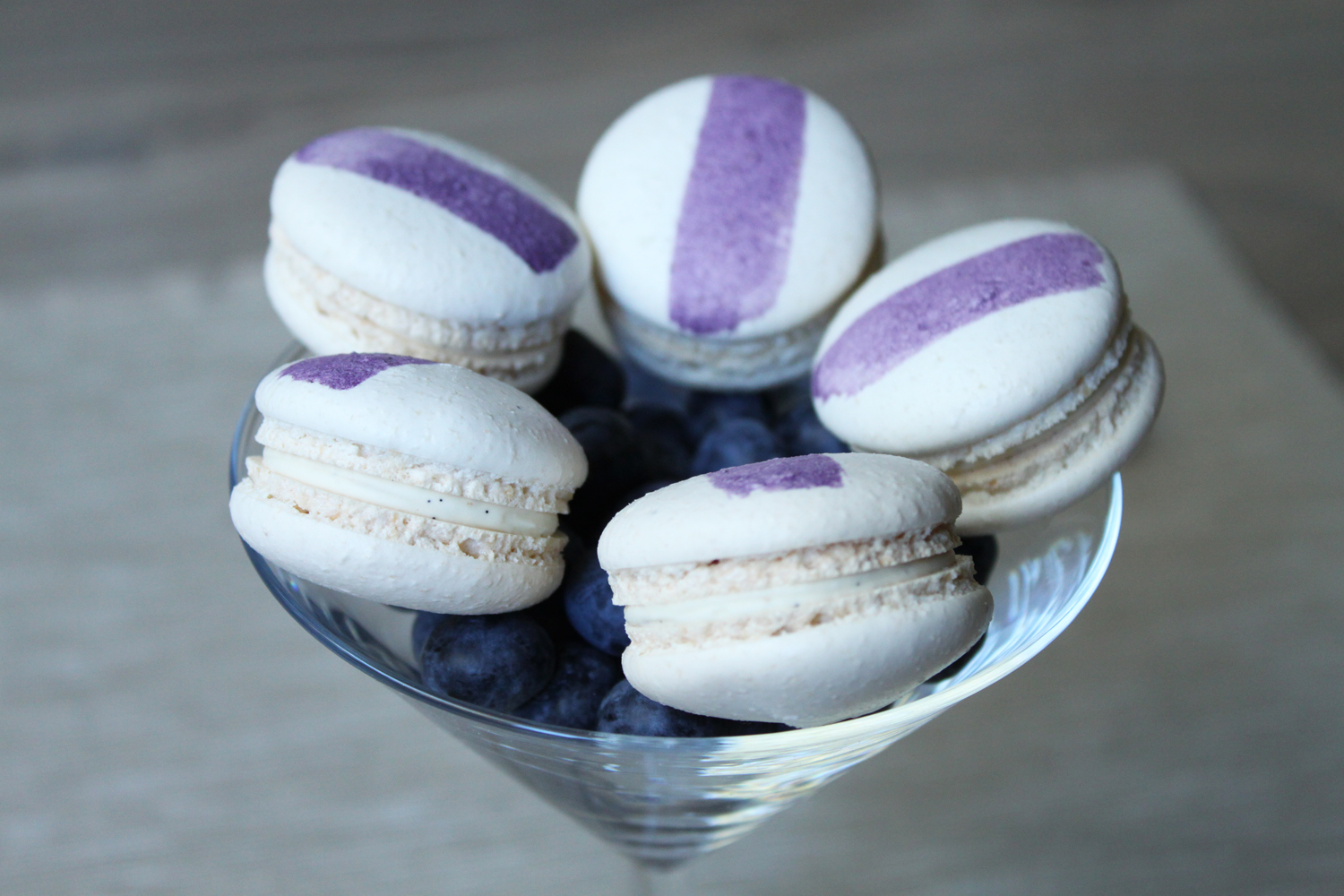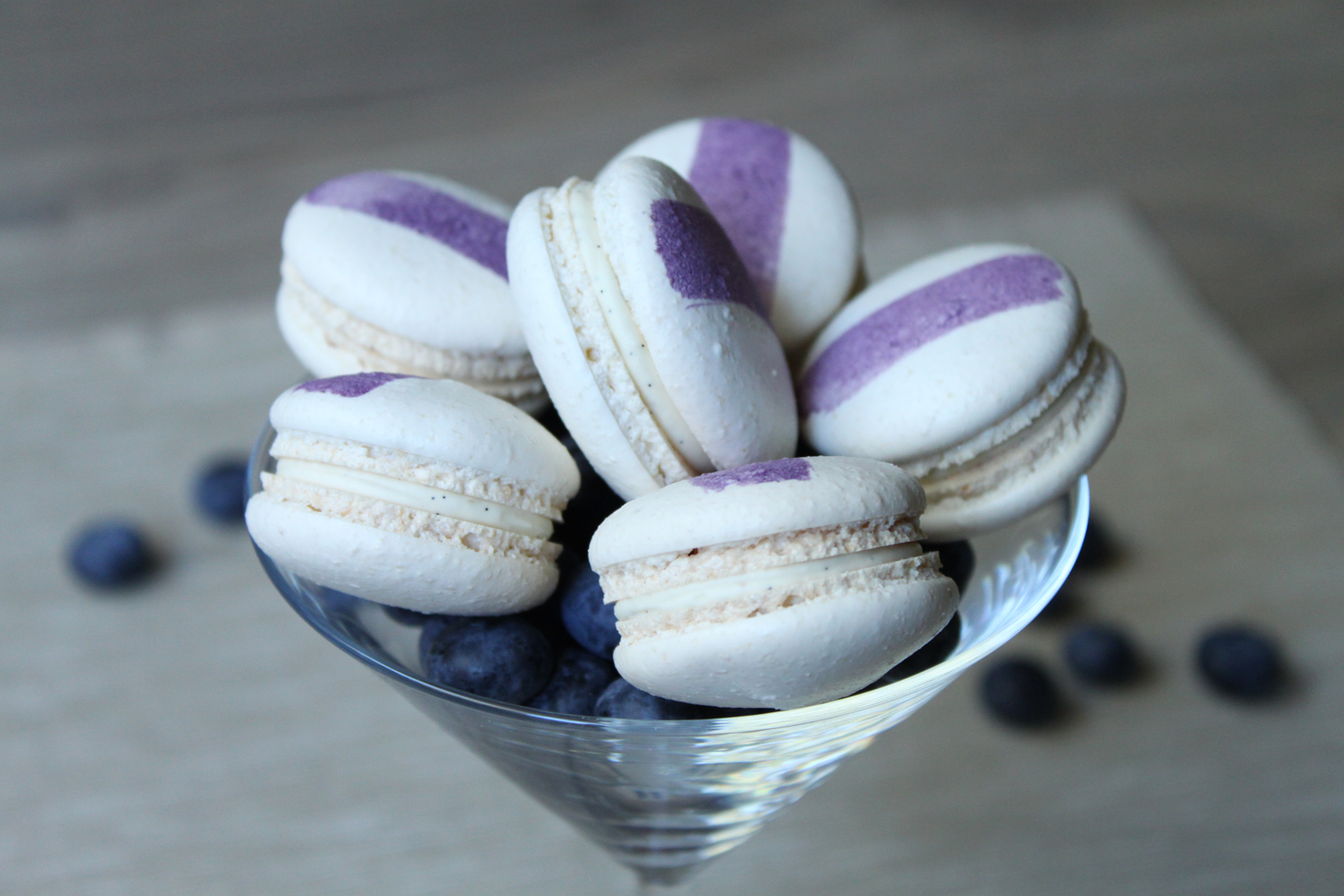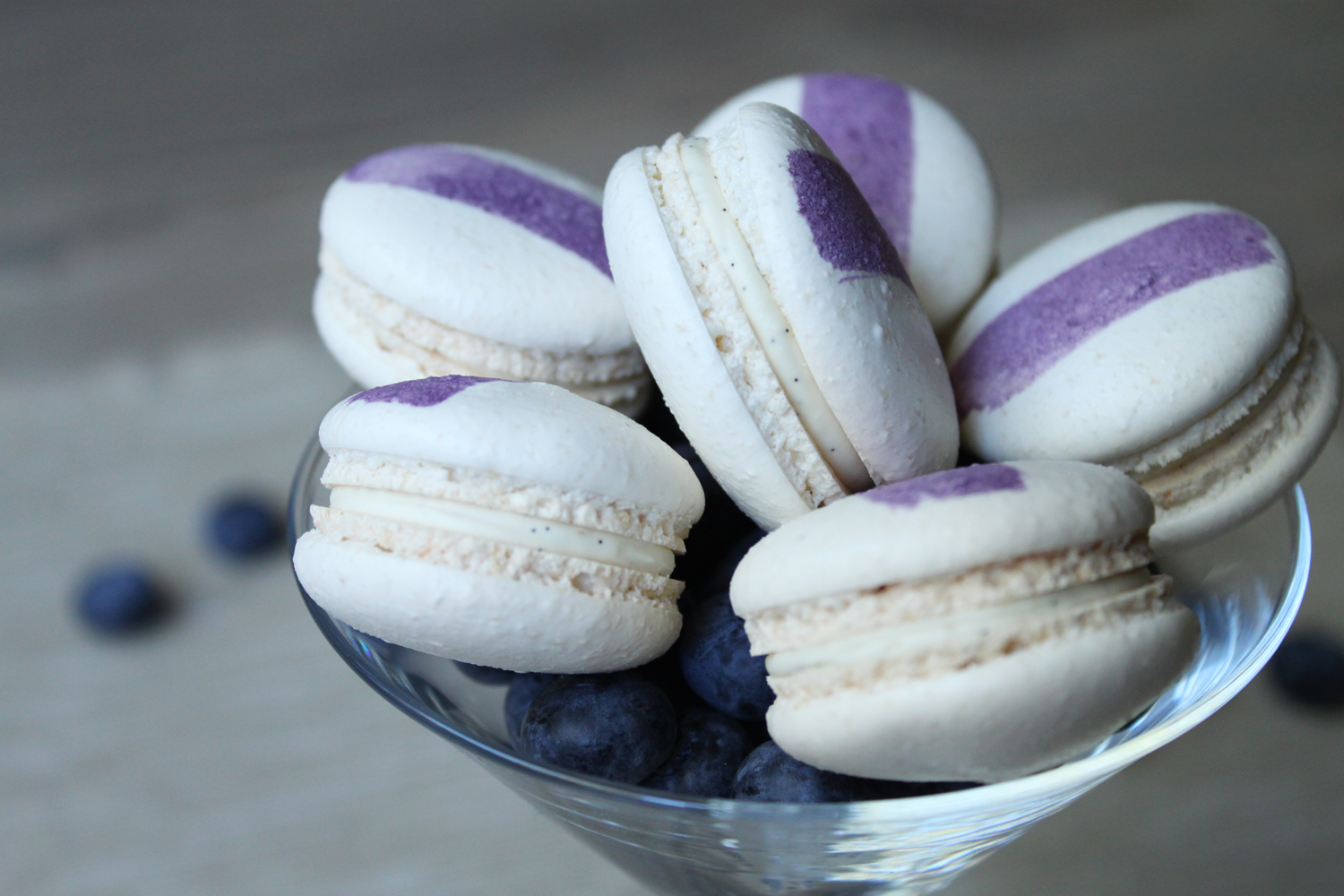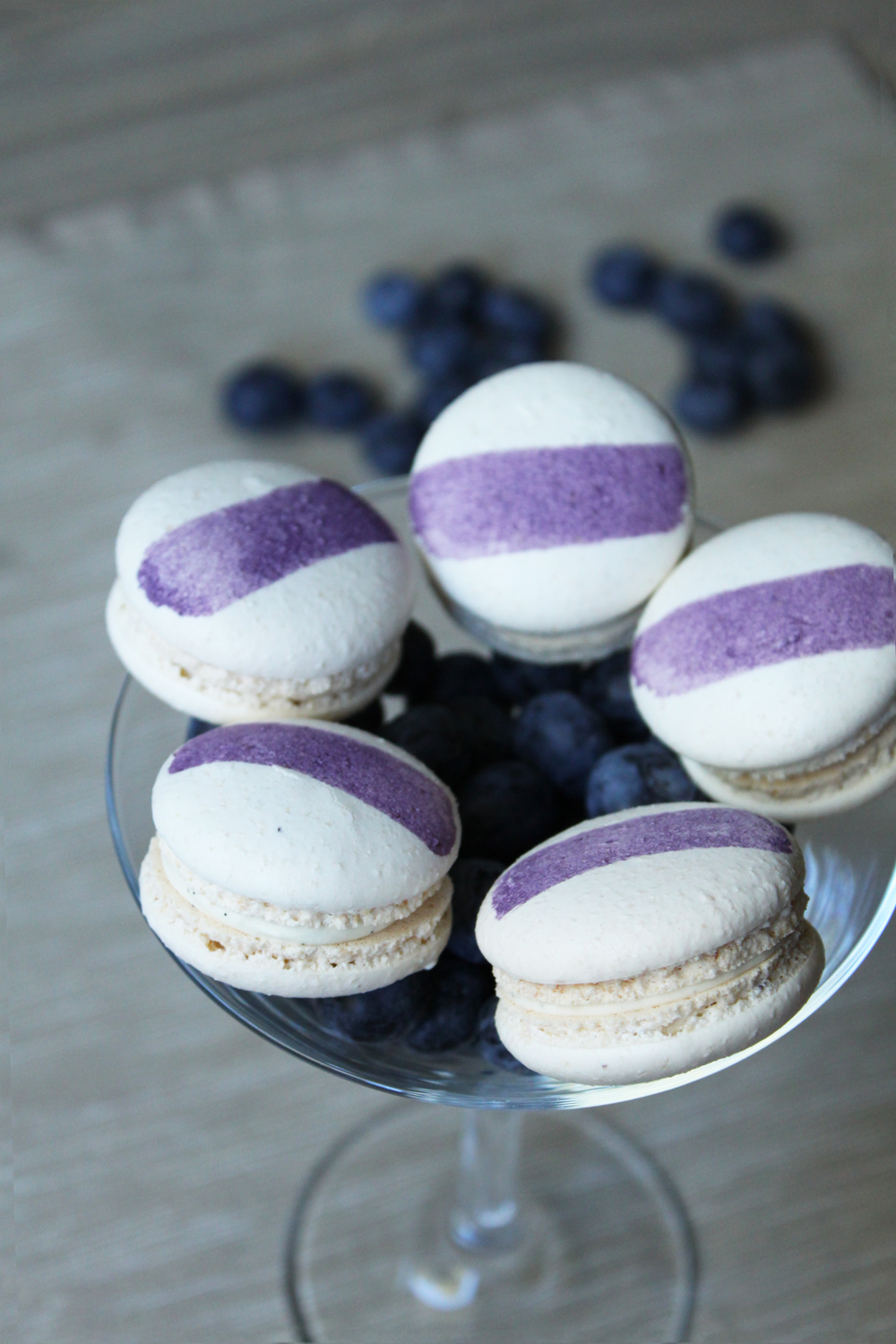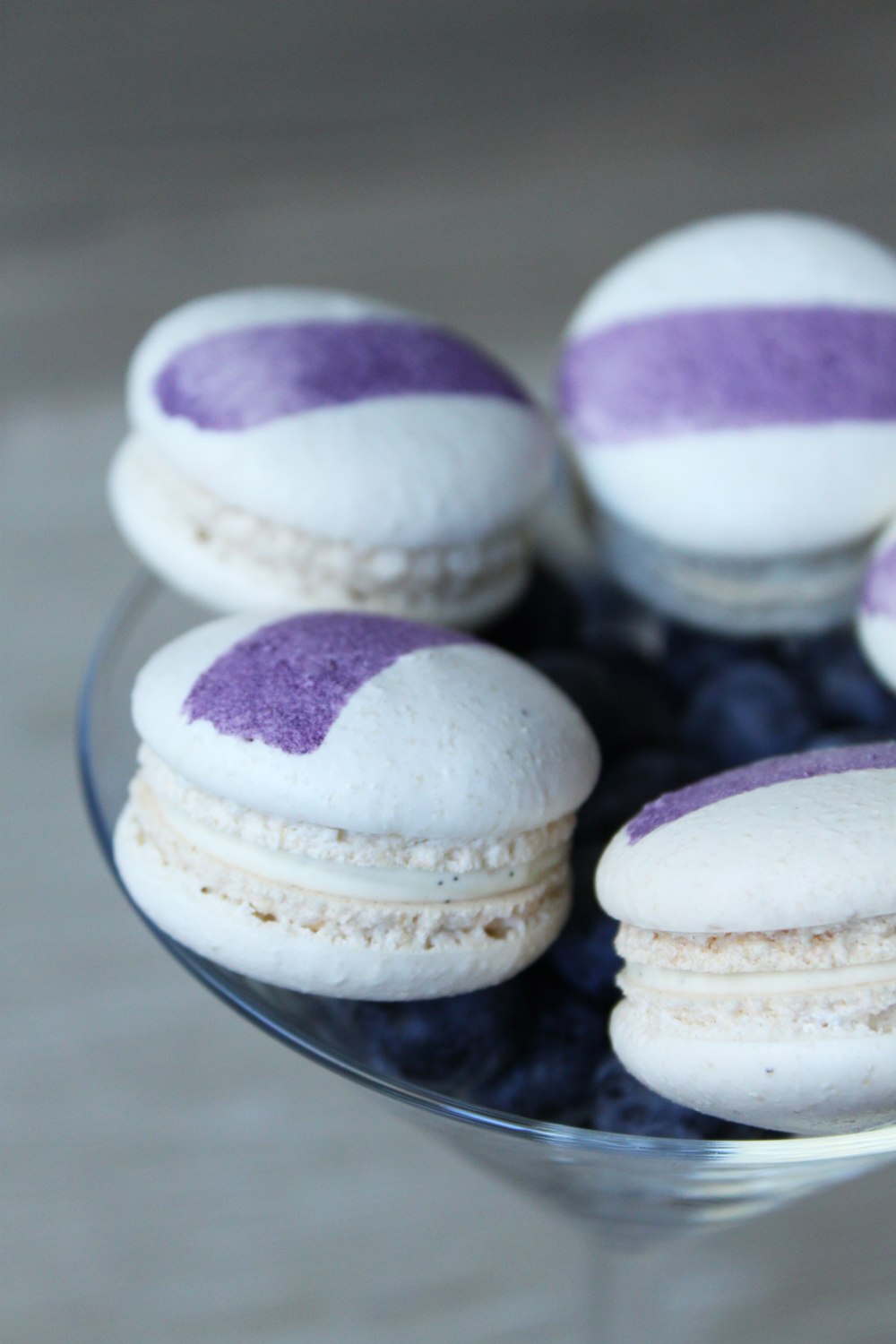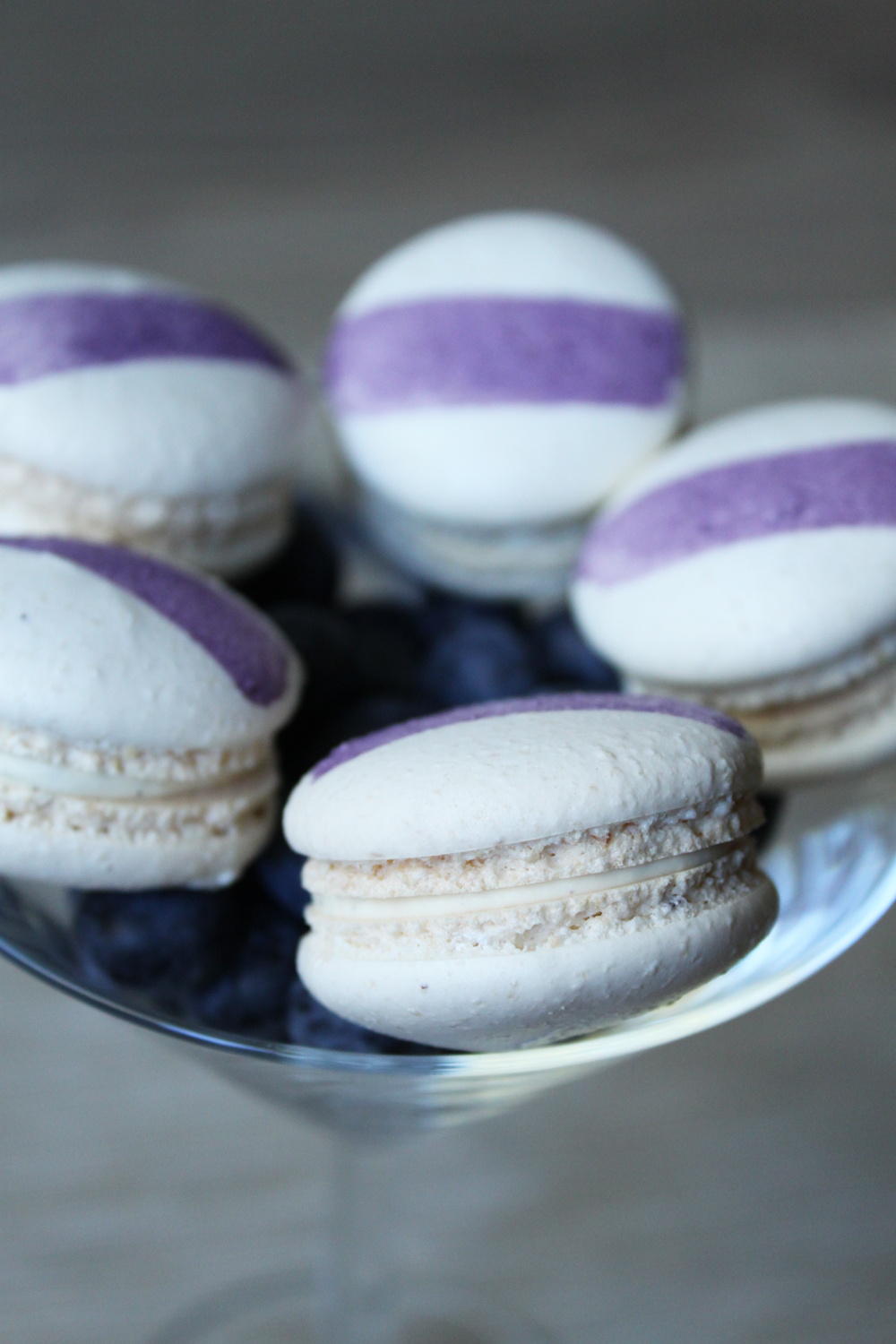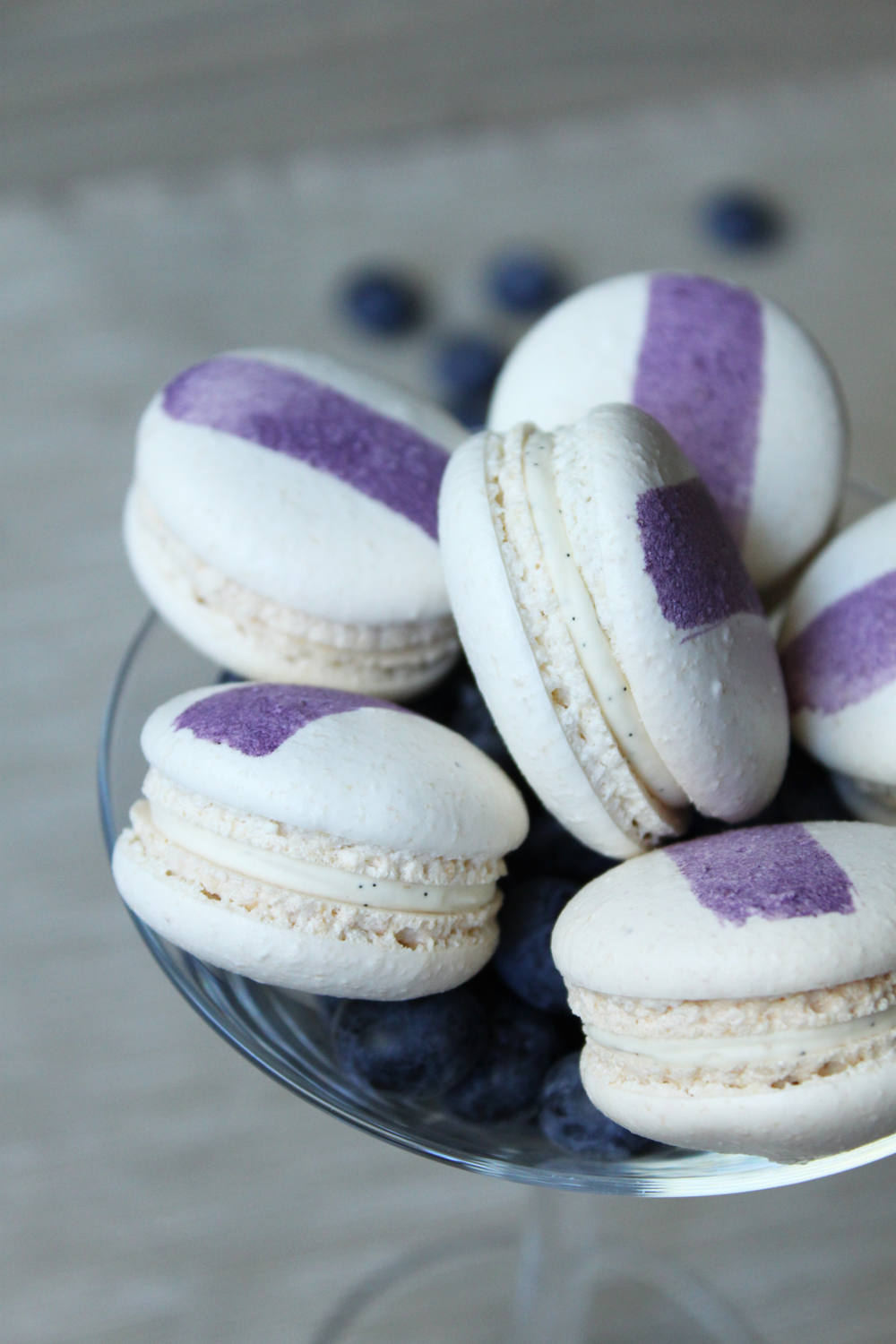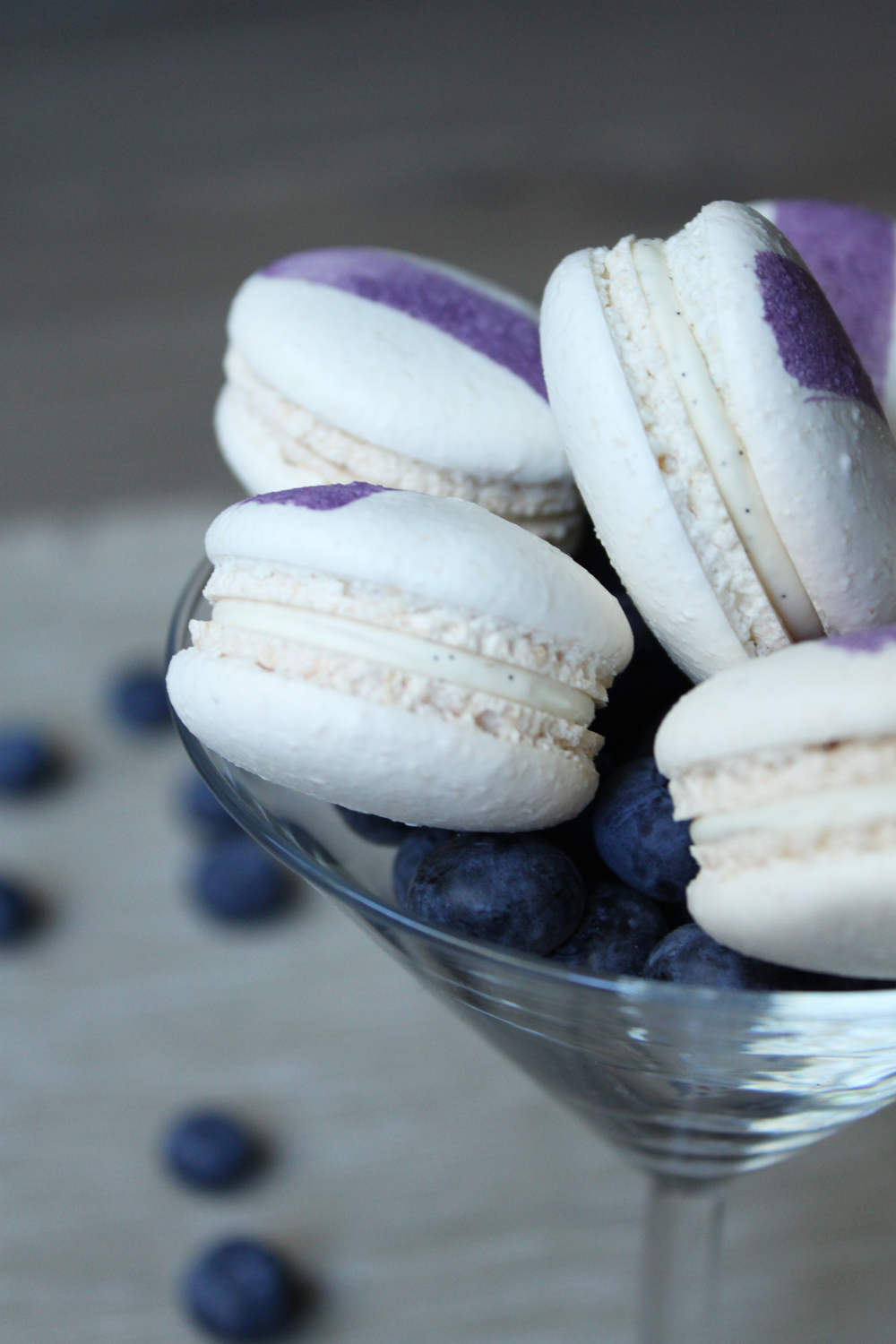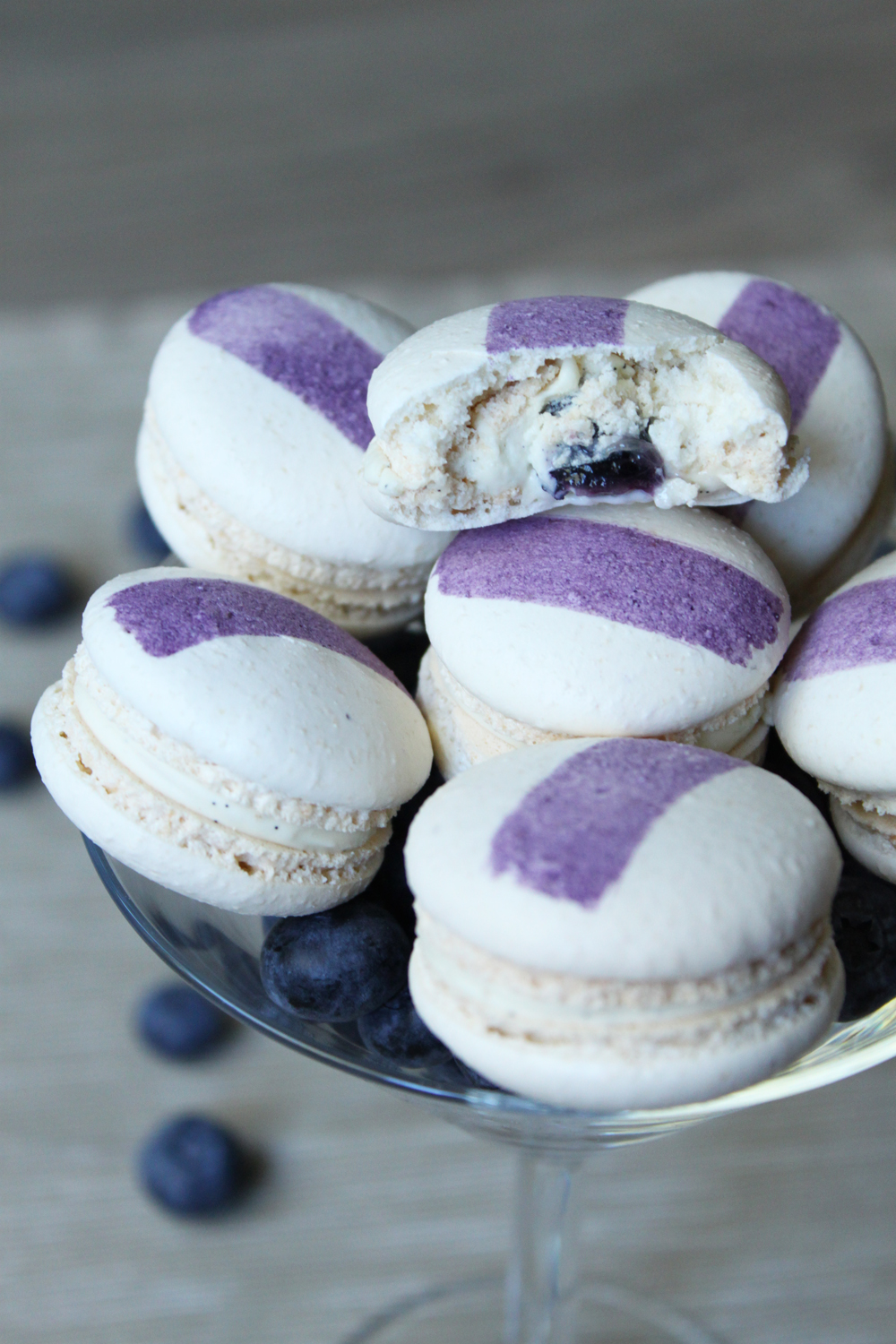



Here’s a new macaron recipe I’d been keeping up my sleeve for a while. Delicious little bites to recover from the hearty festive meals. You should know that I absolutely love the vanilla macaron (in fact, I learnt to love it by making it for my sister — it’s her favourite ^_^). The whipped ganache is airy and full of flavour (you must of course use lovely vanilla pods, nice and plump and oily). But this time, I added a little fruity note with a blueberry in the centre.
I’m going to have to get seriously back into making macarons, because I’ve signed up for the French amateur macaron competition, which will take place in early February in Paris. The pressure is starting to build, given that I can no longer turn out a macaron worthy of the name!
Ingredients & method
3 components · Full recipe
Vanilla Whipped Ganache
Ingredients
- 80 g (2.8 oz) white chocolate couverture
- 50 g (1.8 oz) whipping cream
- 85 g (3 oz) very cold whipping cream
- 1 teaspoon neutral honey (acacia honey, for example)
- 1 vanilla pod
Method
1
Break the white chocolate into small pieces in a bowl.
2
Place the 50 g (1.8 oz) of cream, the honey and the split and scraped vanilla pods in a saucepan and bring to the boil. Cover and leave to infuse for 15 minutes.
3
Remove the vanilla pods, then bring the cream back to the boil.
4
Pour the cream over the white chocolate all at once. Cover the bowl and leave to melt for 2–3 minutes.
5
Stir the ganache well until smooth. If the white chocolate is not completely melted, place the bowl over a bain-marie.
6
Add the 85 g (3 oz) of very cold cream and stir gently.
7
Press a sheet of cling film directly onto the surface and refrigerate for several hours (ideally overnight).
Shells
Ingredients
- 2 x 55 g (1.9 oz) egg whites
- 150 g (5.3 oz) icing sugar
- 150 g (5.3 oz) ground almonds
- 50 g (1.8 oz) water
- 150 g (5.3 oz) caster sugar
- white powder food colouring
- blueberry powder food colouring
Method
1
Blitz the icing sugar and ground almonds together, then sift the mixture.
2
Make the syrup by placing the caster sugar and water in a saucepan. Bring to the boil and cook until the temperature reaches 118°C / 244°F. When the syrup reaches 110°C / 225°F, begin whisking 52 g (1.8 oz) of the egg whites to stiff peaks at medium speed. Once 118°C / 244°F is reached, reduce the mixer speed and pour the hot syrup over the whisked whites. Add the white food colouring at this point. Increase the mixer speed again to cool the meringue down. Test with your finger — it should feel warm but not hot.
3
Switch the whisk for the flat beater on your mixer, incorporate the remaining 55 g (1.9 oz) of egg whites, then gradually add the ground almond and icing sugar mixture. Mix until the batter is smooth, glossy and falls from the beater in a ribbon.
4
Once the right consistency is achieved, transfer the batter to a piping bag fitted with a plain nozzle. Do not hesitate to use a tall glass to hold the piping bag — that way you can use both hands.
5
Pipe small domes of about 3.5 cm (1.4 in) in diameter in a staggered pattern onto a sheet of baking paper. For evenly sized macarons, I use a template downloaded from Pure Gourmandise. Tap the baking tray firmly on the work surface to flatten any peaks.
6
Bake at 120°C / 250°F for 22 minutes. The shells are ready when they can be lifted off the paper very easily. Once out of the oven, leave to cool completely before removing the shells.
Step by step
Not quite comfortable with macaron shells yet? I’ve put together two full step-by-step picture guides to help you get it right every time:
Assembly
Ingredients
- fresh blueberries
Method
1
Remove the ganache from the refrigerator and whip it like a whipped cream.
2
Sort your macaron shells so that the pairs you put together are the same size.
3
Using a piping bag, pipe a small mound of whipped ganache onto the centre of one shell, place a blueberry on top, then sandwich with the matching shell.
4
Dilute the blueberry food colouring in a little water and, using a brush, paint a stripe across the shells.
5
Refrigerate the macarons and wait 24 hours before eating them. They should spend their first night in an uncovered container (to prevent them from becoming damp), then transfer to a closed box and keep refrigerated if any are left.

Gallery