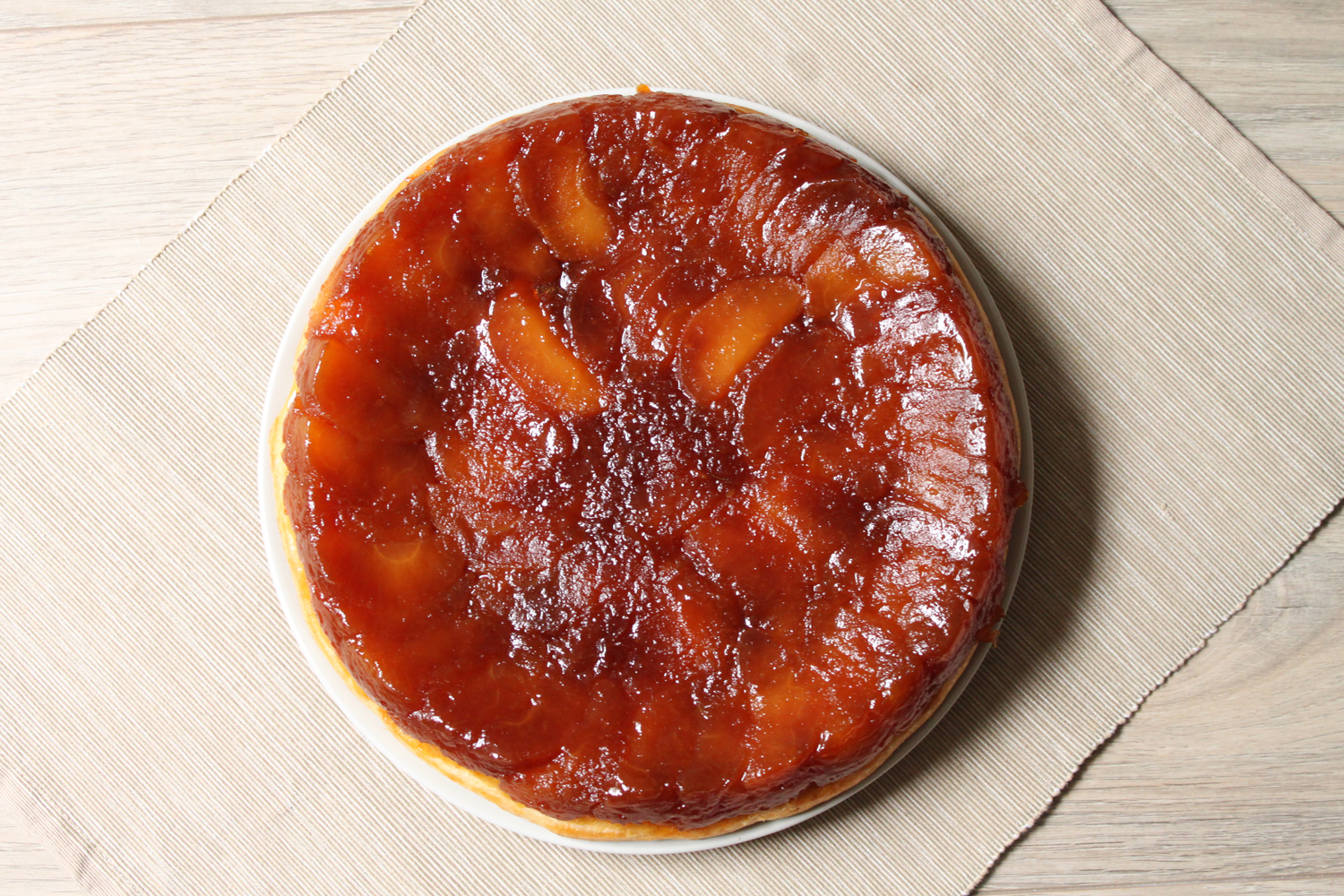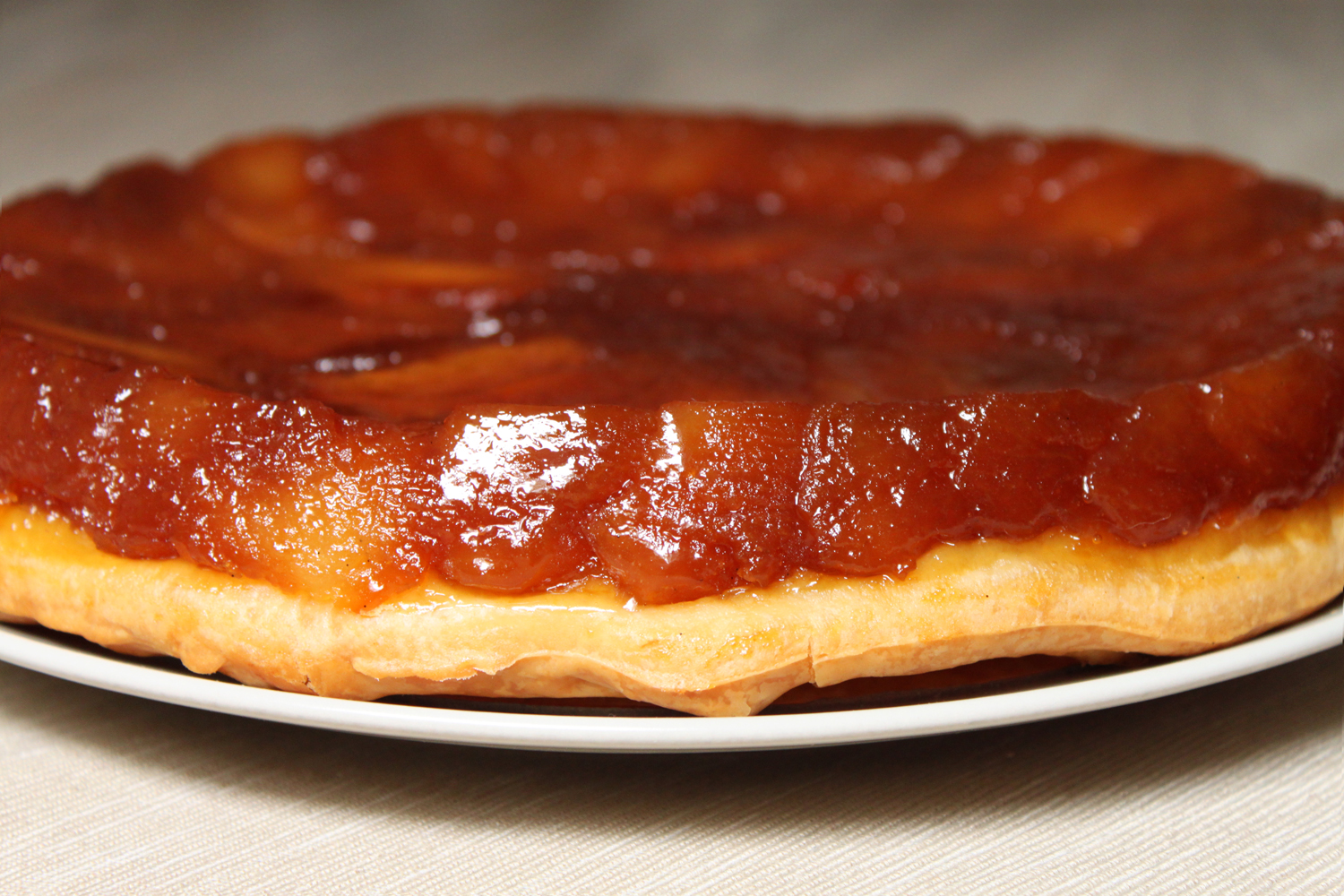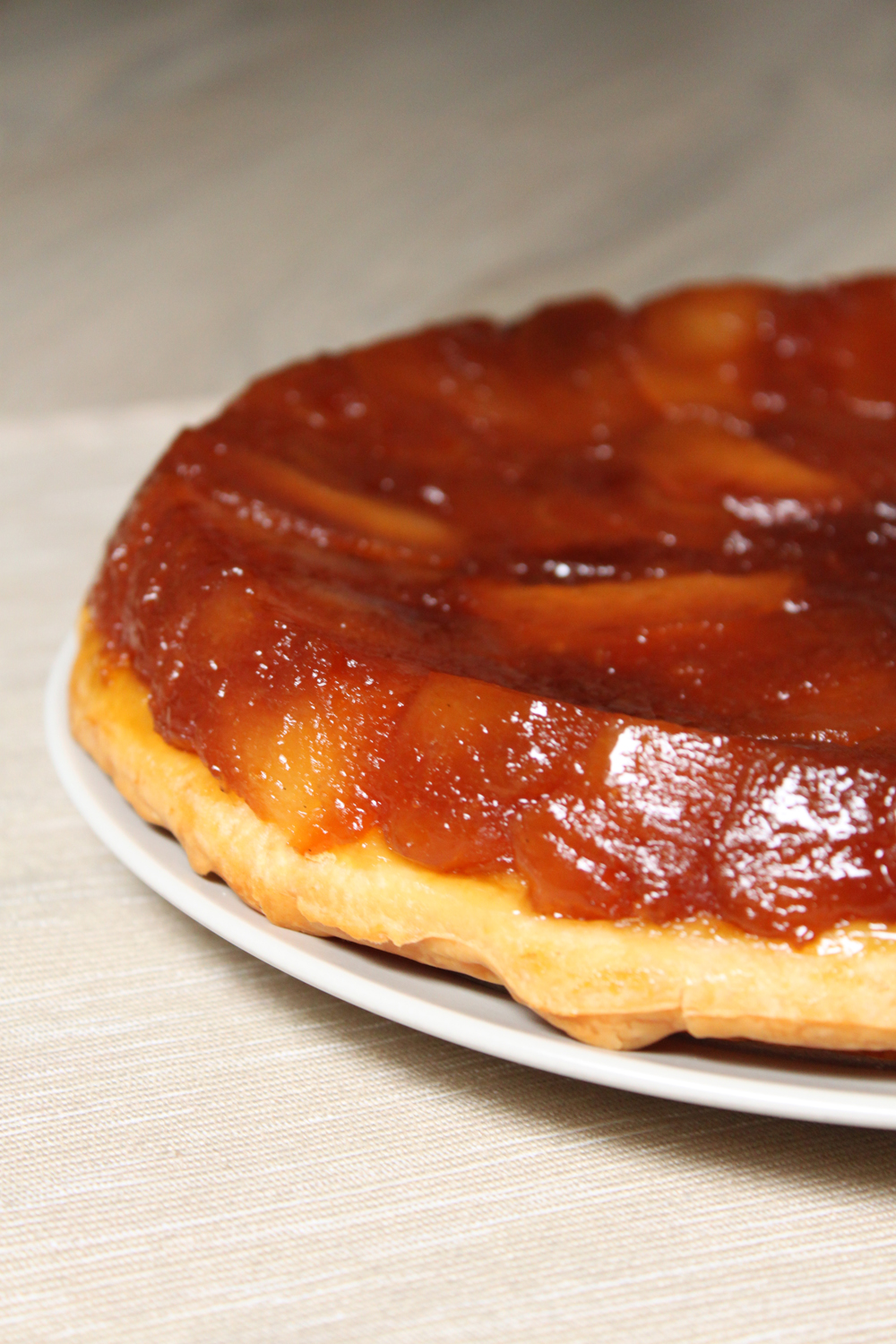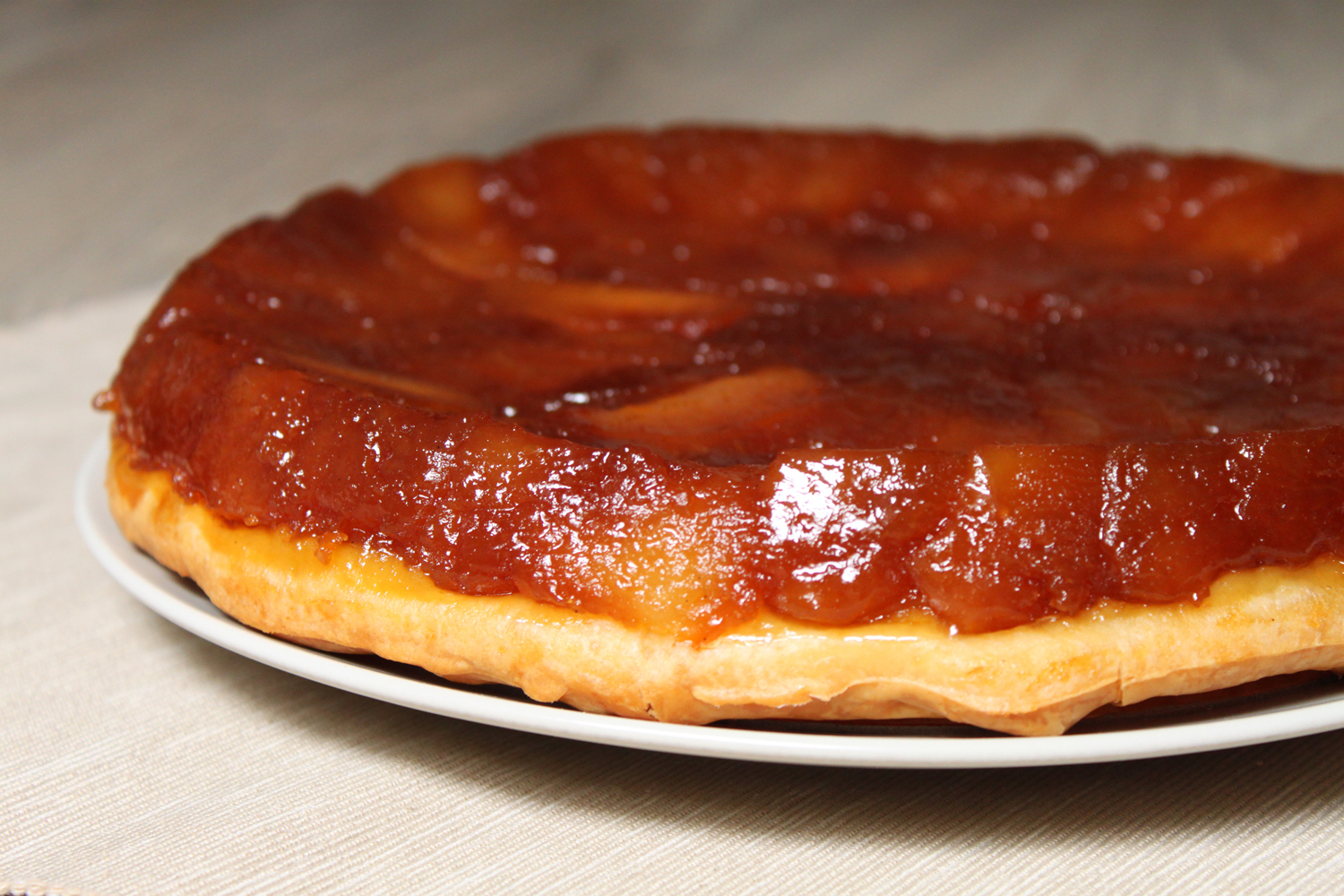


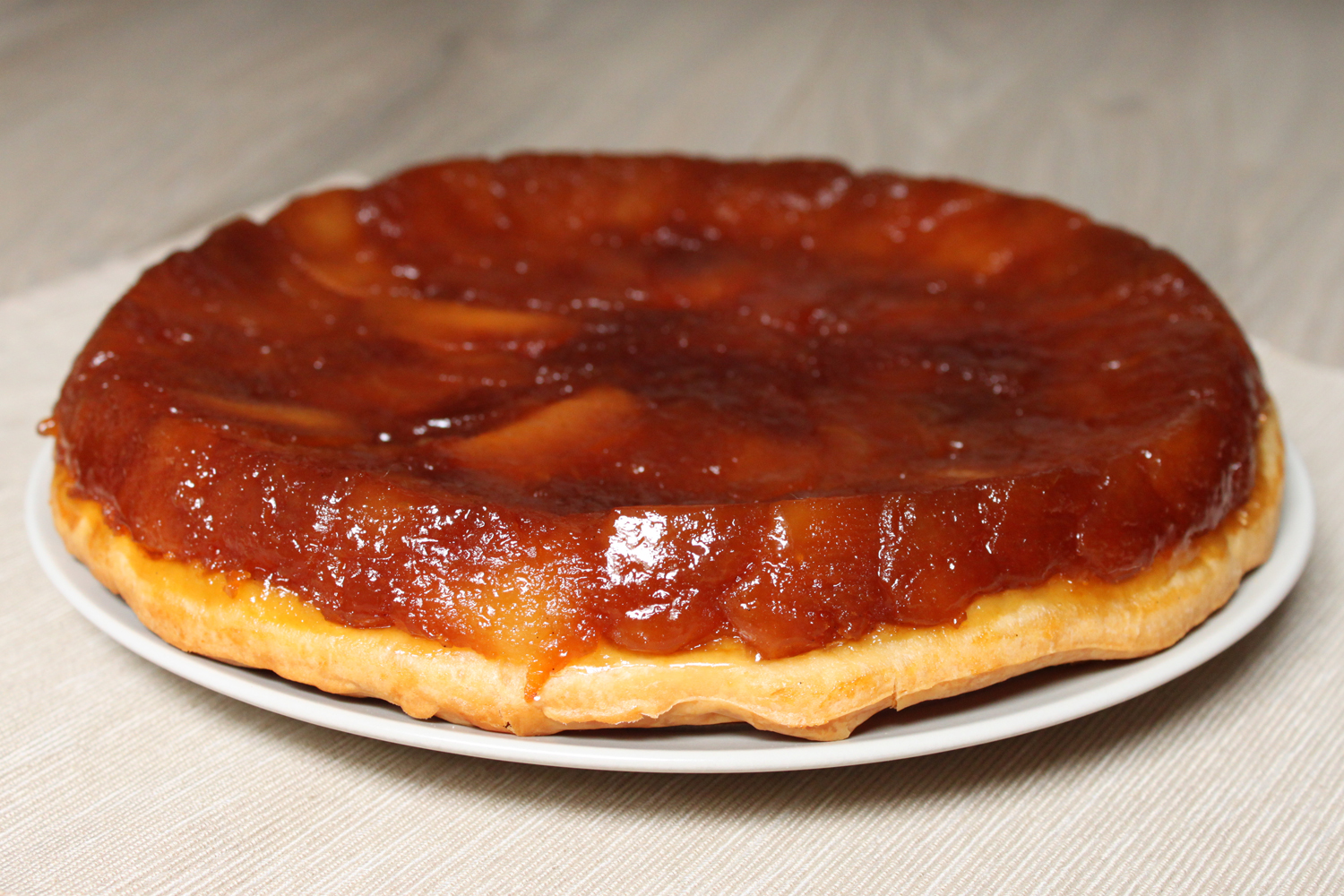
At last, a slightly more autumnal recipe with a tarte tatin — but not just any tarte tatin! Christophe Michalak’s (of course!). He’d made it on the show “Le gâteau de mes rêves”, and I followed the advice of the blog Dur à cuire, who also made it (so I halved the syrup for poaching the apples, because 1 kg of sugar and butter is enormous!). It allowed me to use up the stock of apples from my in-laws’ garden ^^
Unfortunately, I can hardly compare it with other tarte tatins, as it was the first time I’d made one (and the first time I’d eaten one too!). One thing’s for sure: it looks fantastic! The apples were ultra-soft and full of flavour (in addition to the vanilla, I added cinnamon, a star anise and a few cloves to the syrup). I really liked it! One small downside: I found it a little too sweet for my taste, but that’s because of the apple jelly I made at home from the scraps (apple peelings and pips).
As for the pastry, I didn’t overthink it, as it was shop-bought. You can of course make it yourself — it’ll be even better!
Ingredients & method
3 components · Full recipe
Caramel
Ingredients
- 200 g (7.1 oz) sugar
Method
1
Make a dry caramel in 3 stages. First, place one third of the sugar in a saucepan over medium heat. When the sugar has almost completely melted, add the second third, then do the same with the final third.
2
On no account stir the caramel with a spoon. You can, however, remove the saucepan from the heat for a moment and tilt it, swirling it around so that the uncaramelised sugar on the edges is incorporated.
3
Once the caramel is ready, pour it into a 22 cm (8.7 in) diameter tin, spreading it as evenly as possible over the entire surface. Leave to cool; the caramel will harden.
Poaching the Apples
Ingredients
- 500 g (17.6 oz) sugar
- 500 g (17.6 oz) unsalted butter
- 500 g (17.6 oz) water
- 8 apples
- 2 vanilla pods
- 1 cinnamon stick
- 1 star anise
- a few cloves
Method
1
Peel and core the apples, then cut them into 4 quarters.
2
In a large saucepan, place the butter cut into pieces, the sugar, the water, the 2 vanilla pods split and scraped, and the spices, then heat.
3
When the butter has melted and the sugar has dissolved, stir well and begin poaching the apples. Depending on the size and variety of apple chosen, this can take between 7 and 15 minutes. I did this in 3 batches.
4
Turn the quarters 2 or 3 times during poaching. Check the apples regularly. They should be slightly translucent and a knife should pass through them without resistance. They absolutely must not turn to mush.
5
When one batch is ready, set the quarters aside to cool and start the next batch until all the apple quarters are done.
Assembly
Ingredients
- 1 sheet of puff pastry
- apple jelly or apricot jam
Method
1
Fill the tin in a rosette pattern with the apple quarters, placing them on their side and pressing them together firmly (which becomes quite easy to do after poaching).
2
Once the outer ring is complete, fill the centre, pressing the quarters in tightly. Finally, press gently down on all the apple quarters to pack them together.
3
Ideally, leave the apples to rest overnight, covered with cling film touching the surface, so that the flavours develop and the apples settle and firm up. I did not do this…
4
Preheat the oven to 180°C / 350°F.
5
Unroll the puff pastry (I bought mine ready-made, but you can make it at home) and prick it with a fork.
6
Place the pastry over the apples (holes facing upwards) and press it down so that it touches the apples. Mark the angle at the edge of the tin. Trim the excess pastry overhanging the tin. For a neater finish, I then rolled the puff pastry all around the edge of the tin.
7
Bake for 30 to 40 minutes, until the pastry is nicely golden and crisp.
8
Leave to cool completely before unmoulding.
9
Once out of the oven, brush the tart with apple jelly (which I made at home using the peel and cores). If you bought it ready-made, remember to warm it slightly in the microwave to loosen it a little. If you cannot find apple jelly, you can equally well use quince jam or jelly, a neutral glaze or a sugar syrup — the aim is to make the tart shine.
Gallery