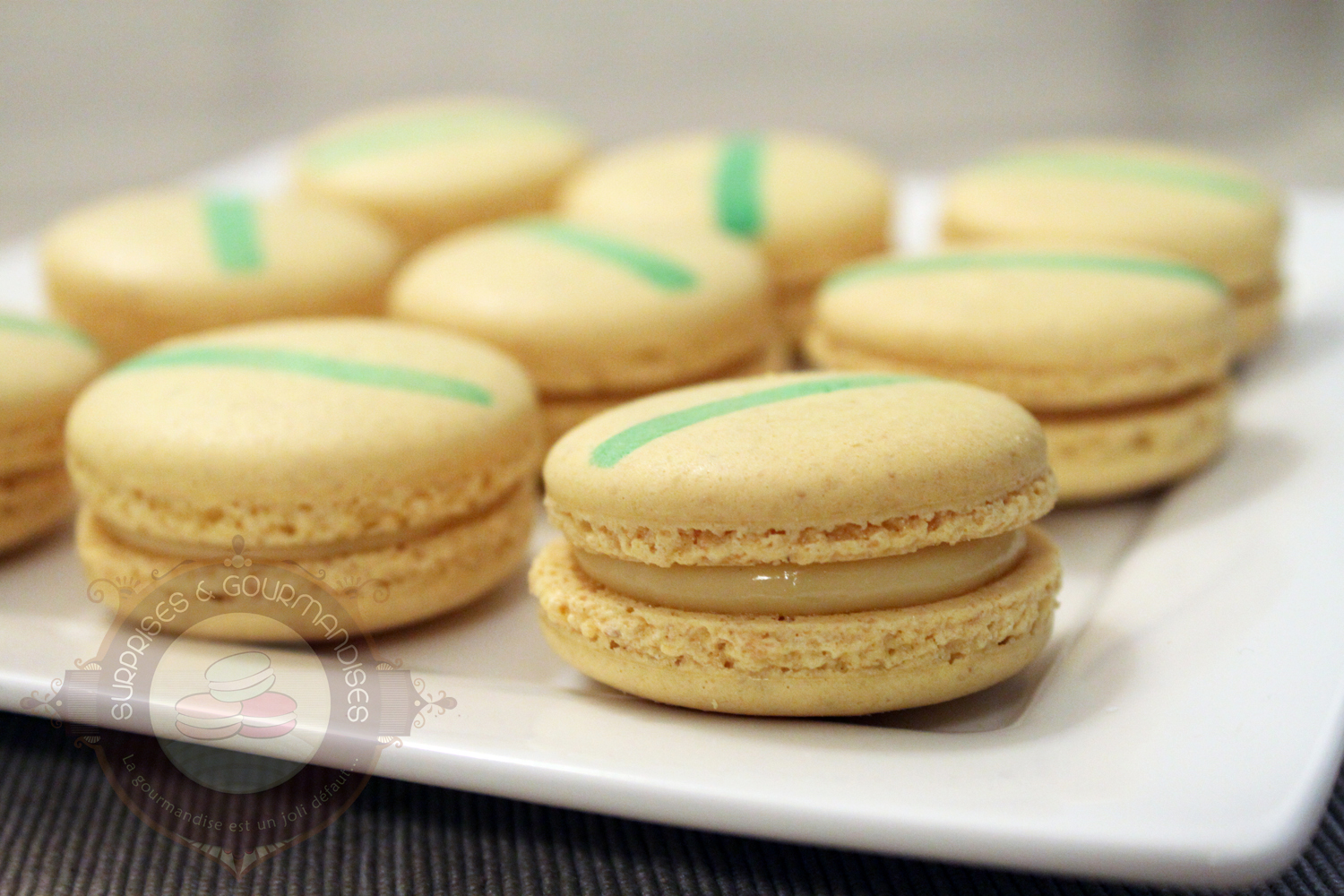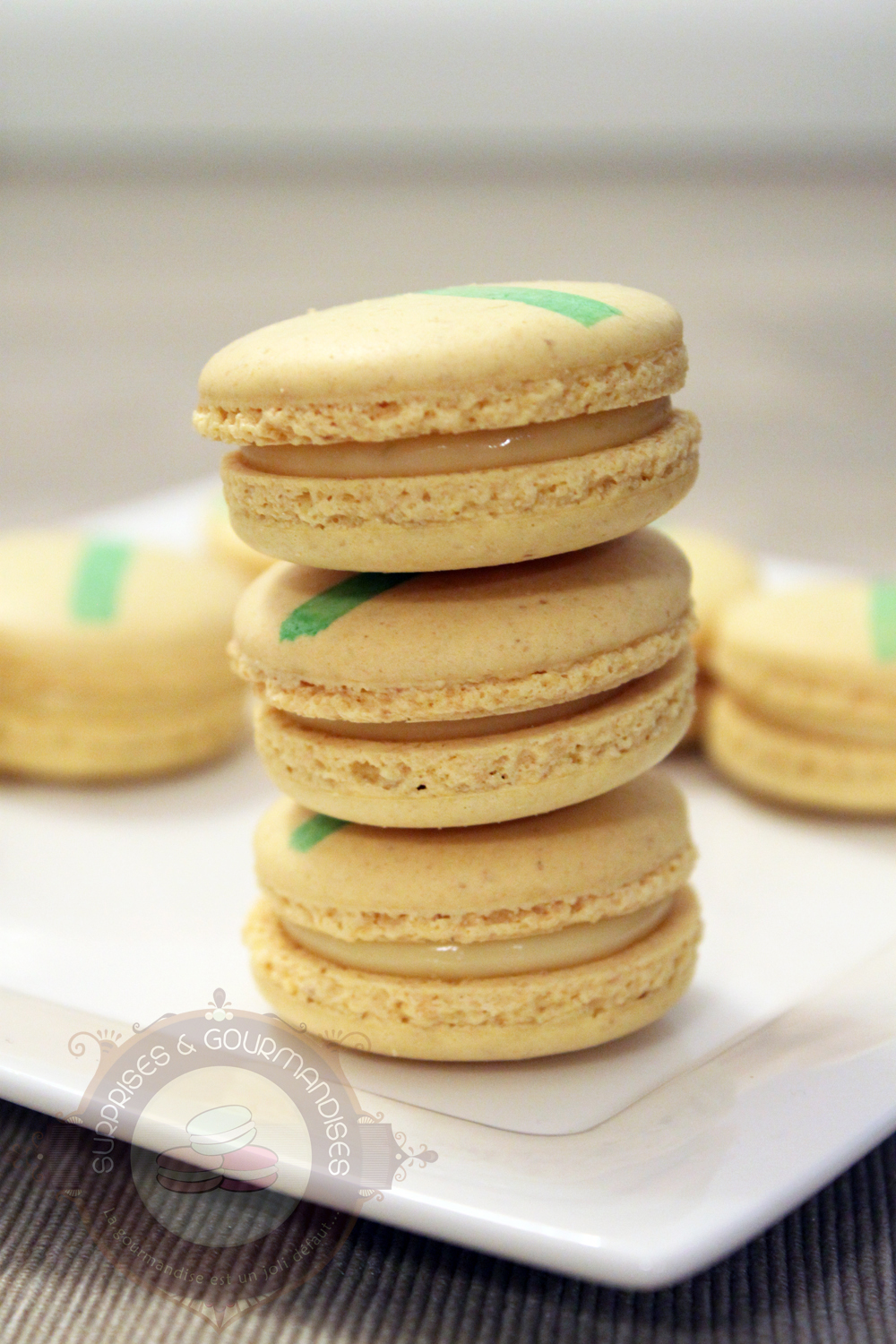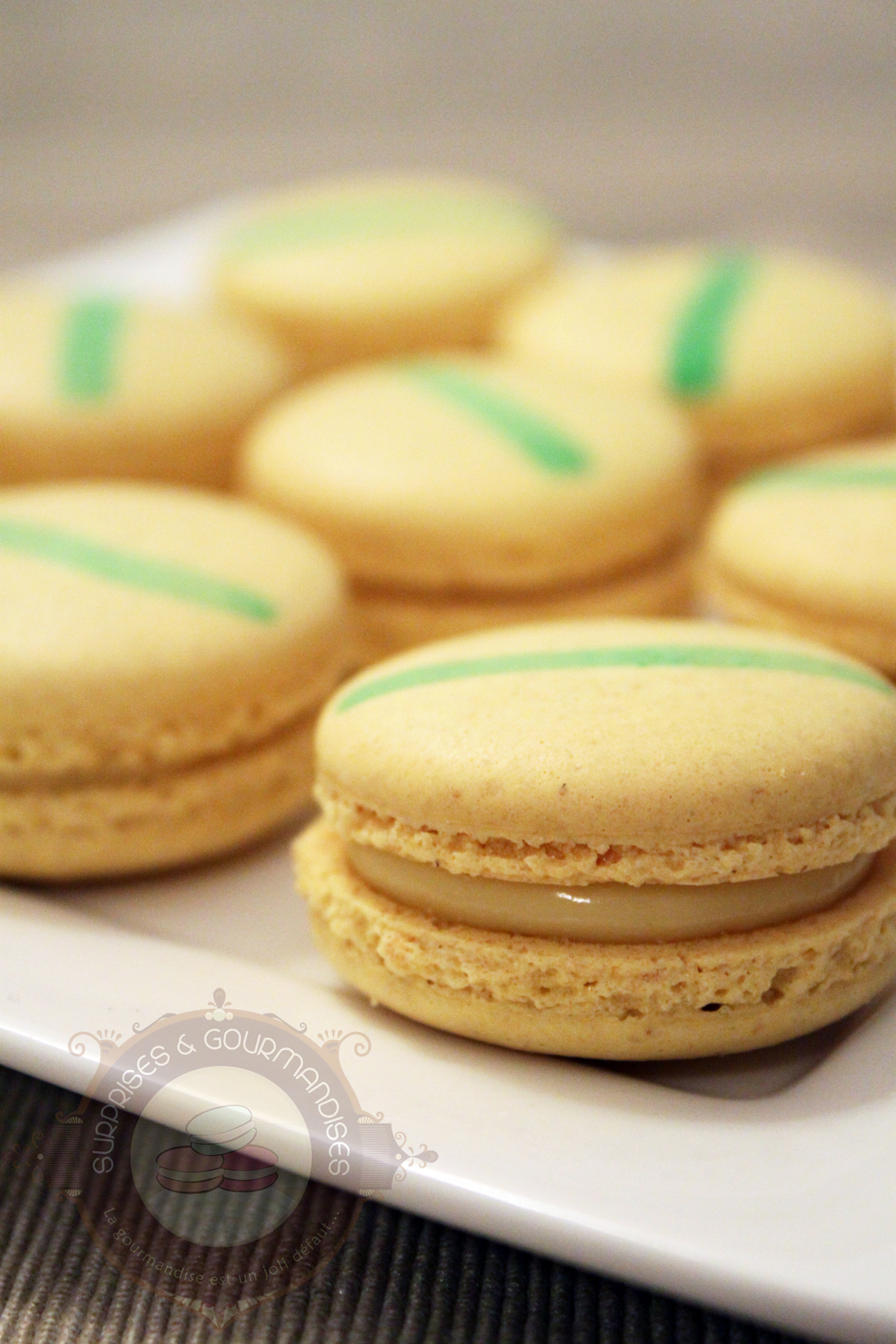



A few months ago, I discovered the lemon and basil combination and I must say I’m rather a fan. A real revelation! Especially for someone who doesn’t like lemon or basil on their own. The 2 flavours go together wonderfully: lemon basil tart or lemon basil macaron, I’ve had the chance to use this pairing several times. It’s up to you to adjust the basil to your taste, though. My colleagues guinea pigs were divided: some struggled to detect the basil while others could taste it easily. A matter of palate, I suppose 😉
Ingredients & Method
3 components · Full recipe
Shells
Ingredients
- 2 x 55 g (1.9 oz) egg whites
- 150 g (5.3 oz) icing sugar
- 150 g (5.3 oz) ground almonds
- 150 g (5.3 oz) caster sugar
- 50 g (1.8 oz) water
- yellow food colouring powder
- green food colouring powder
Method
1
Blitz the icing sugar and ground almonds together, then sift.
2
Make the syrup: put the caster sugar and water in a saucepan and bring to the boil until it reaches 118°C / 244°F. When it hits 110°C / 225°F, gradually whisk 55 g (1.9 oz) of egg whites to soft peaks. Once the syrup reaches 118°C / 244°F, reduce the mixer speed and pour the syrup over the whipped whites. Add the yellow food colouring at this point. Increase the speed again to cool the meringue slightly. Check with your finger — it should be lukewarm, not cold.
3
Switch the whisk attachment for the paddle and fold in the remaining 55 g (1.9 oz) of egg whites, then the sifted almond-icing sugar mixture. Leave the mixer running until the batter becomes smooth, glossy and falls in a ribbon. I let the mixer run for a few seconds to combine everything, then finish the macaronage by hand.
4
Once the right consistency is reached, transfer the batter to a piping bag fitted with a plain 8–10 mm nozzle. A tall glass to support the bag makes it much easier to fill with both hands.
5
Pipe small domes of about 3.5 cm (1.4 in) in a staggered pattern onto a baking parchment-lined tray (or a Silpat). For evenly sized macarons, I use a template from Pure Gourmandise — simply slide it under the parchment or Silpat (and don’t forget to remove it before baking). Tap the tray on the counter to smooth the tops.
6
Bake at 120°C / 250°F for about 22 minutes. Leave to cool before lifting the shells off. They are ready when they release easily.
7
If you like, hollow out the shells with your thumb to make room for more filling. Do this straight from the oven — if you wait, the shells will turn brittle.
Step by step
Not quite comfortable with macaron shells yet? I’ve put together two full step-by-step picture guides to help you get it right every time:
Lemon Basil Cream
Ingredients
- 2 eggs
- 100 g (3.5 oz) caster sugar
- 100 g (3.5 oz) lime juice
- 120 g (4.2 oz) butter
- 15 g (0.5 oz) fresh basil, chiffonade
- zest of 1 lemon (I used a bergamot)
- 2 g (0.1 oz) gelatine
Method
1
Soak the gelatine in cold water.
2
Rinse the basil leaves, then chiffonade or finely chop them.
3
Pour the lime juice into a saucepan, then add the lemon zest and the chopped basil.
4
Add the eggs and sugar, then whisk everything together.
5
Heat to 85°C / 185°F, stirring constantly. The cream will thicken. Like a crème anglaise, be careful not to exceed this temperature. If you don’t have a thermometer, here’s Chef Michalak’s tip: whisk the mixture briskly, then stop — if the “whirlpool” halts immediately, the cream has reached the right temperature.
6
Add the squeezed-out gelatine and leave to rest for a few minutes until the cream cools slightly.
7
Pass through a fine-mesh sieve to remove the zest and basil.
8
When the cream has cooled to around 35°C / 95°F, pour it into a tall jug. Add the butter in one go and blend with a stick blender until smooth and homogeneous. The cream will lighten slightly.
9
Transfer to a wide, shallow dish for quicker cooling. Cover with cling film and refrigerate for at least 3 hours.
Assembly
Ingredients
- None
Method
1
Sort your shells into matching pairs of the same size.
2
Transfer the lemon basil cream to a piping bag fitted with a plain nozzle and pipe onto half the shells. Sandwich with the remaining shells.
3
To paint on a green stripe (a nod to the basil), dilute a little green food colouring powder with a few drops of water or rum, stir, then brush on with a fine paintbrush.
4
Refrigerate the macarons and leave until the next day before tasting. They should spend the first night uncovered to prevent them becoming damp, then you can close the box. They will keep for a few days in the fridge, although the moisture from the filling may start to soften the shells. I doubt they’ll last that long anyway!

Gallery