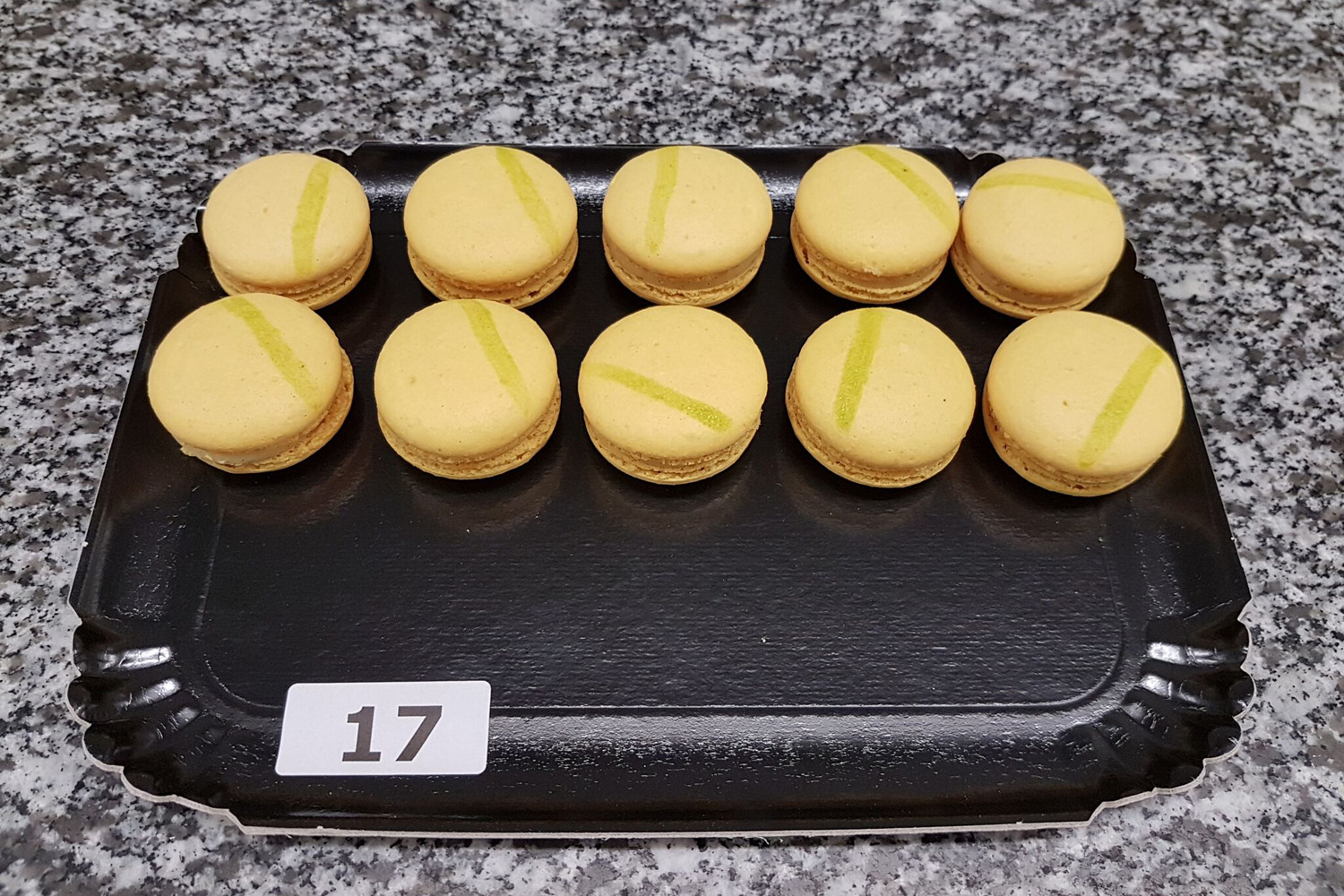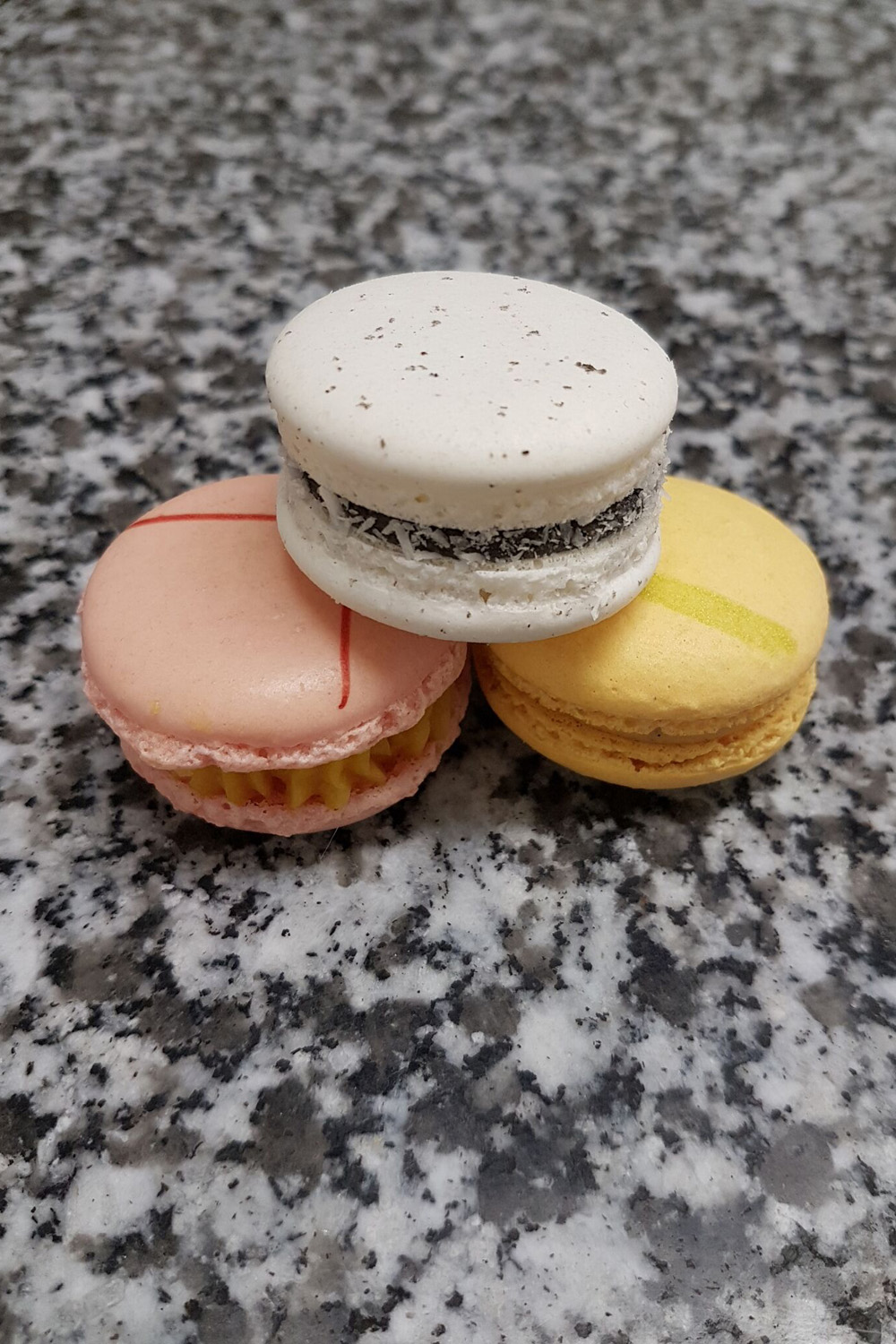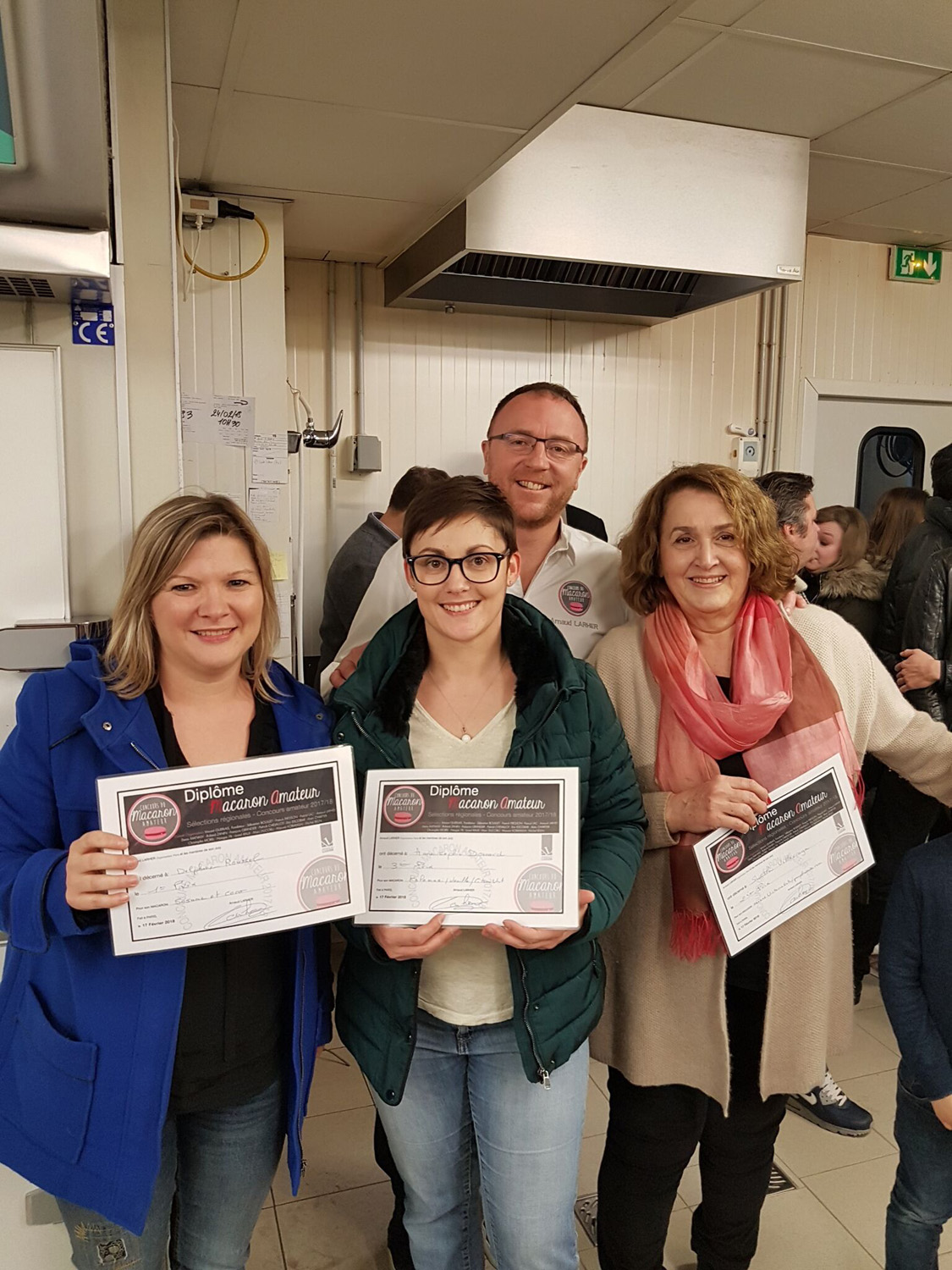



Last Saturday saw the 6th edition of the international macaron competition in Paris at Arnaud Larher’s (as far as I’m concerned, it was my 4th time taking part). This year, registration for the competition went a little differently. It has to be said that places are hard to come by in Paris! Usually, in under 2 minutes, all 25 places are snapped up. But this time, you had to send in a photo of macarons made by yourself of course (whatever the recipe) along with the name of the macaron that would be presented at the competition. And Arnaud Larher himself would select the candidates from the first 40 entries. A one-in-2 chance, then! And I wasn’t selected… a tad disappointed but not that much, since I’d already had the chance to take part 3 times.
And then one evening, I got a phone call from Karine Brès, the competition organiser. There had been a withdrawal and I was first on the waiting list. Obviously, I immediately accepted to take part! The rest of the story, you already know… that withdrawal ended up getting me onto the podium 😀
Yet it was far from a done deal. A few days before the competition, I could already see myself emailing Karine to tell her that, to my great regret, I wouldn’t be able to take part. Impossible to produce shells worthy of the name! They all cracked! So yes, the super humid weather didn’t help, but we were all in the same boat (snow had made an appearance in Paris and the surrounding region). Even my lemon confit had decided to play tricks on me, failed twice. In short, nothing was going right!
But I was stubborn (and incidentally, I pestered my blogger friends for advice). So I’d like to take this opportunity to thank Delphine from the blog Ma cuisine gourmande, who is also the big winner of this year’s macaron competition at Denis Matyasy’s, and Isabelle from the blog Pourquoi pas?, who were both a precious help to me, the first in getting my shells right and the second in getting my lemon confit right. And in the end it’s thanks to French meringue that I managed my shells (whereas I’ve been making my macarons with Italian meringue for years and years!). And that’s how, 2 days before the competition, I was able to produce lovely shells and an amazing lemon confit!
My only mistake was filling my shells on Thursday evening for a tasting on Saturday early afternoon. The lemon confit, being moist, made the shells soggy again. Drat drat!!! Arnaud Larher told me that it was this little mistake that earned me 3rd place. In fact, 2nd and 3rd places were decided by a show of hands, the bitterness of grapefruit versus the acidity of calamansi and lime 🙂
Congratulations to Svetla for her roasted and caramelised Victoria pineapple macaron with Californian pink grapefruit marmalade and zest (2nd place) and to Delphine for her Sesame and Coconut macaron which won everyone over (shame, I didn’t get to taste it).
And what if we talked about calamansi before revealing the recipe? Because I suspect some of you must be wondering: but what on earth is it??? Native to South-East Asia, calamansi is a very small citrus fruit, two to three centimetres in diameter. It is the fruit of the calamondin tree. Born from a cross between the mandarin and the kumquat, it offers a great diversity of flavours. Widely used in Filipino cooking, it is rich in vitamin C and gives off a delicate mandarin scent with a bitter orange taste. It is as tangy as a lemon, as fragrant as a lime, bitter like pink grapefruit and on top of that has a passion fruit flavour. Yes, all that! I’m not really a fan of citrus fruit, but I must say I loved calamansi!
Photo credit: Alibaba
So yes, you won’t find it at the corner shop, that’s true. I bought the calamansi purée at G. Detou in Paris (they also have a shop in Lyon). Enough talking, on to the recipe 🙂
Ingredients & method
4 components · Full recipe
Shells
Ingredients
- 150 g (5.3 oz) egg whites
- 135 g (4.8 oz) caster sugar
- 236 g (8.3 oz) icing sugar
- 173 g (6.1 oz) almond flour
- yellow and orange powder food colouring
Method
1
Blend the icing sugar and almond flour together, then sift the mixture.
2
Whip the egg whites to stiff peaks, add the caster sugar in 2 additions and whisk at maximum speed to achieve a “bird's beak” consistency. Add a little yellow food colouring (and a tiny hint of orange) and mix again.
3
Fold in the almond flour and icing sugar mixture using a rubber spatula (this is the macaronage stage). The batter should be shiny, smooth and fall in a ribbon. Once the right consistency is reached, transfer the batter to a piping bag fitted with a smooth nozzle. Don't hesitate to use a tall glass to support your piping bag so you can use both hands.
4
Pipe small domes of about 3.5 cm (1.4 in) in a staggered pattern on a sheet of parchment paper or a silpat. For even macarons, I use a template downloaded from Pure Gourmandise.
5
I used a hairdryer to form a skin on the first tray of macarons. After 5 minutes, the surface was no longer sticky and I placed them in the oven. The other two trays air-dried while the first tray baked.
6
Bake at 120°C / 250°F for 20–22 minutes. Once out of the oven, let the shells cool before removing them. They are ready when they peel off easily. To fit more filling, hollow out the shells before they are completely cool.
Step by step
Not quite comfortable with macaron shells yet? I’ve put together two full step-by-step picture guides to help you get it right every time:
Ganache
Ingredients
- 300 g (10.6 oz) white chocolate
- 60 g (2.1 oz) heavy cream
- 150 g (5.3 oz) kalamansi purée
- 1 vanilla pod
Method
1
Melt the white chocolate in a double boiler.
2
Heat the cream in a small saucepan with the split and scraped vanilla pod. Cover and leave to infuse for 10 minutes.
3
Remove the vanilla pod and heat the cream again.
4
I intentionally heat a little more cream than needed, as there is always a small loss once heated. I make sure to have the full 60 g (2.1 oz) of cream.
5
Pour one third of the hot cream over the white chocolate and stir to create an emulsion. Then add a second third, then a third, to obtain a smooth, homogeneous mixture. The ganache should be smooth and glossy.
6
Add the kalamansi purée and blend with an immersion blender.
7
The ganache may split (likely due to the small amount of cream). I use an immersion blender to emulsify everything, both before and after adding the kalamansi purée.
8
Pour the ganache into a wide dish and press cling film directly onto the surface. Refrigerate overnight (several hours of rest allow the ganache to firm up enough to be piped).
Lime confit
Ingredients
- 40 g (1.4 oz) lime zests
- 60 g (2.1 oz) sugar
- 200 g (7.1 oz) lime juice
Method
1
Remove the zests with a peeler, taking care to take only the zest without the pith (the white inner part of the peel).
2
Blanch the zests: place them in a saucepan of cold water, bring to the boil and cook for 1 minute. Remove with a slotted spoon and refresh in iced water. Repeat this process twice (blanching removes bitterness from the peel).
3
In a saucepan, combine the lime juice, sugar and zests. Cook uncovered on very low heat for 50 minutes until the mixture has reduced significantly (about 2–3 tablespoons remain).
4
Blend while still hot with an immersion blender, then store in a jar in the refrigerator.
5
After failing my lime confit twice, I tried another method: I used a microplane grater to zest the lime and blended with an immersion blender halfway through cooking.
Assembly
Ingredients
- None
Method
1
Sort your macarons so that those you pair together are the same size.
2
Transfer the kalamansi vanilla ganache to a piping bag fitted with a smooth nozzle and fill half the shells.
3
Put the lime confit in a small piping bag without a nozzle. Pipe a small amount of lime confit into the ganache, then close with the other shells (finding the right balance is key — the lime confit is quite powerful as it is very concentrated, but use too little and it will go unnoticed).
4
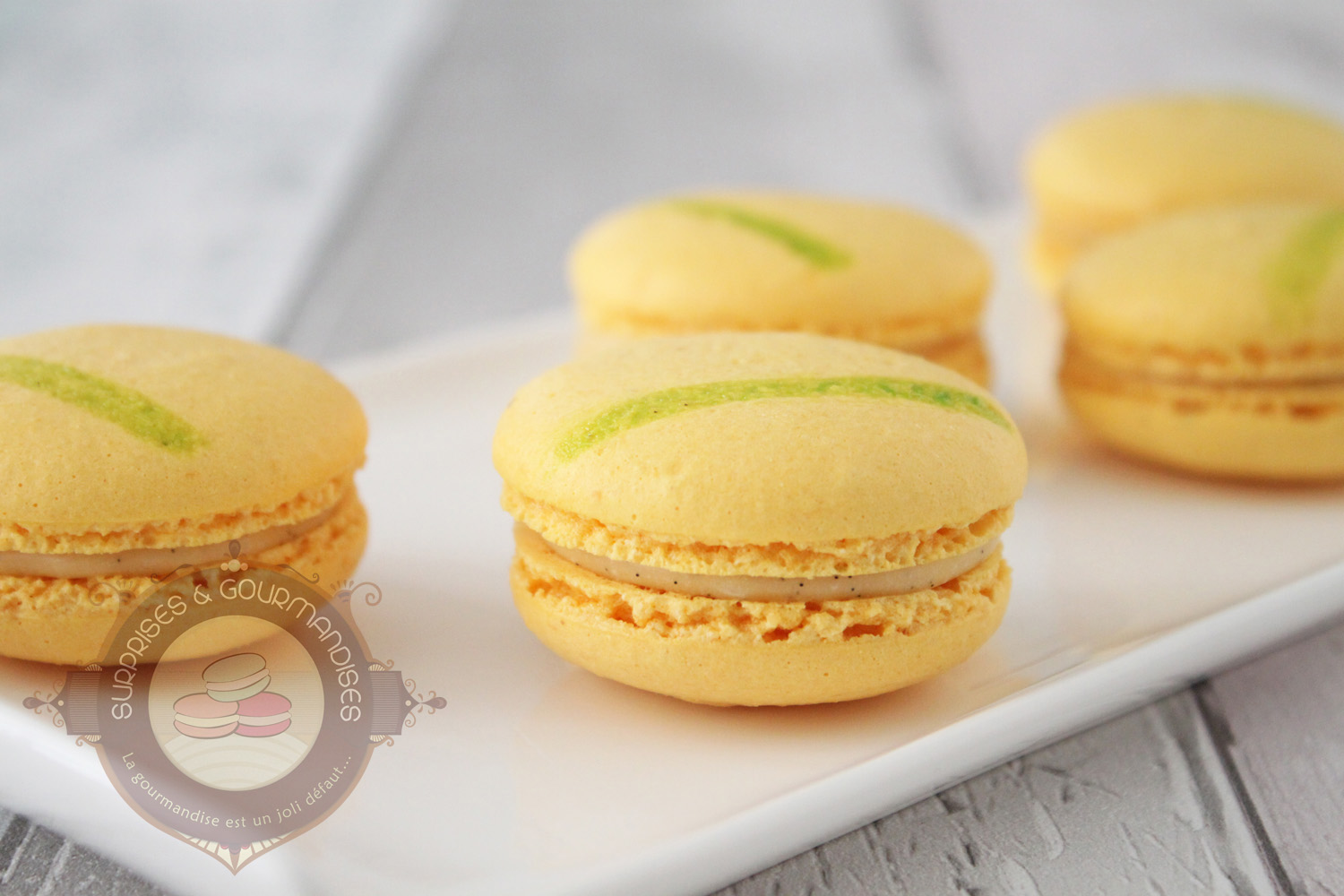
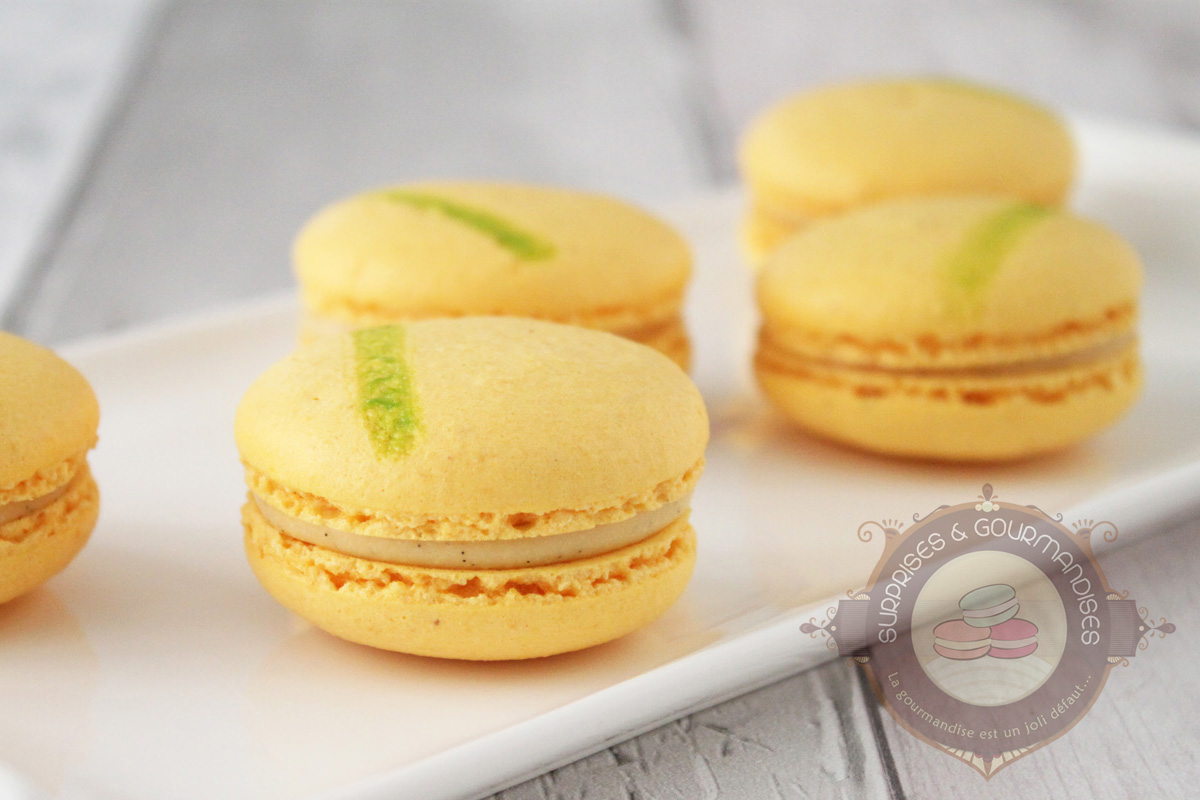
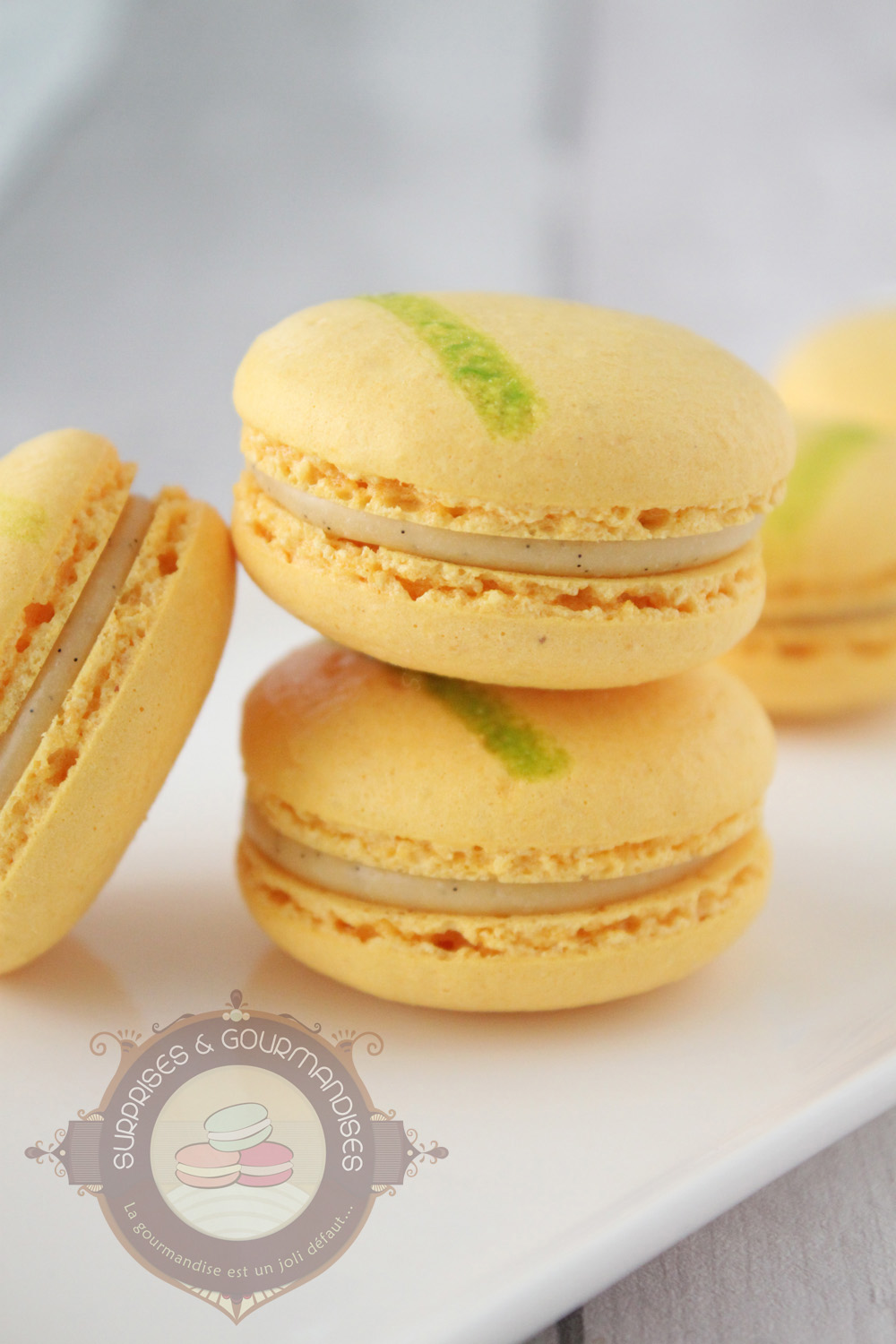
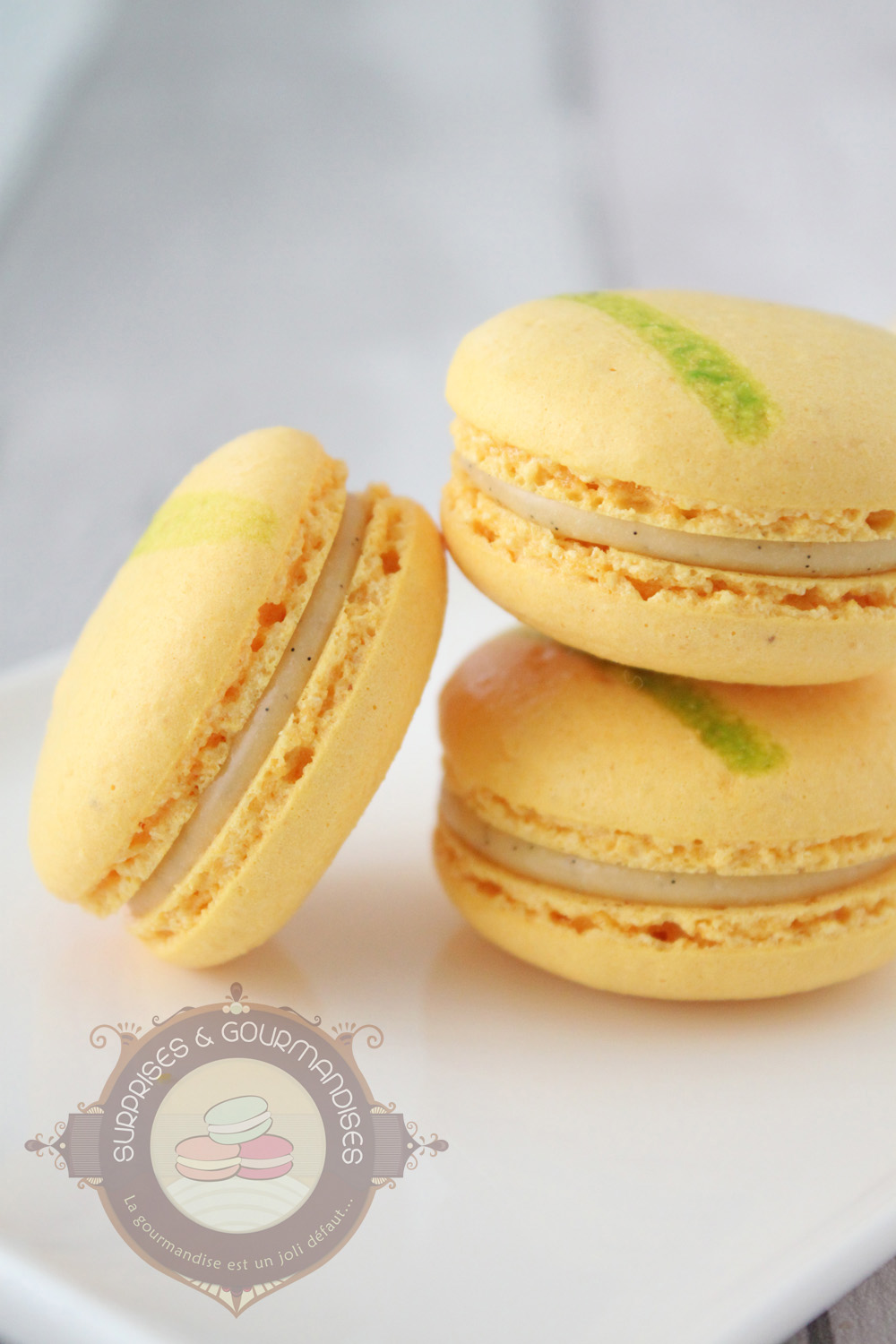
To draw a green stripe (which evokes the lime, as you will have guessed), dilute a little green powder food colouring with a few drops of water or rum. Mix and paint the stripe with a fine brush.
5
Refrigerate the macarons and wait until the next day to eat them. The macarons should spend the first night in an open container (to prevent them from becoming damp) before you close the box. They can be kept for a few days in the fridge, but the cream (particularly the lime confit) may re-soften the shells. Though I doubt they will last several days!

Gallery