


You’ve probably noticed that the blog has been running a little slowly since the start of the school year. This year, I’ve gone back to teaching full-time, so it’s a whole new routine to find, between work, the kids, after-school activities, baking, food photography and the blog… I’m trying to keep up a publishing rhythm on Instagram but I’ve neglected the blog a bit, I have to admit (it’s hard to be everywhere, as you can imagine).
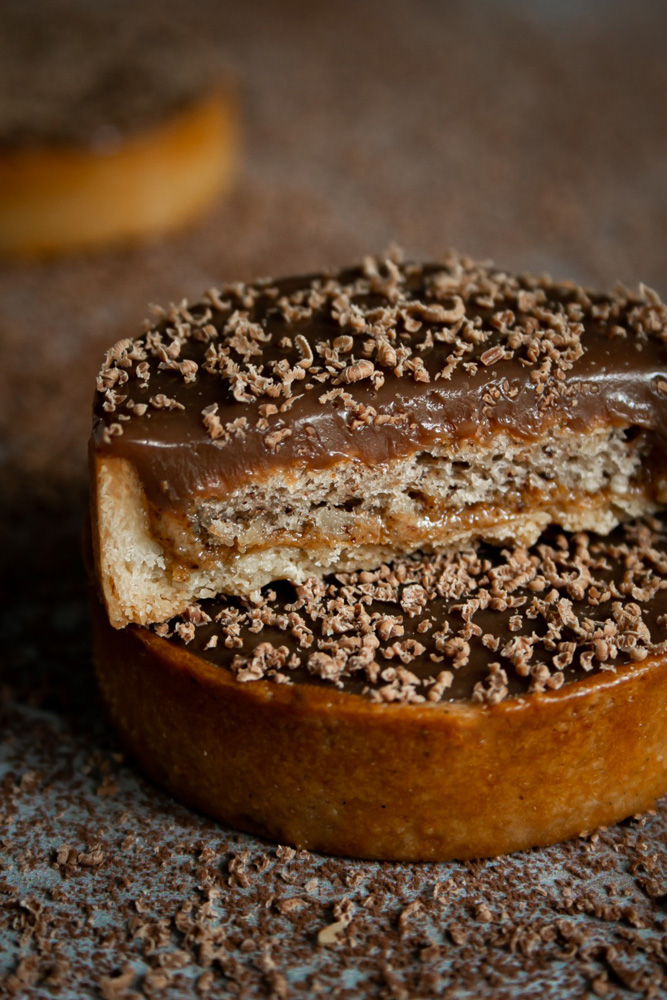
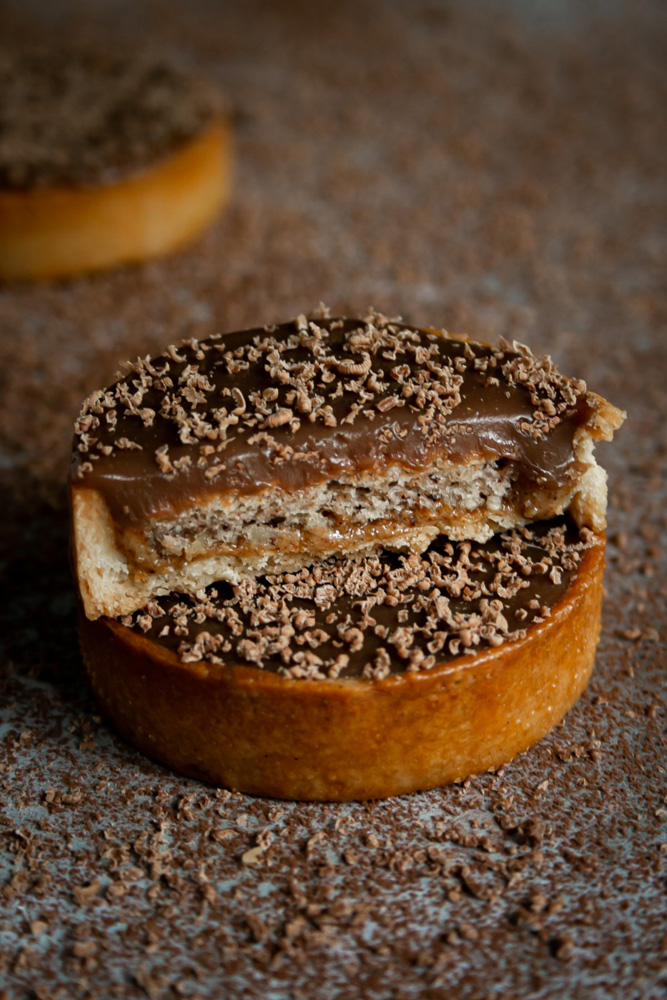
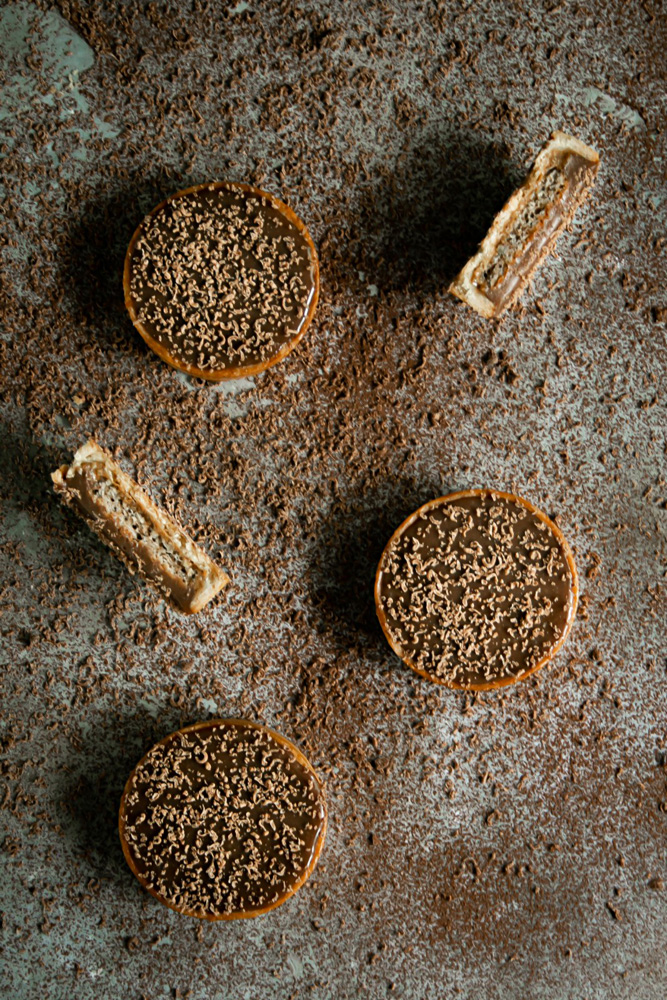
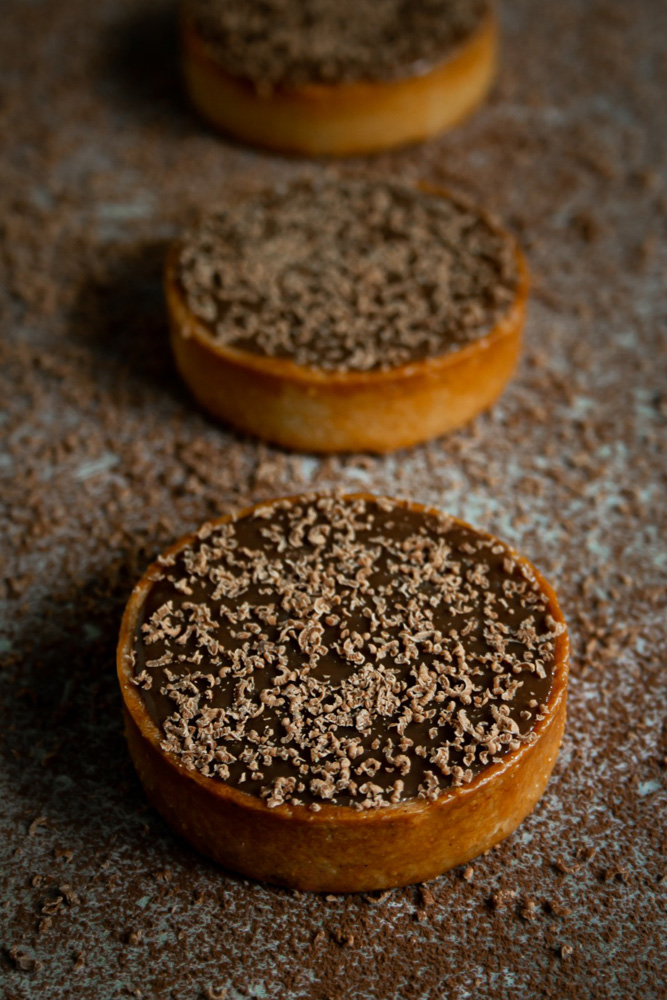
But here I am again with a new, ultra-indulgent recipe, gianduja and hazelnut praline tartlets to die for. They are made up of a pâte sucrée, a hazelnut praline, a soft hazelnut sponge and a delicious gianduja ganache.
The next recipe will be a Yule log because I know many of you are already thinking about your festive dessert. In the meantime, you can browse the Yule logs and Christmas desserts section, you may already find something you like there 🙂
How do you make a hazelnut praline?
I have a preference for 100% hazelnut praline (my guilty pleasure) but you can very well make an almond/hazelnut praline. Either way, to make a good praline, you absolutely must roast the nuts, that is, put them in the oven at around 150°C for 10 to 15 minutes (some people push the roasting a little further, it’s up to you). This is very important because it’s what allows the nuts to release their aromas and gives them a more pronounced flavour. There are 2 methods for making a praline:
- Method 1: make a dry caramel, spread it on a baking tray and leave it to cool. Then simply put the cooled nuts and the caramel sheet broken into small pieces in a food processor and blend.
- Method 2: make a syrup with water, sugar and glucose, bring it to 118°C, add the nuts and let them caramelise (the nuts will first turn sandy, then you continue caramelising until you get a nice caramel colour). Tip it out, let the tray of nuts cool completely, then blend in a food processor.
Personally, I prefer the second method. Admittedly, it takes a little longer, but I find the result is better. Here, I used the first method because I was a little short on time (to get a better result, in this specific case, I push the roasting a bit further because the nuts don’t go back on the heat as with the second method).
Don’t hesitate to make extra praline, it keeps for months in an airtight jar at room temperature (you can also keep it in the fridge if you prefer). It will come in handy for lots of different recipes.
What if I don’t have any gianduja?
I usually use Valrhona’s milk gianduja, which is simply excellent. You can find it on the Valrhona Ensemble website. But if you can’t find any, you should know that it’s entirely possible to make it yourself. The recipe is actually really simple to make. I do however recommend using quality ingredients (such as Pariani Piedmont hazelnuts and a milk chocolate like Valrhona’s Jivara).
To make homemade gianduja, you need equal parts hazelnuts, icing sugar and milk chocolate. First, you need to roast the hazelnuts (always) in the oven at 150°C for around 15 minutes. Then rub them to remove most of the skins (it doesn’t matter if a few remain). In the bowl of a good food processor, put the hazelnuts and the icing sugar and blend until you get a fairly smooth paste (this can take a little while, it all depends on the power of your processor). Next, add the previously melted milk chocolate and blend again until you get a homogeneous mixture. You can use it straight away or pour it into a dish lined beforehand with cling film, it will then be easier to take it out of the dish and take the amount you need.
Ingredients & preparation
6 components · Full recipe
Hazelnut praline (can be made ahead)
Ingredients
- 180 g (6.3 oz) noisettes Pariani
- 120 g (4.2 oz) sucre
- 1 pincée de fleur de sel
Method
1
Toast the hazelnuts at 150°C / 300°F (300°F) fan-assisted for 15–20 minutes, until golden.
2
Make a dry caramel: heat the sugar in a saucepan without stirring until amber.
3
Add the toasted hazelnuts and stir to coat.
4
Pour onto a silicone mat and leave to set completely.
5
Break into pieces and blend until you obtain a smooth praline paste. Set aside.
6
Beat the butter and icing sugar together until pale and creamy.
Sweet pastry dough (make the day before)
Ingredients
- 150 g (5.3 oz) de beurre
- 95 g (3.4 oz) de sucre glace
- 30 g (1.1 oz) de poudre d’amande
- 60 g (2.1 oz) d’œuf (un gros œuf)
- 250 g (8.8 oz) de farine
- une pincée de fleur de sel
- de la vanille en poudre
Method
1
vanille en poudre
Add the egg and mix until combined.
2
Sift in the flour and ground hazelnuts and mix until a smooth dough forms.
3
Wrap in cling film and refrigerate for at least 1 hour.
4
Roll out to 3mm thickness and line the tartlet rings.
5
Refrigerate for 30 minutes before baking.
6
Preheat the oven to 160°C / 325°F (325°F) fan-assisted.
7
Blind-bake the lined tartlet shells for 15–18 minutes.
Baking the sweet pastry dough
Ingredients
- un jaune d’œuf
- 2 g (0.1 oz) de crème liquide
Method
1
Remove the baking weights and bake for a further 5 minutes until evenly golden.
2
Leave to cool completely on a wire rack.
3
Preheat the oven to 160°C / 325°F (325°F) fan-assisted.
4
Beat the butter and sugar together until pale.
5
Add the eggs one at a time, mixing well after each addition.
6
Fold in the ground hazelnuts and flour.
7
Add the hazelnut praline and mix gently.
Hazelnut soft sponge
Ingredients
- 50 g (1.8 oz) de poudre de noisettes
- 30 g (1.1 oz) de cassonade
- 50 g (1.8 oz) d’œuf
- 11 g (0.4 oz) de sucre glace
- 11 g (0.4 oz) de crème liquide entière
- les zestes d’un citron jaune
- 47 g (1.7 oz) de beurre
- 25 g (0.9 oz) de farine
- 2,8 g (0.1 oz) de levure chimique
- 50 g (1.8 oz) de blanc d’œuf
- 8,3 g (0.3 oz) de cassonade
Method
1
Pipe or spoon into the baked tartlet shells.
2
Bake for 12–15 minutes, until just set. Leave to cool.
3
Soak the gelatine leaves in cold water.
4
Heat the cream in a saucepan until just below boiling point.
5
Pour over the chopped gianduja and milk chocolate.
6
Drain and squeeze out the gelatine and stir into the hot mixture.
7
Blend with a hand blender until smooth.
8
Pour over the cooled soft sponge in the tartlet shells.
9
Tap gently to level and refrigerate until set.
Gianduja ganache
Ingredients
- 300 g (10.6 oz) de gianduja lait 35% de Valrhona
- 150 g (5.3 oz) de crème liquide entière
Method
1
Once the ganache has set, pipe the hazelnut praline on top of each tartlet.
2
Decorate with roasted hazelnut halves, a pinch of fleur de sel and any other garnishes desired.
3
Refrigerate until ready to serve.
Assembly
Ingredients
- Aucun
Method
1
Fill the tartlet shells with a layer of praline.
2
Place a hazelnut biscuit on the praline, centering it carefully, and press down gently.
3
Pour the gianduja ganache over the hazelnut biscuit to fill the tartlet to the brim.
4
Grate a little gianduja over the top of the tart and refrigerate.
5
Fill the tartlet shells with a layer of praline. Place a hazelnut biscuit on the praline, centering it carefully, and press down gently. Pour the gianduja ganache over the hazelnut biscuit to fill the tartlet to the brim. Grate a little gianduja over the top of the tart and refrigerate.
Questions fréquentes
How do you make hazelnut praline?
I have a preference for 100% hazelnut praline (my guilty pleasure), but you can just as well make an almond and hazelnut praline. Either way, to make a good praline you absolutely must toast the nuts — that is, put them in the oven at around 150°C / 300°F (300°F) for 10 to 15 minutes (some people push the roasting a little further, that’s up to you). This step is very important as it allows the nuts to release their aromas and develop a more pronounced flavour. There are 2 methods for making praline. Personally, I prefer the second method. It’s a little longer, but I find the result is better. Here I used the first method as I was a little short on time (for a better result in this case, I push the roasting slightly further since the nuts don’t go back on the heat as with the second method). Don’t hesitate to make extra praline — it keeps for months in an airtight jar at room temperature (you can also refrigerate it if you prefer). It’ll come in handy for all sorts of different recipes.
What if I don’t have gianduja?
I usually use Valrhona milk gianduja, which is simply excellent. You can find it on the Valrhona Ensemble website. But if you can’t find it, know that it is perfectly possible to make it at home. The recipe is actually very easy to make. I would still recommend using quality ingredients (such as Pariani Piedmont hazelnuts and a good milk chocolate like Valrhona Jivara). To make homemade gianduja, you need equal parts hazelnuts, icing sugar and milk chocolate. Start by roasting the hazelnuts (always) in the oven at 150°C / 300°F for about 15 minutes. Then rub them to remove most of the skins (it doesn’t matter if a little remains). In the bowl of a good food processor, place the hazelnuts and icing sugar and blend until you get a fairly smooth paste (this may take a little time, depending on the power of your machine). Then add the pre-melted milk chocolate and blend again until smooth. You can use it straight away, or pour it into a cling-film-lined dish — it will be easier to portion out later. For these tartlets, I used Valrhona 35% milk gianduja and Pariani nuts.
Gallery