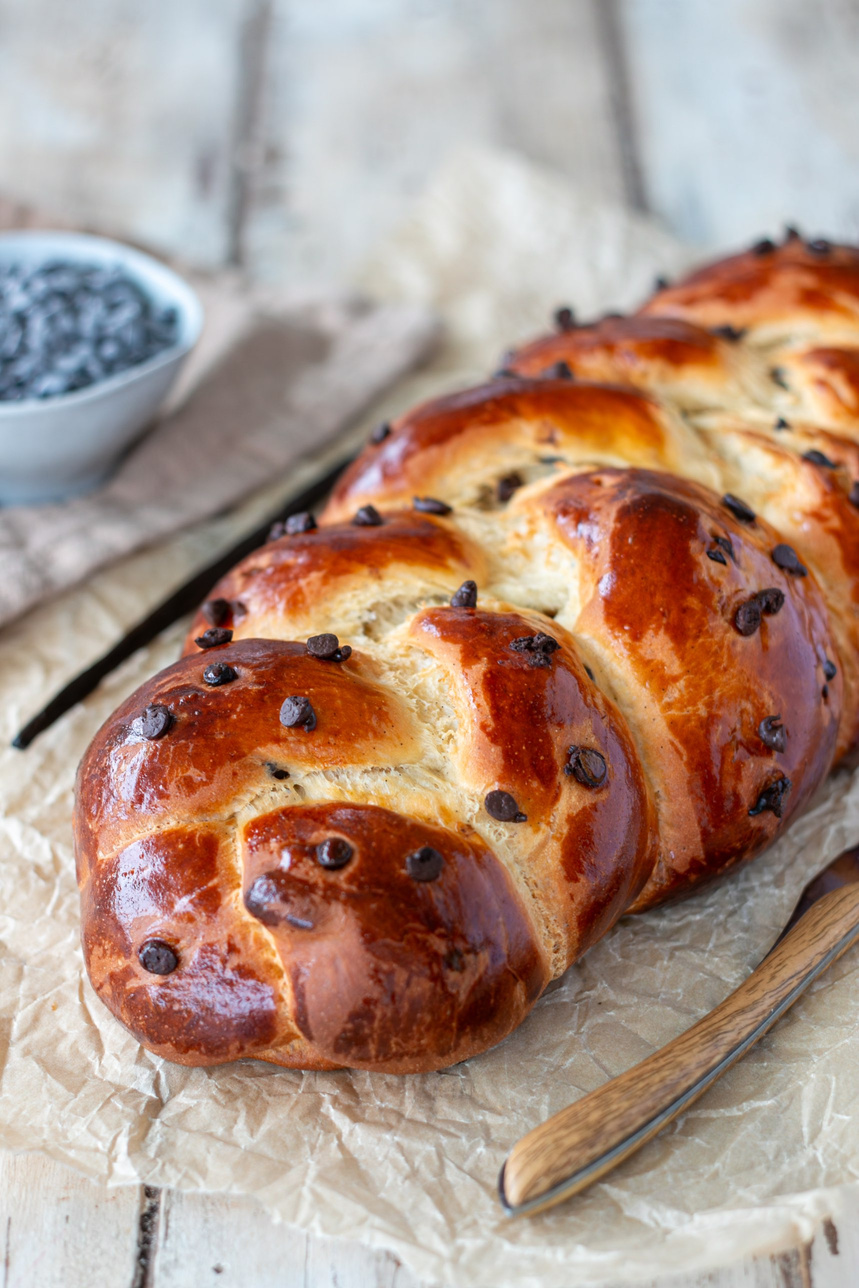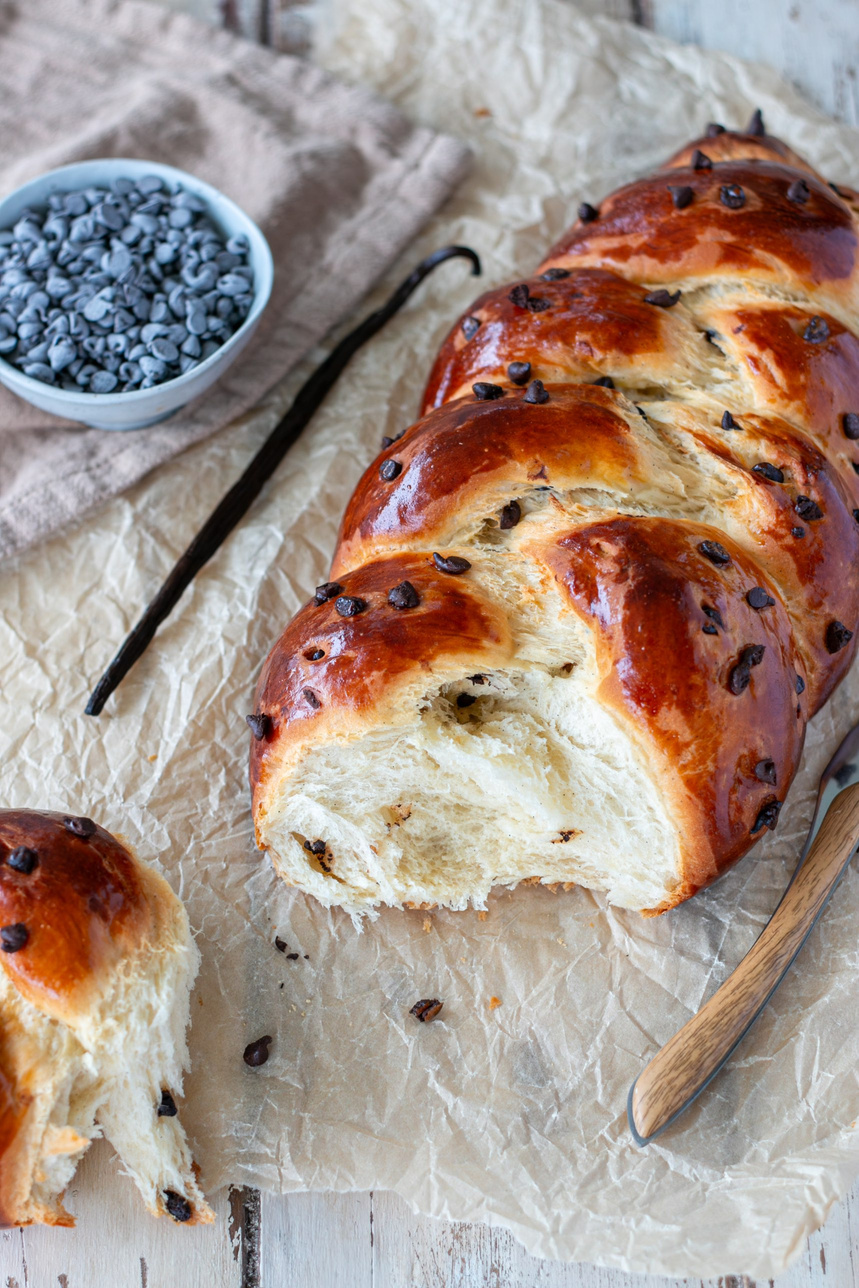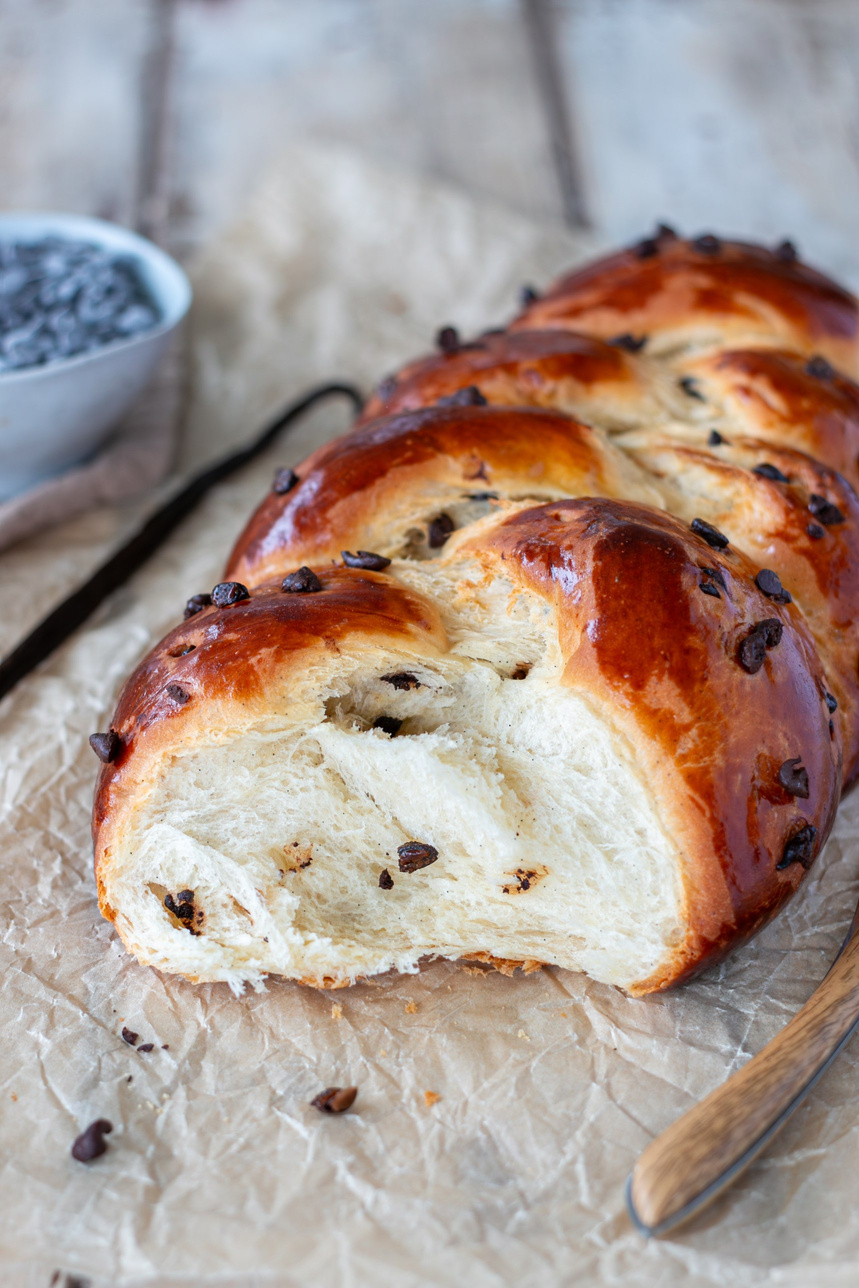


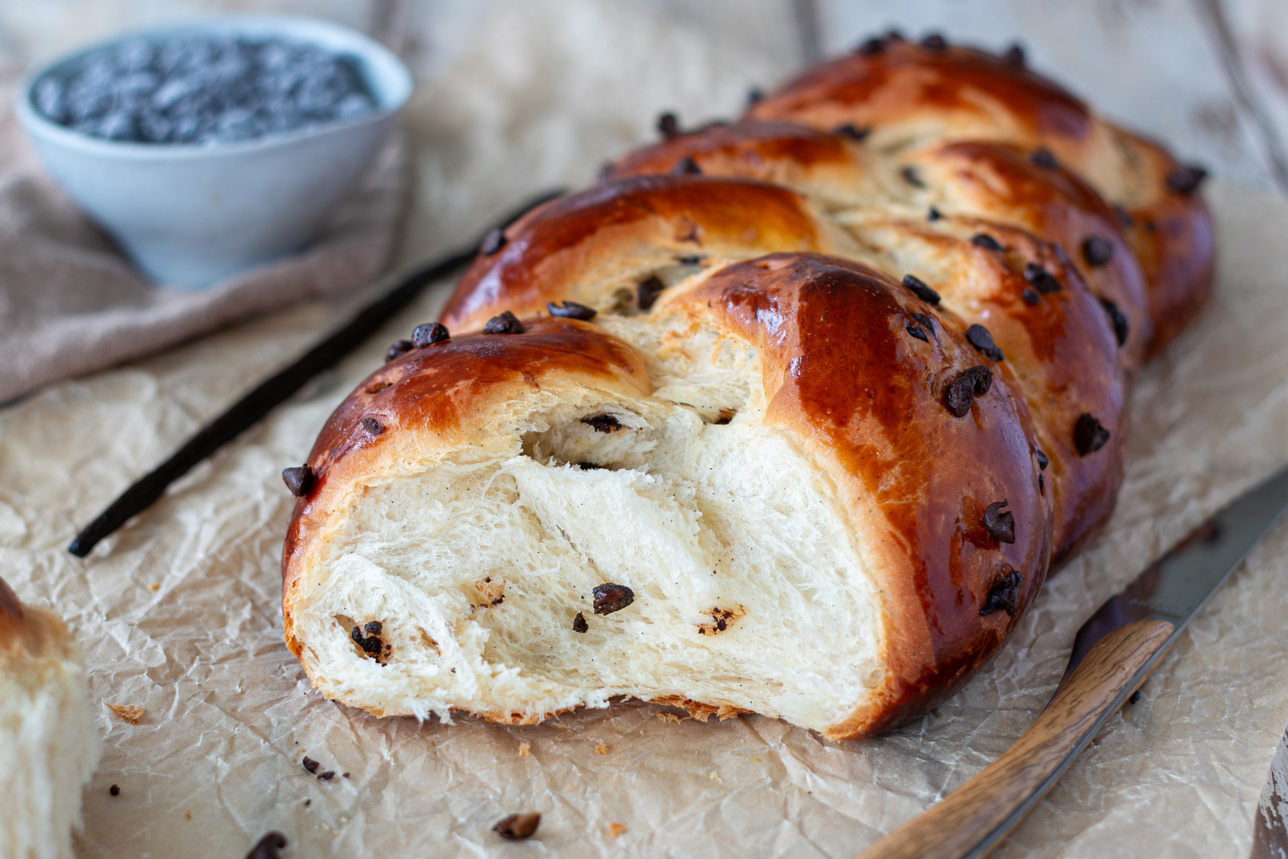
Braided Vanilla Brioche with Chocolate Chips
For a while now, I’d really wanted to try my hand at a braided brioche: a baking classic that never fails to impress on the breakfast table. I’m clearly no expert when it comes to braiding, but this vanilla and chocolate chip version made me want to start again right away.
The texture is incredible: a stringy, ultra-soft crumb that pulls apart strand by strand without even needing a knife. A real treat to share, ideally while it’s still warm!
For this version, I took the time to break down every step with far more photos than usual, especially for the shaping and braiding, which is often the part that’s intimidating for beginners. The idea is that you can follow along step by step and get a neat, even braid on your very first try.
I used a Norohy vanilla bean for this recipe, a partner of Le Meilleur Pâtissier (the French Bake Off), and this post actually goes live on the very day the new season’s first episode airs! I’m also running a giveaway on my Instagram account to win a Valrhona bundle including Norohy vanilla products (plus a few extra surprises 😉). It runs from November 27 to December 4, with 2 winners. I’ll give you all the details and how to enter right here!
Before you get started, here are a few questions that often come up about this type of brioche:
Why isn’t my dough rising enough?
Check that the fresh yeast didn’t come into direct contact with the salt or sugar while mixing, and that the proofing temperature stays around 26-28°C (79-82°F) (a switched-off oven with a glass of hot water works perfectly well). If the dough is still dense after its night in the fridge, it’s best to let it come back gently to room temperature before shaping.
Can I replace the fresh yeast with dry baker’s yeast?
Yes, but there are two types of dry yeast to tell apart. Instant dry yeast (the most common kind) needs no rehydrating: it goes straight in with the flour, away from the salt and sugar, exactly like crumbled fresh yeast — use about 8 g (0.3 oz) to replace the 25 g (0.9 oz) of fresh yeast. Active dry yeast, on the other hand, needs to be rehydrated in a warm liquid before use: in that case, take a small part of the 180 g (6.3 oz) of milk, warm it slightly and dissolve the yeast in it, keeping the rest of the milk cold as stated in the recipe.
How do I stop the braid from losing its shape during baking?
The key is to keep even tension on the three strands while braiding, without pulling too tight: the dough will still expand during proofing and baking, so a braid that’s too compact ends up squashing or losing its shape in the oven.
What’s the best way to get the kneading and proofing right?
For good kneading, start with well-chilled ingredients and keep an eye on the dough’s temperature with a thermometer: it shouldn’t go much above 24°C (75°F), otherwise the butter starts melting instead of incorporating, which makes the dough sticky and less elastic. The windowpane test (stretching a piece of dough between your fingers until it becomes almost transparent without tearing) is still the best sign that it’s ready. For proofing, simply place the brioche in the switched-off oven with a glass of boiling water alongside it to create a warm, humid environment, and check the temperature with a thermometer, aiming for 26-28°C (79-82°F): too warm and the dough rises fast but loses flavour; too cool and it takes forever to double in size. Also be careful not to let it proof for too long: over-proofed dough puffs up to the point of smoothing out the braid’s definition, and the result looks less neat. Either way, it’s better to go by how the dough looks (doubled in size, no more) than by a fixed time.
My tips for getting this brioche right on the first try:
- The butter and eggs need to be well chilled so kneading doesn’t warm the dough up too much.
- Don’t skip the overnight rest in the fridge: cold dough is much easier to shape and braid.
- The windowpane test, before you stop kneading, is still the best guide: the dough should stretch thin without tearing.
- Towards the end of baking, keep an eye on the colour and cover with foil if needed, so the braid doesn’t brown too quickly.
If you’re looking for a great breakfast or afternoon snack recipe, I’d really recommend this one.
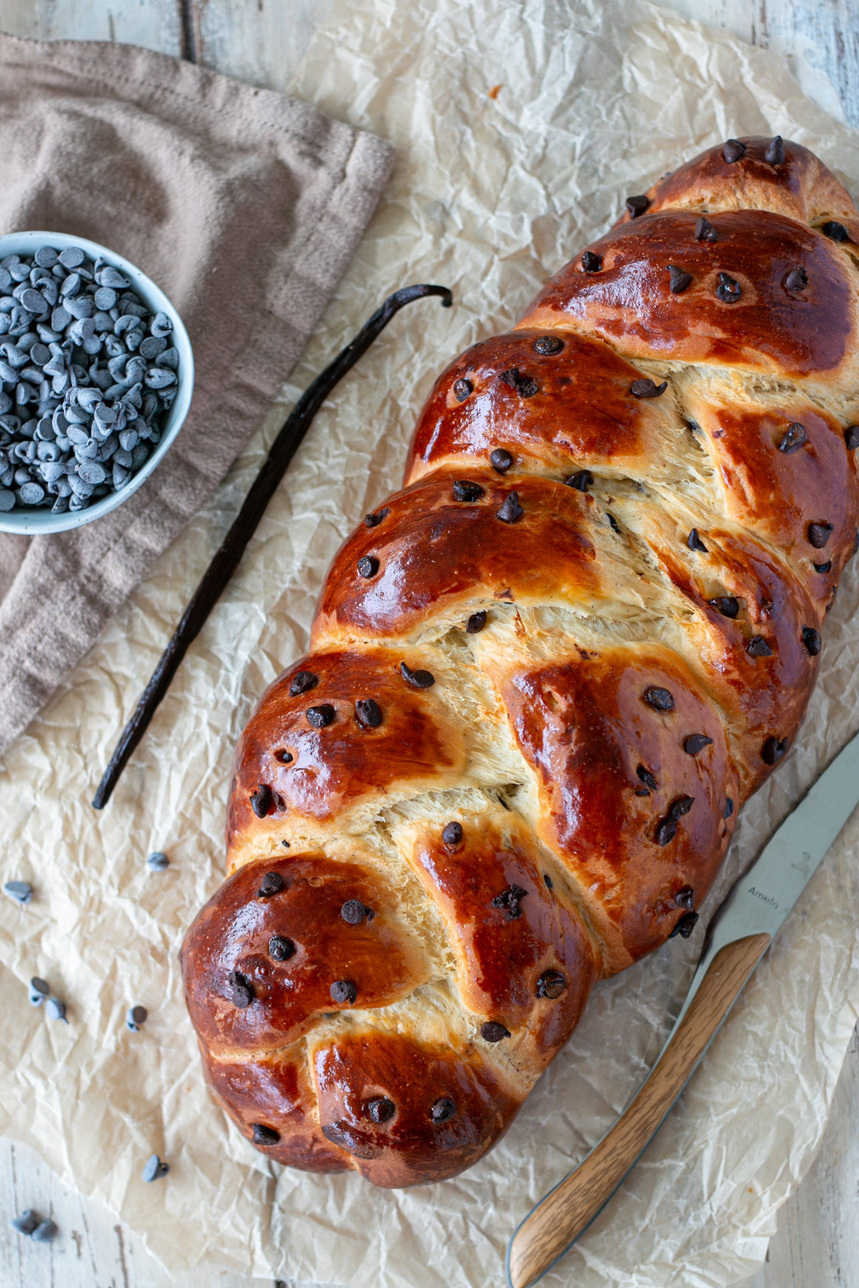
Ingredients & Method
3 components · Full recipe
Brioche dough
- 500 g (17.6 oz) flour (preferably T45 gruau flour, otherwise T45 wheat flour)
- 80 g (2.8 oz) caster sugar
- 8 g (0.3 oz) salt
- 25 g (0.9 oz) fresh yeast
- 2 cold eggs
- 180 g (6.3 oz) cold milk
- 100 g (3.5 oz) cold butter
- 1 Norohy organic Madagascar vanilla bean
In the bowl of a stand mixer, pour in the flour, sugar and salt, in that order.
Make a well and crumble the fresh yeast into the centre (it must not come into contact with the salt or sugar).
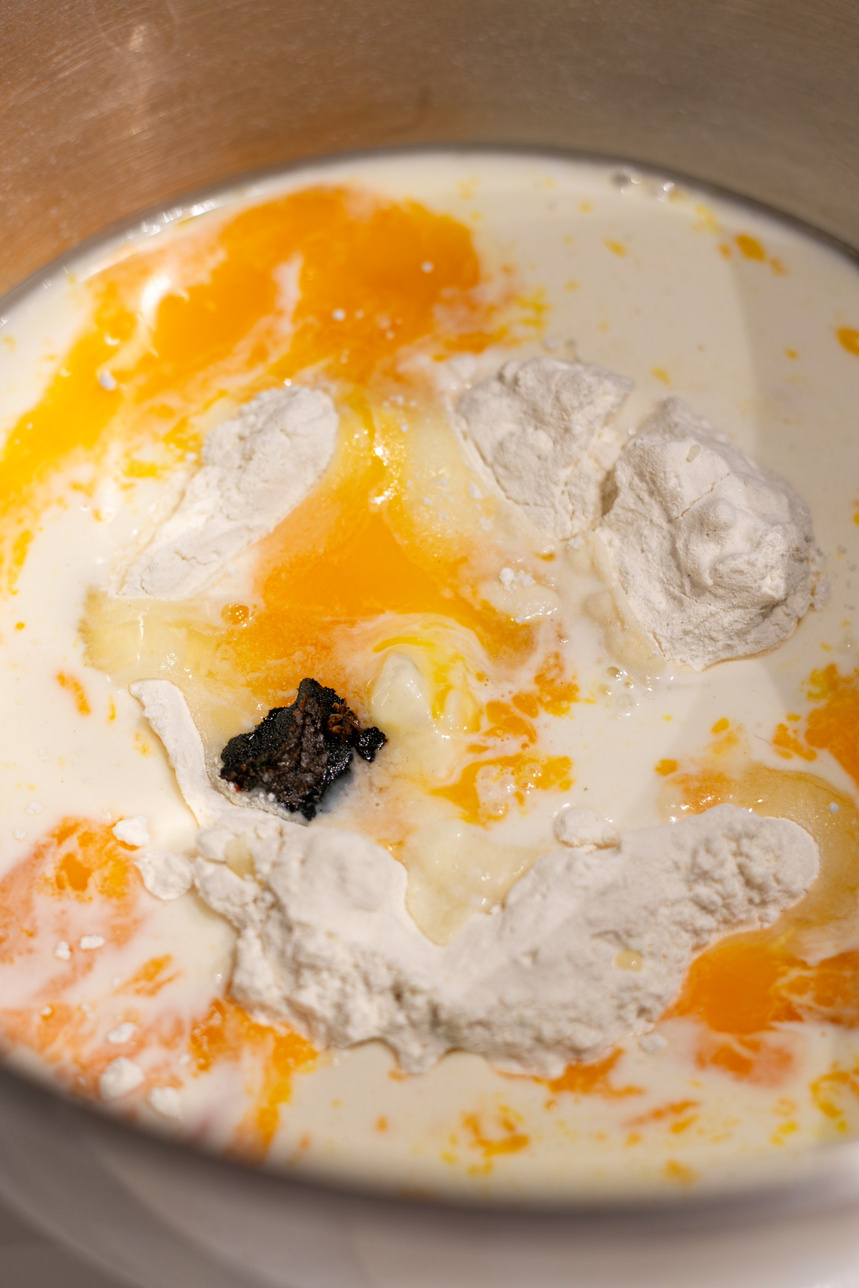
Add the eggs, then the milk, and scrape the seeds from the vanilla bean straight into the bowl. Knead with the dough hook for 5 to 10 minutes on medium speed, until the dough pulls away from the sides of the bowl.
Add the cold butter in small pieces while continuing to knead.
Knead for about 10 more minutes, until the dough pulls away from the sides again. To check that the dough is ready, do the windowpane test: stretch the dough between your fingers. It should stretch thin and become almost transparent without tearing.
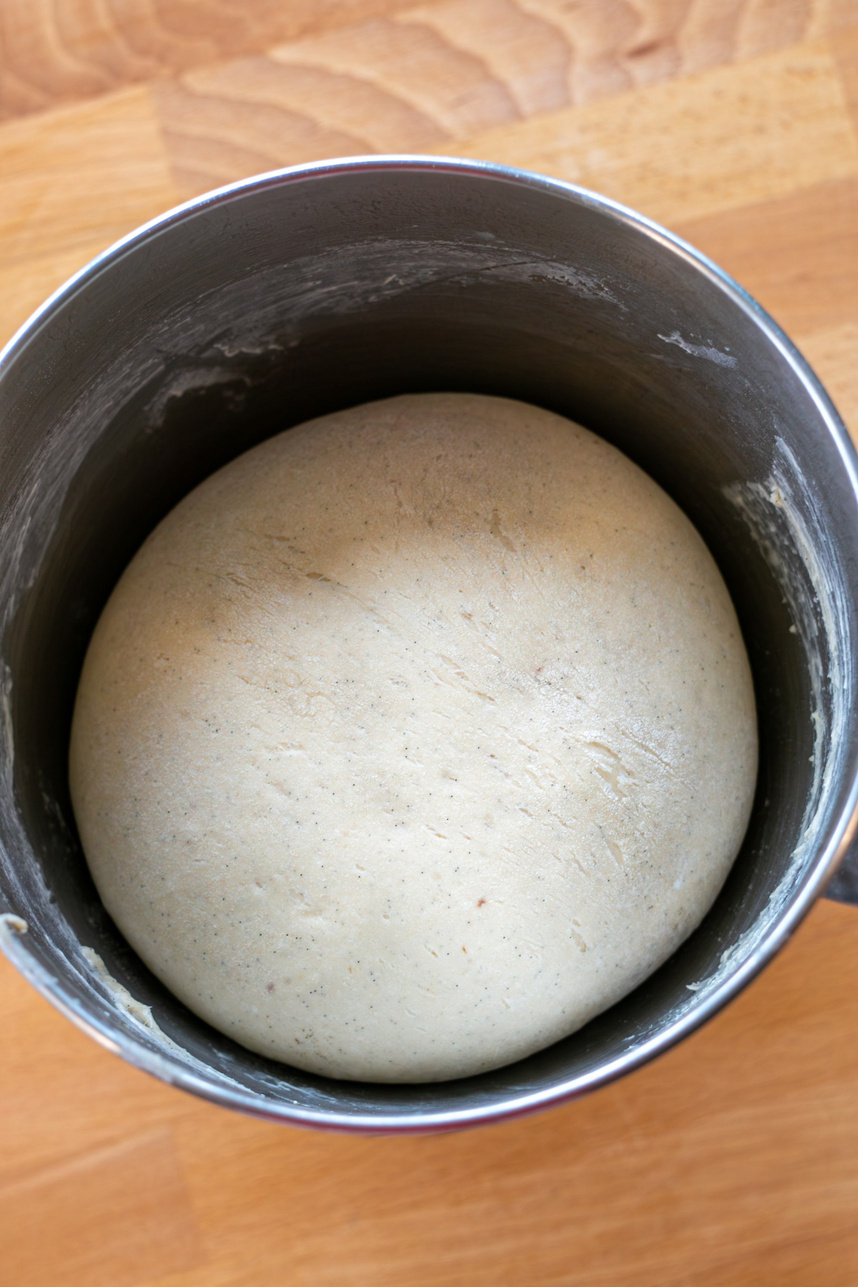
Spread the dough out slightly and bring the edges in towards the centre to create a smooth, taut surface. Turn the dough over and place it back in the mixer bowl, seam side down, so the top is smooth.
Cover the mixer bowl with cling film and let it rise in the fridge overnight.
Shaping
- 200 g (7.1 oz) Valrhona dark chocolate chips
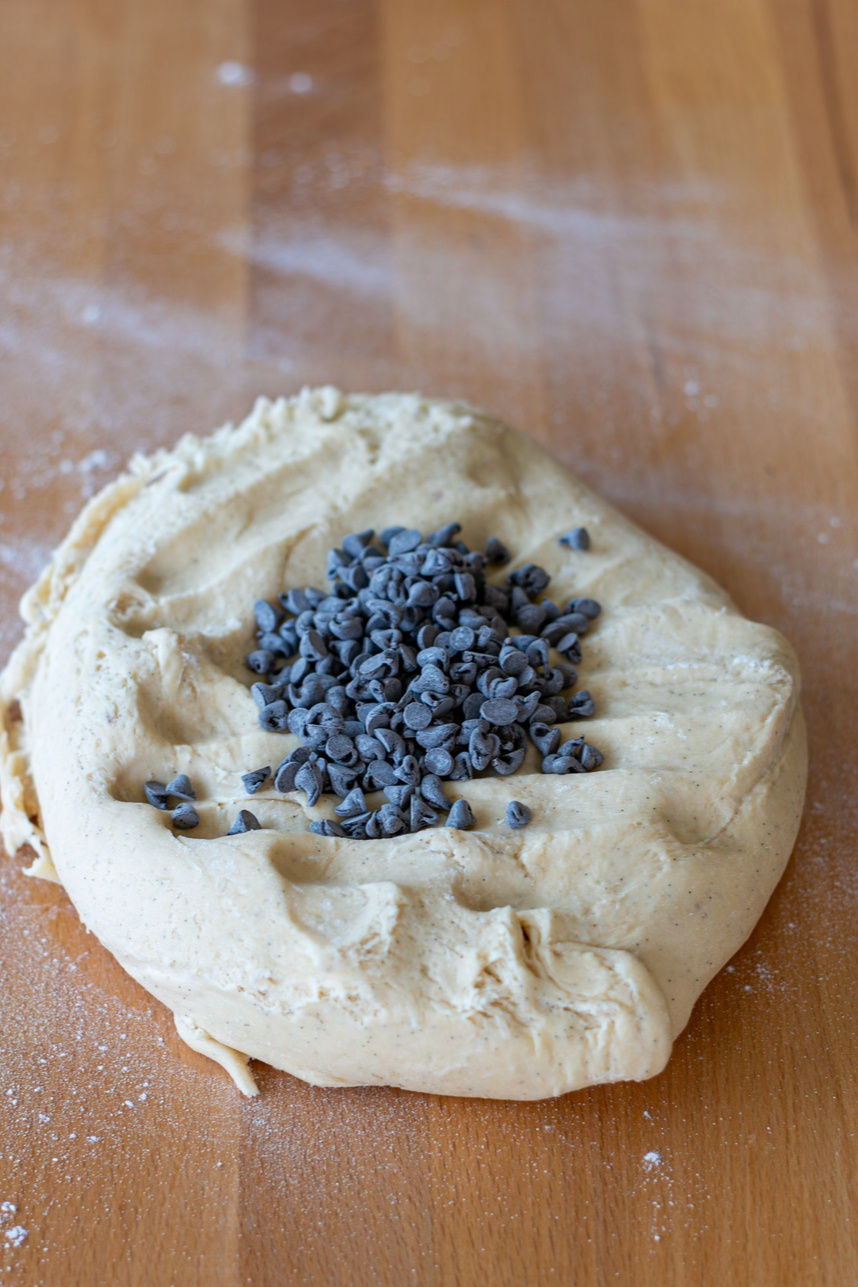
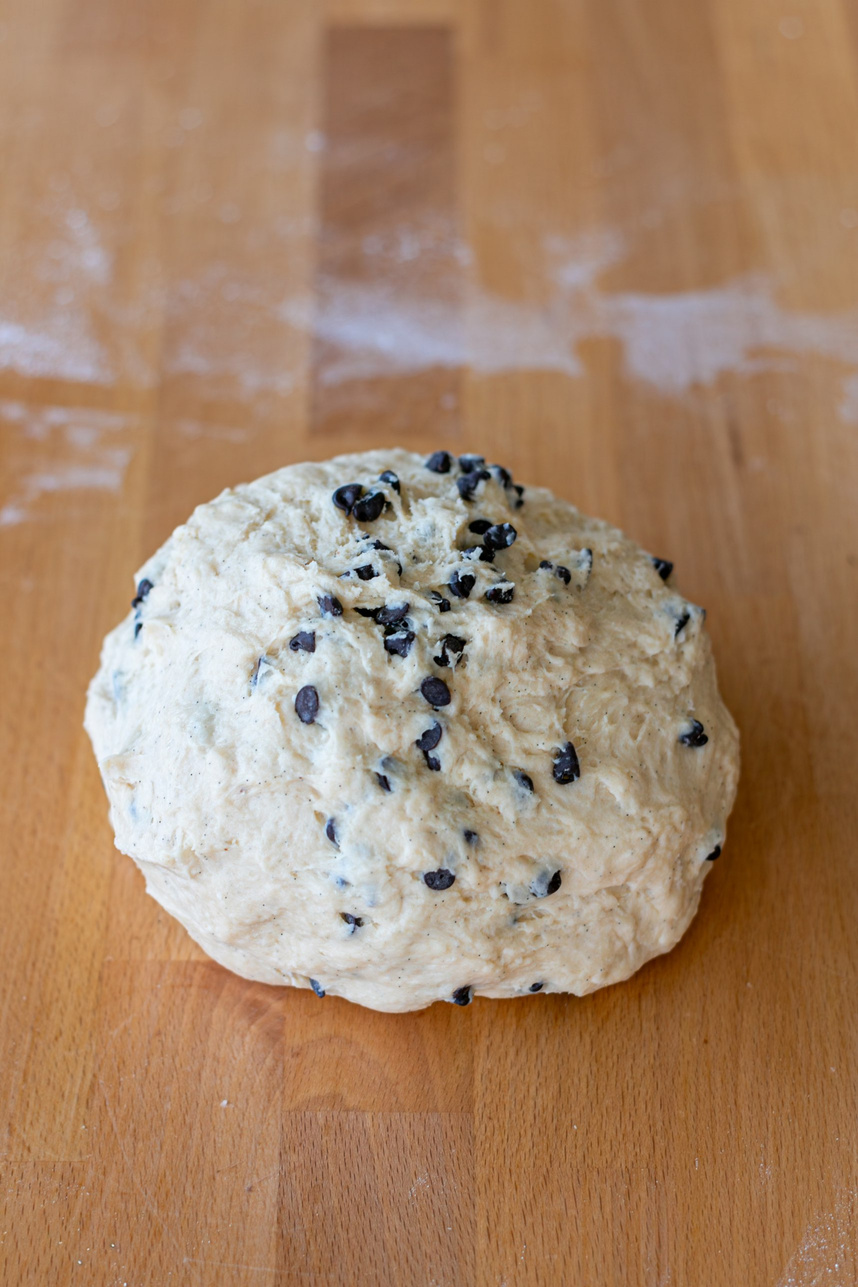
Knock back the dough with your fist, then flatten it slightly. Add the chocolate chips on top and fold the dough over itself.
Finish mixing in the stand mixer on low speed, to distribute the chips evenly without crushing them (I didn’t do this, but it’s easier).
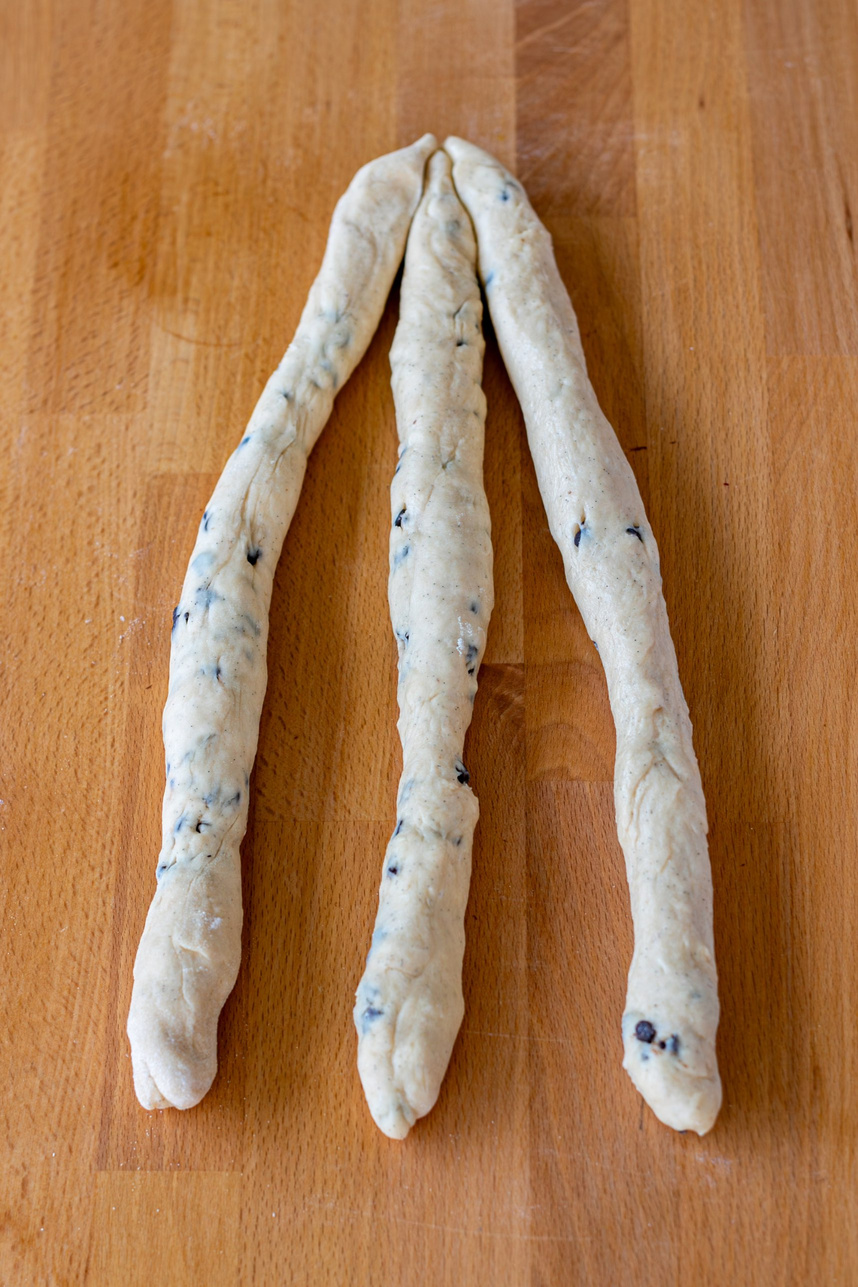
Divide the dough into 3 equal pieces, then shape each into a 40 cm (15.7 in) strand by rolling it under the palms of your hands.
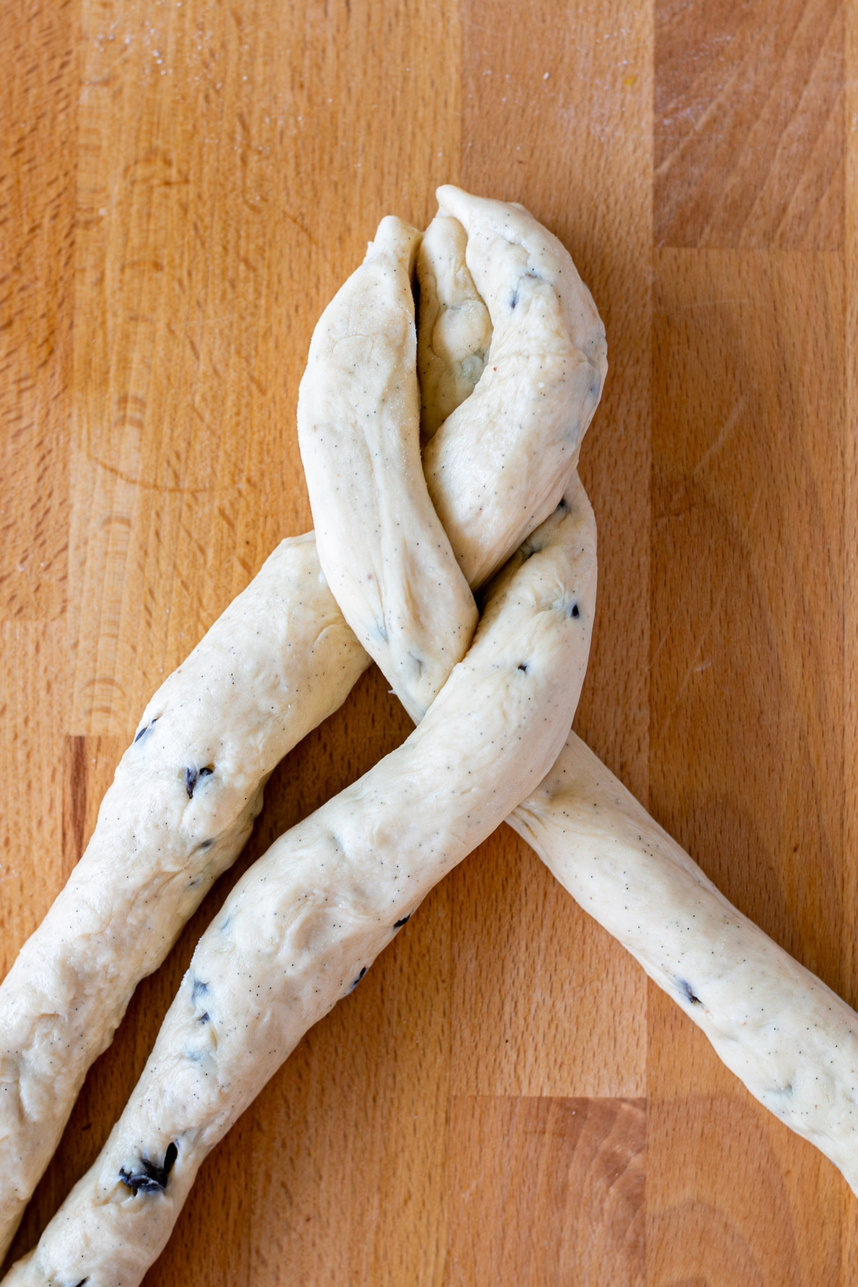
Pinch the 3 strands together at one end, without squeezing too hard.
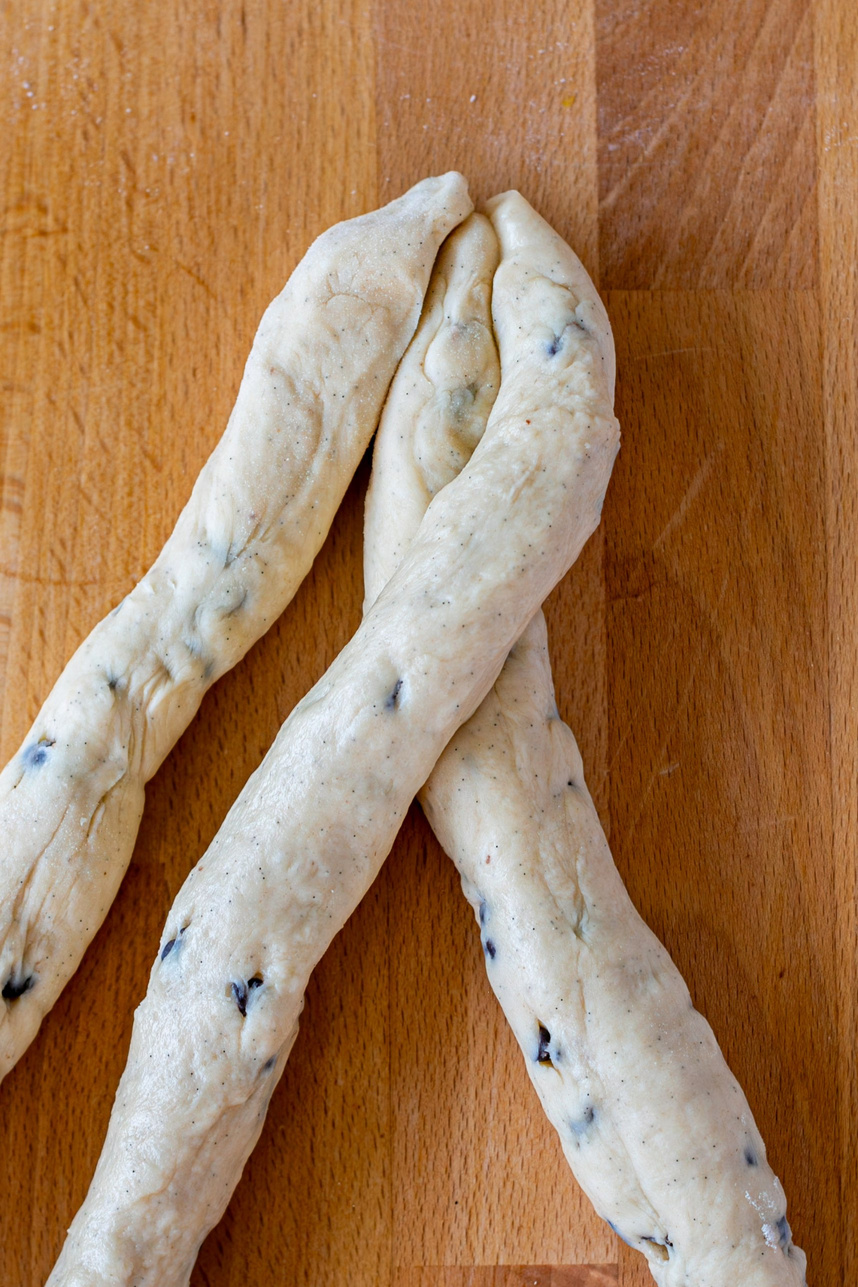
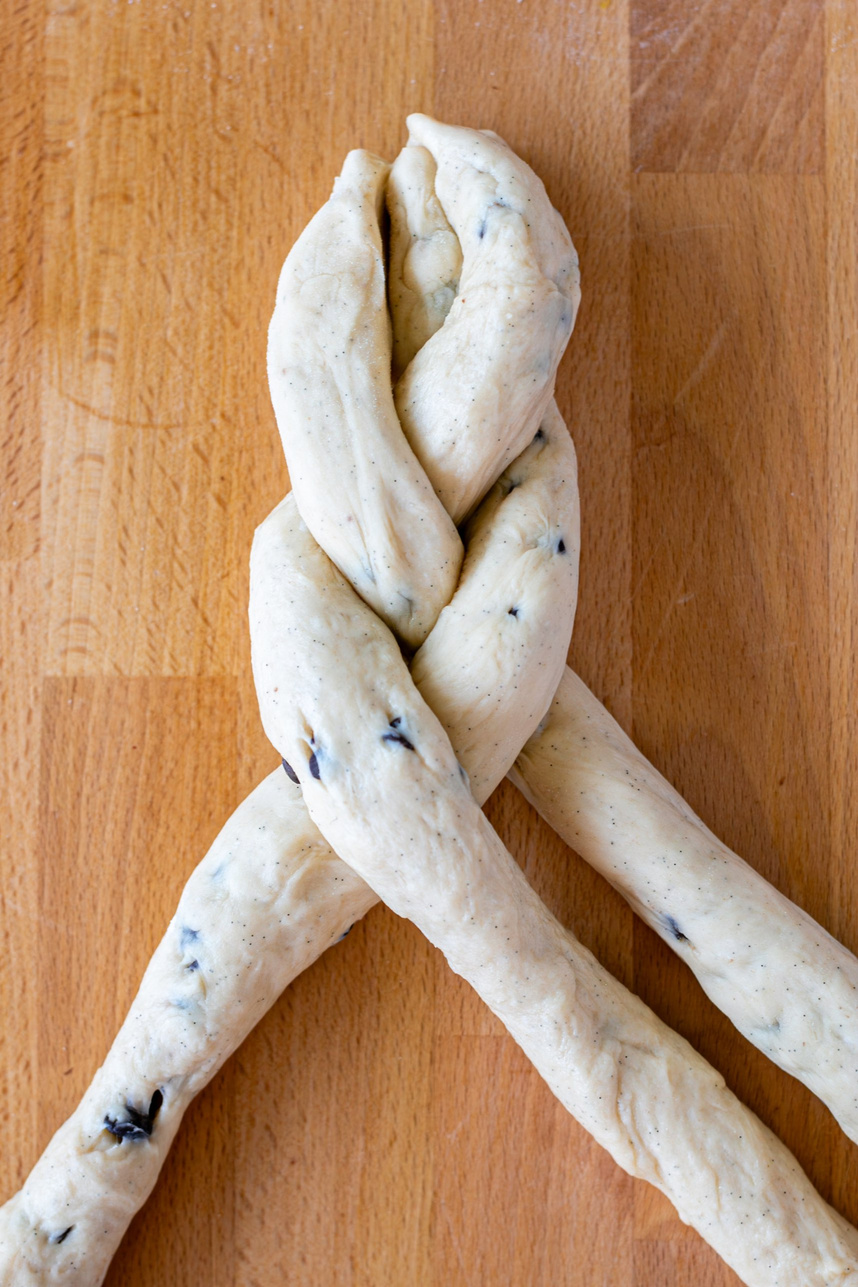
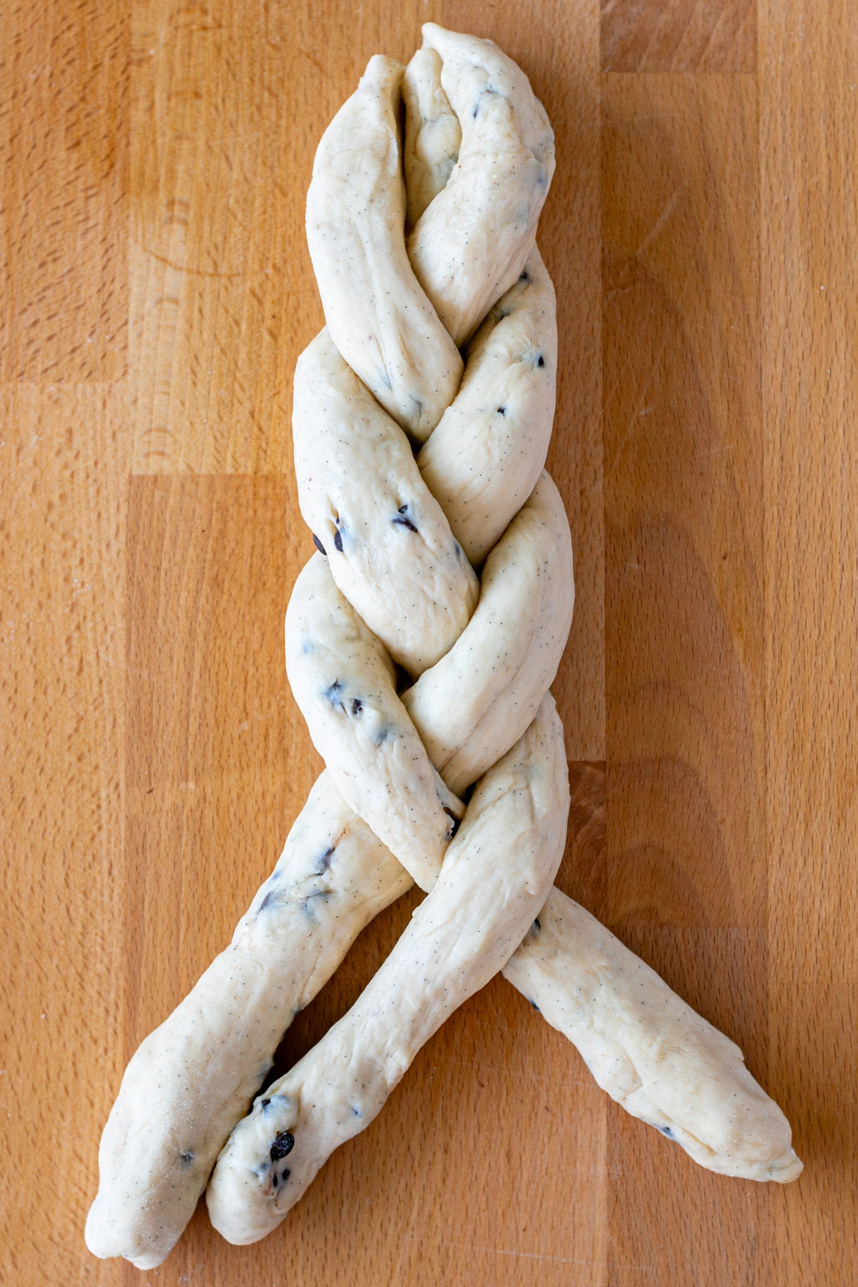
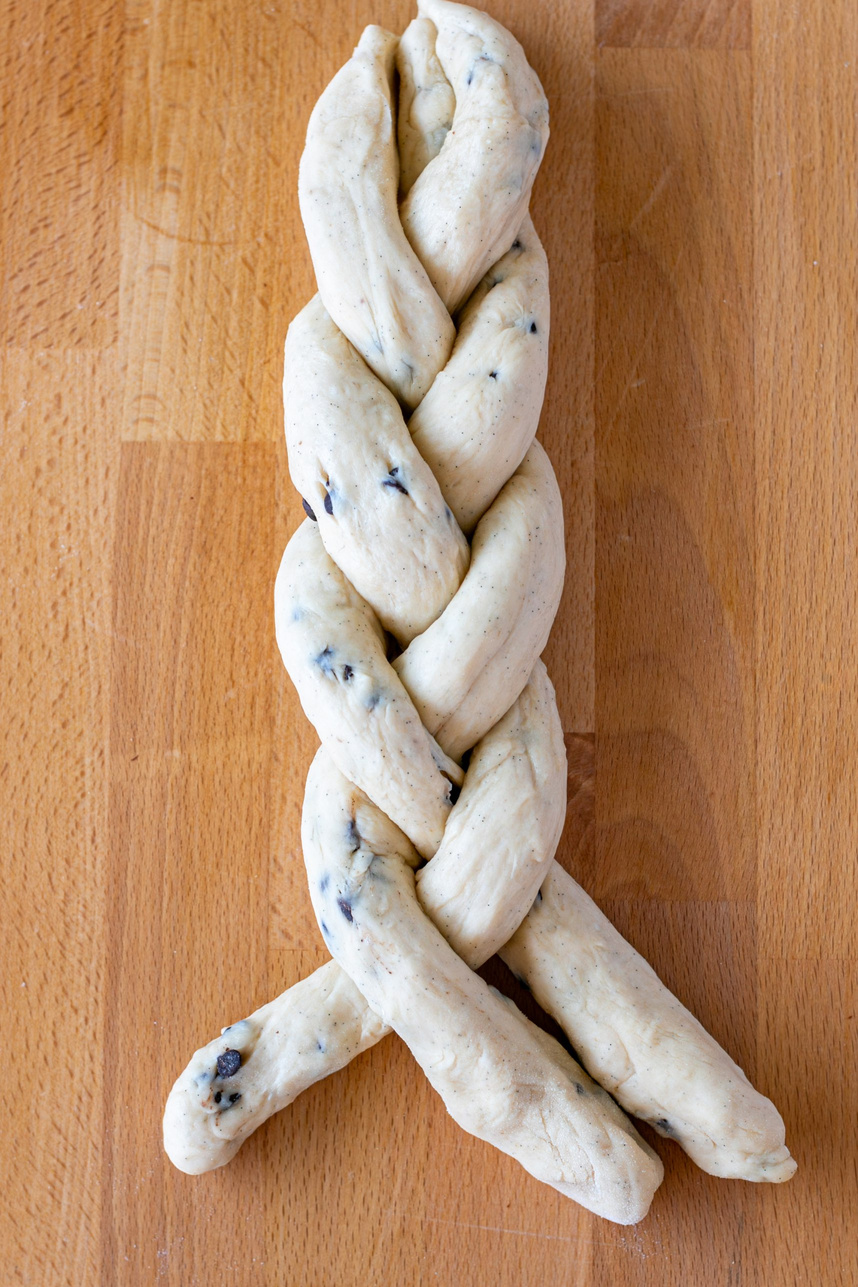
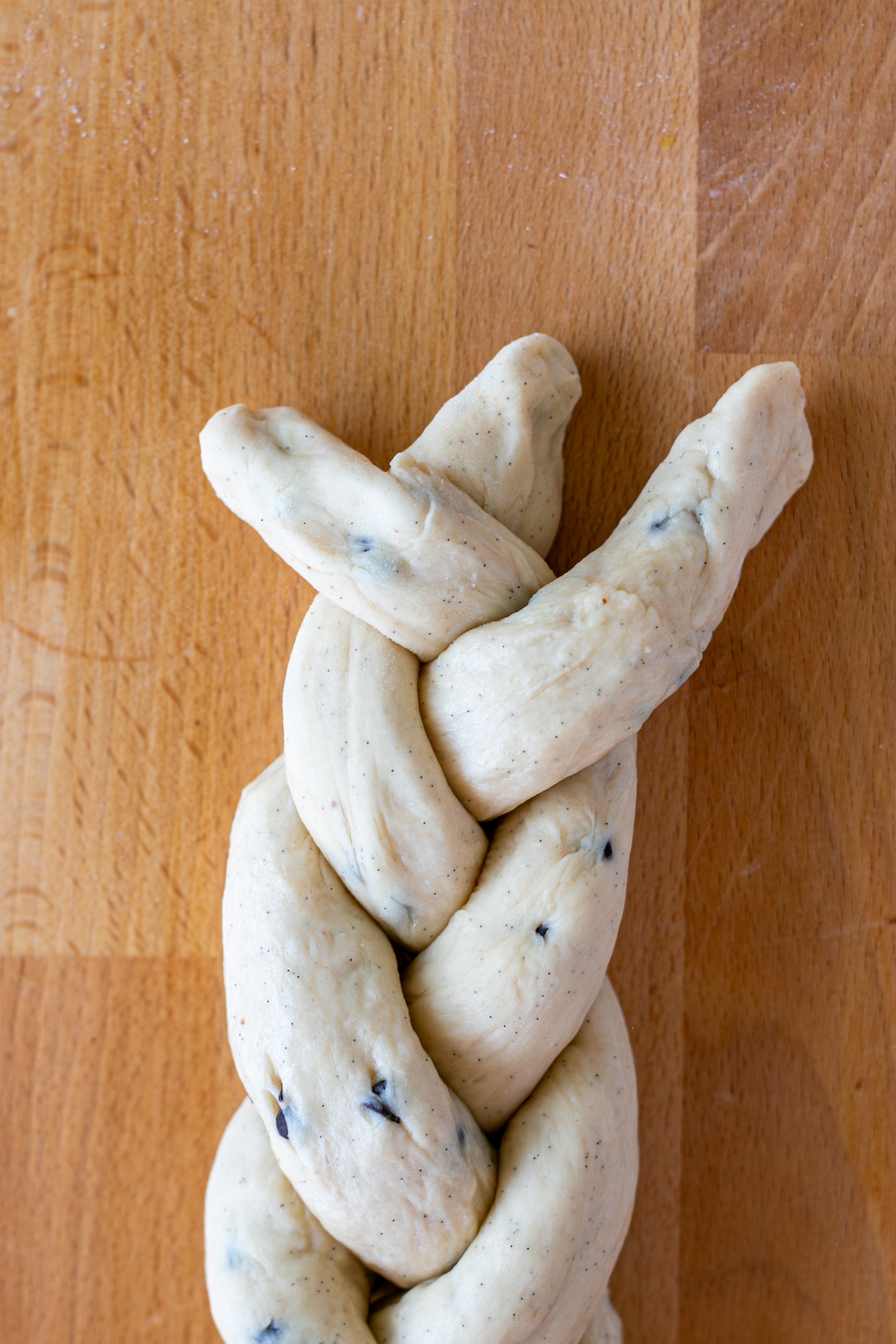
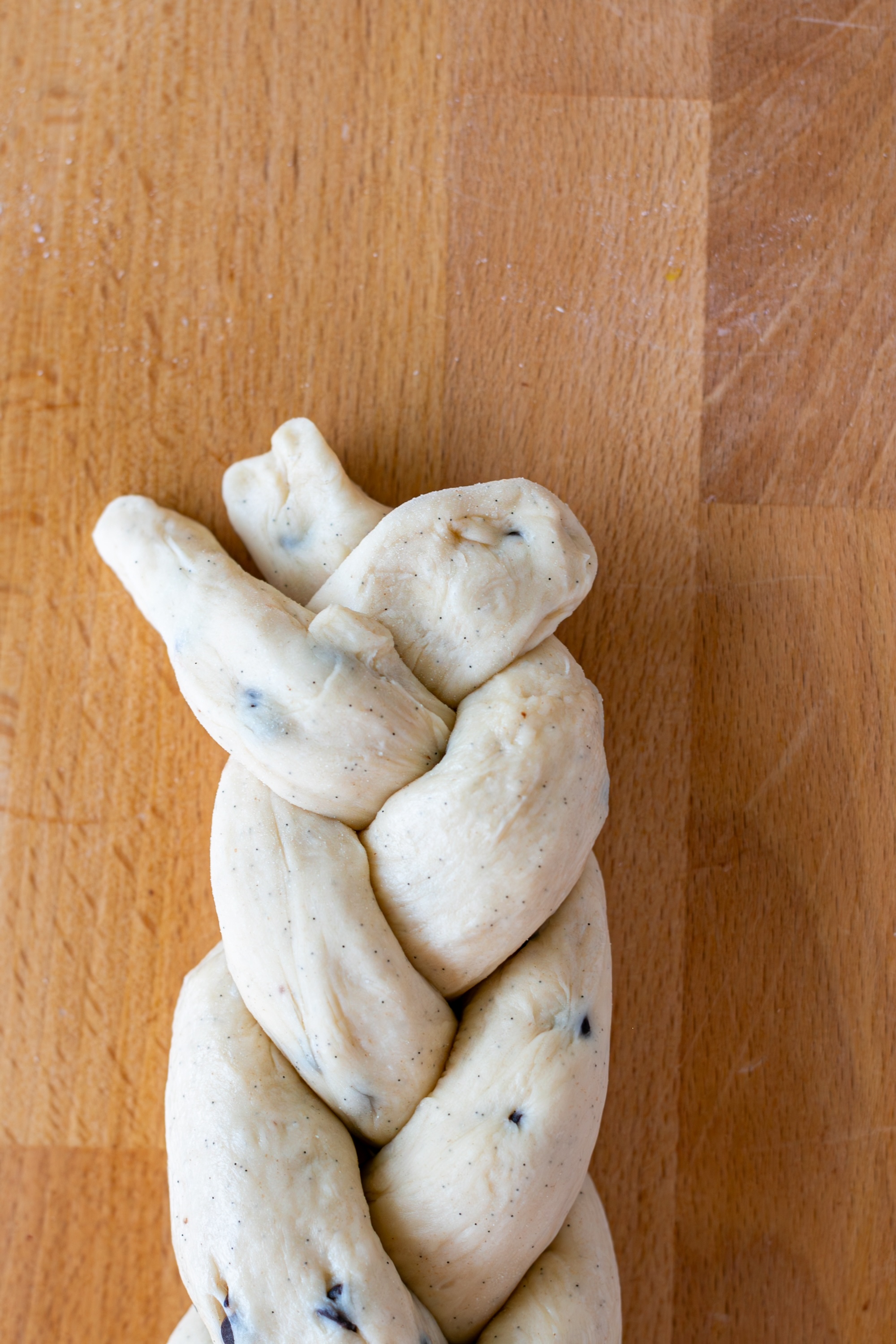
Cross the right-hand strand over the middle one, so it becomes the new centre strand.
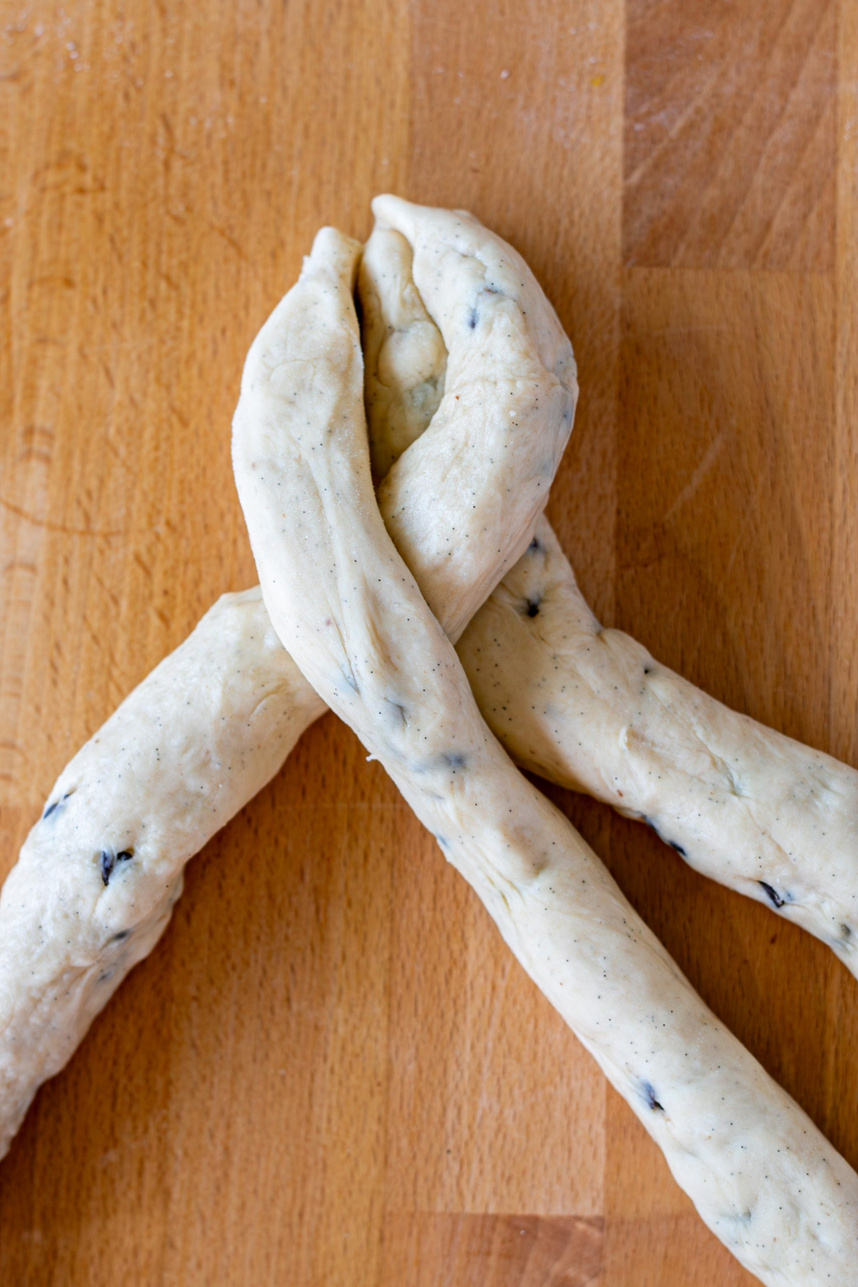
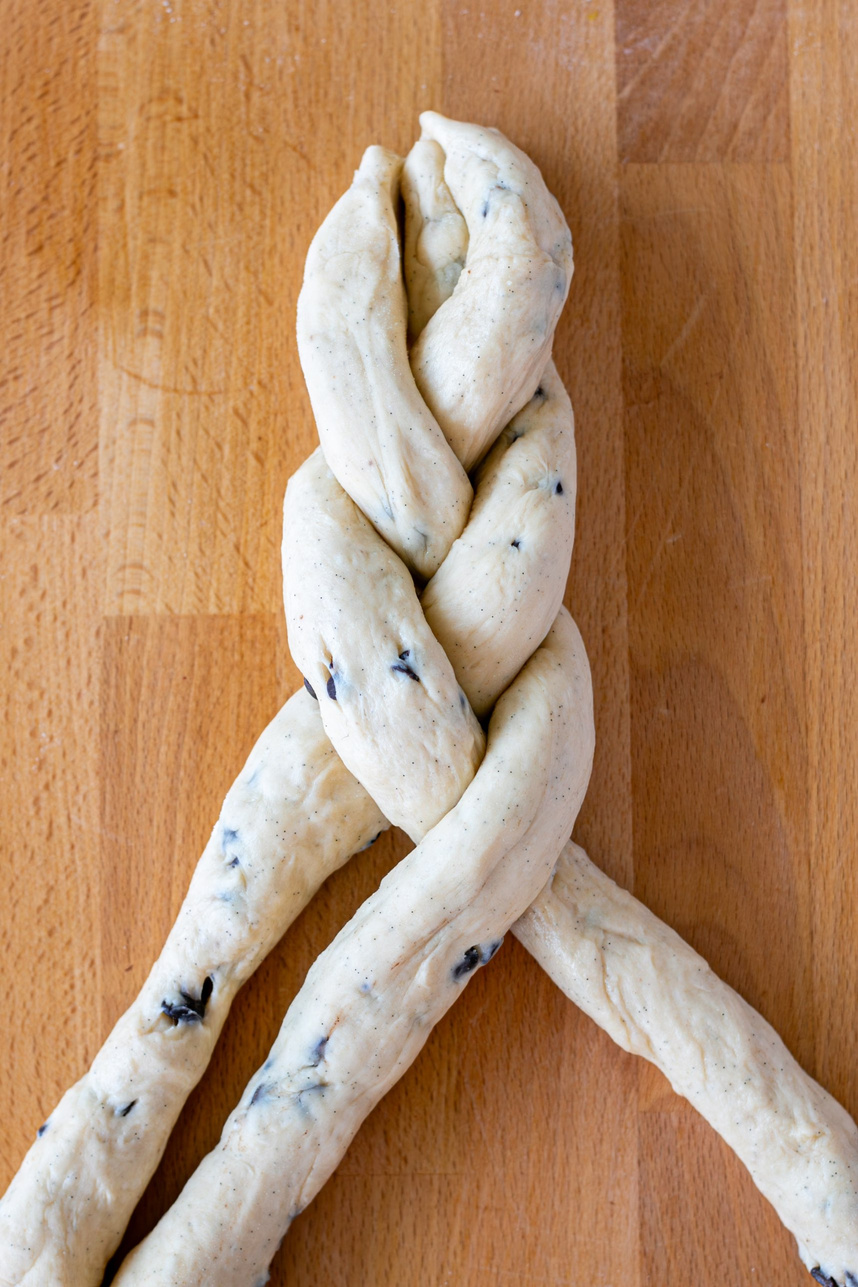
Cross the left-hand strand over the middle one, keeping even tension for a neat braid.
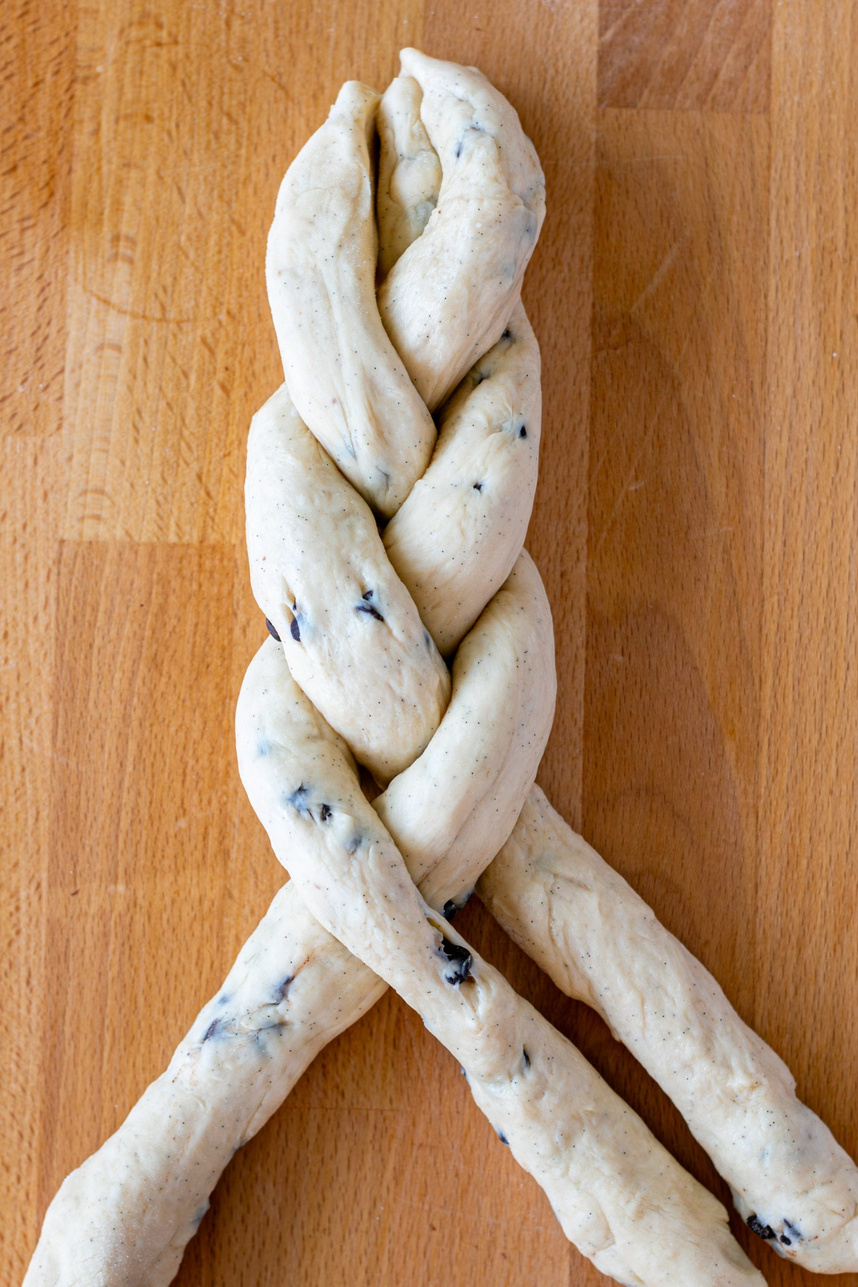
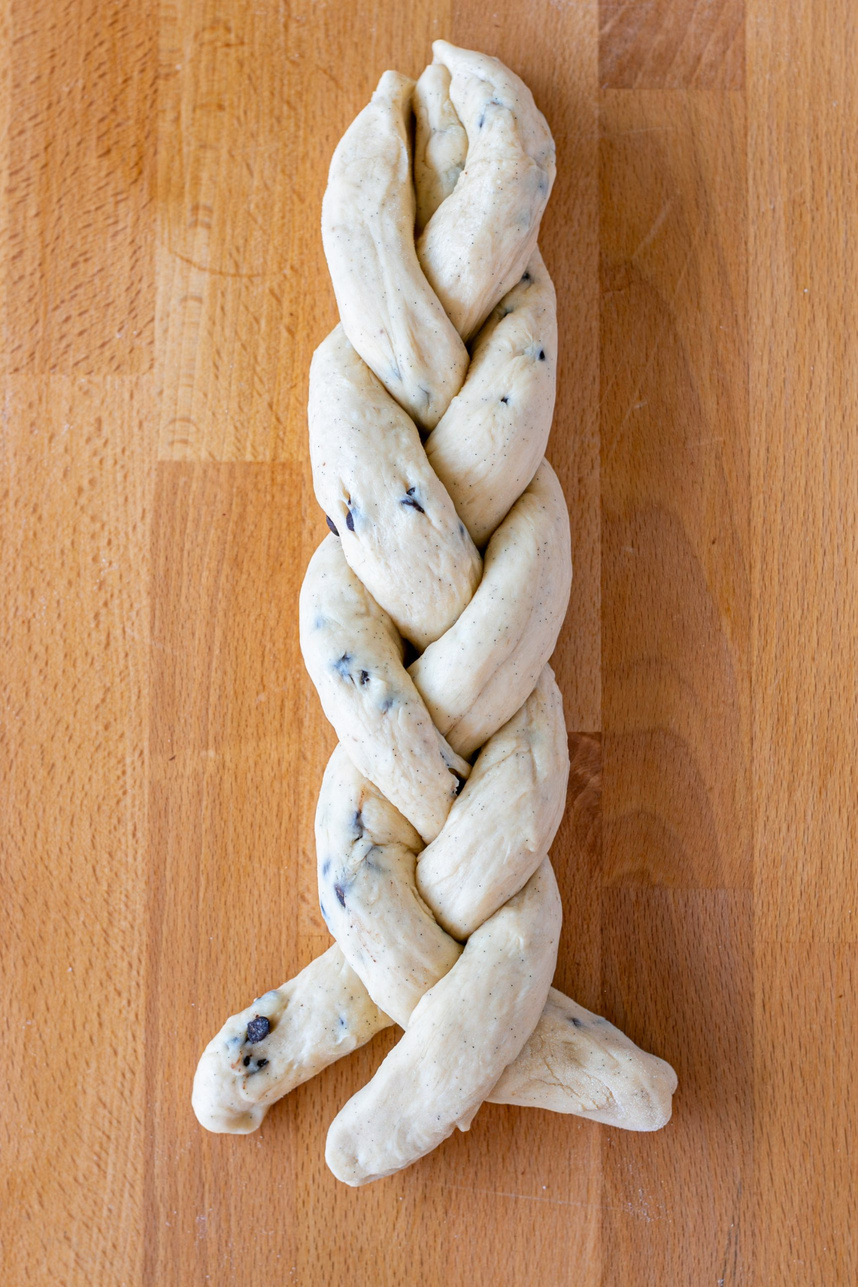
Repeat the right-left alternation all the way to the end of the strands.
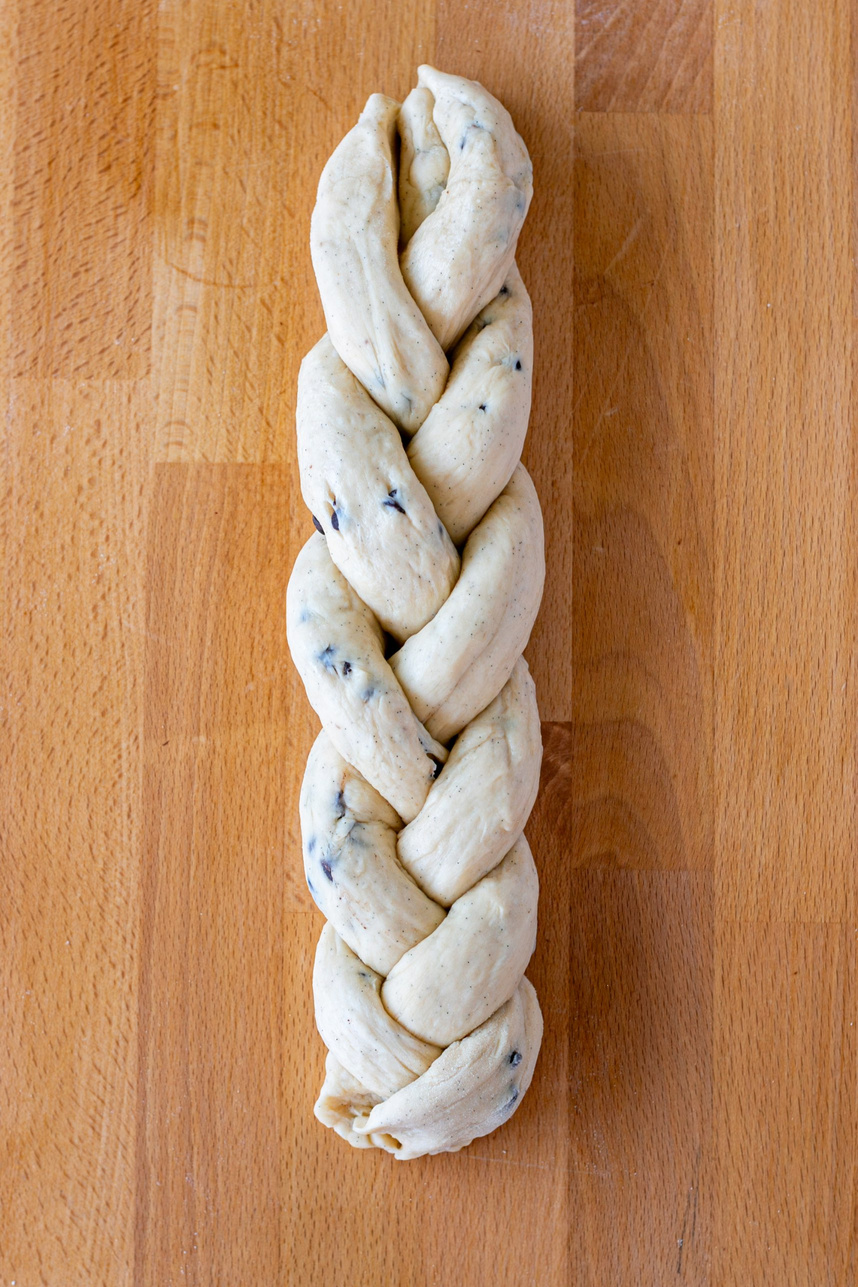
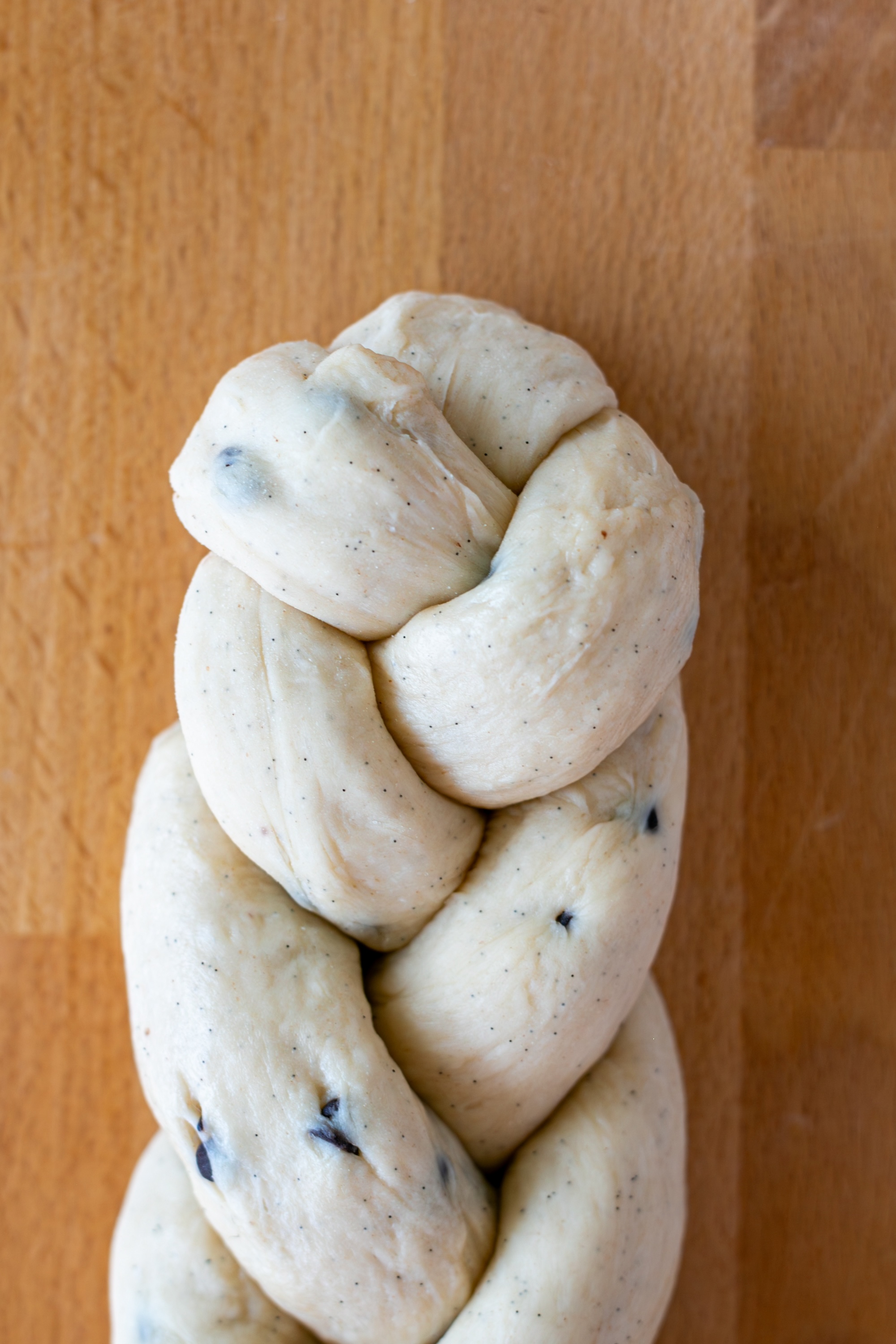
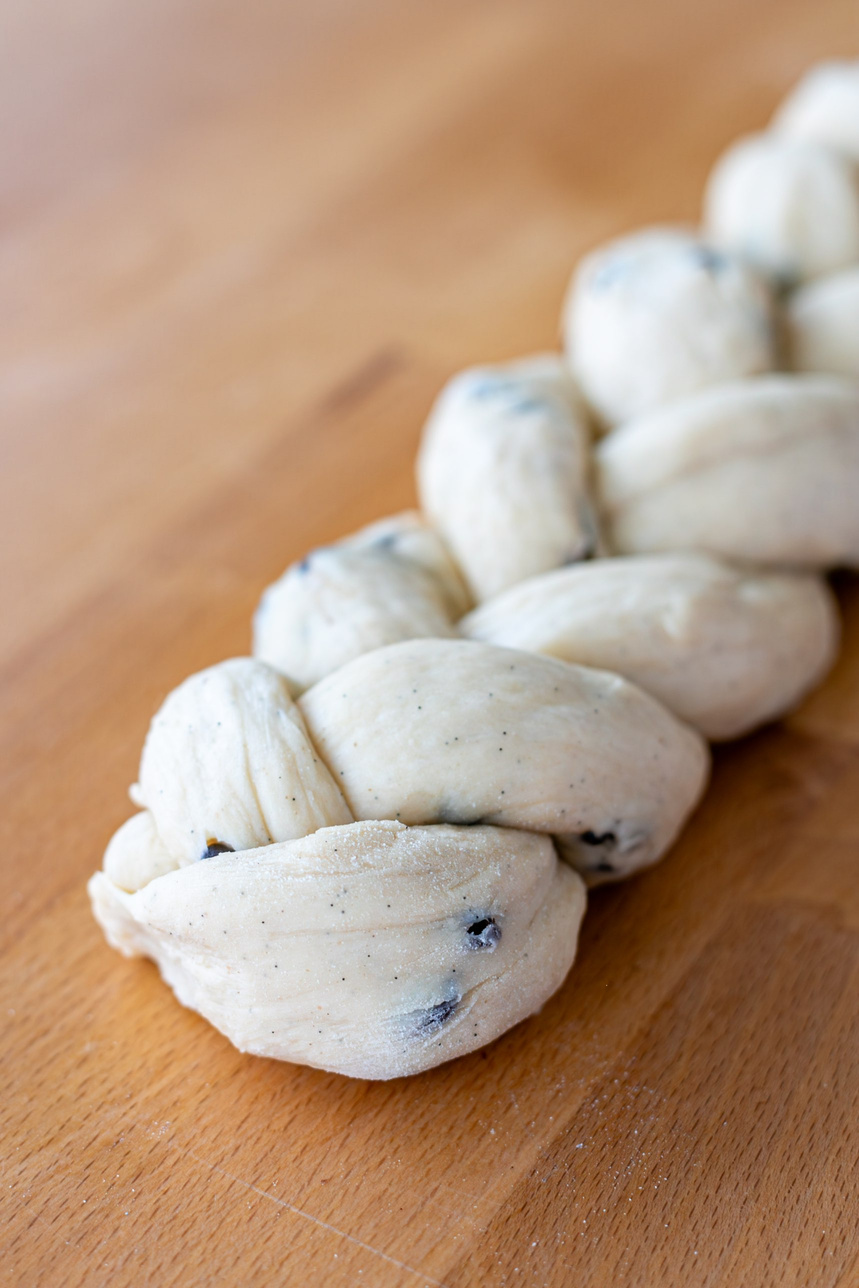
Go back to the loose start of the braid and redo it, this time tucking the strands underneath, to tighten and even out the whole braid.
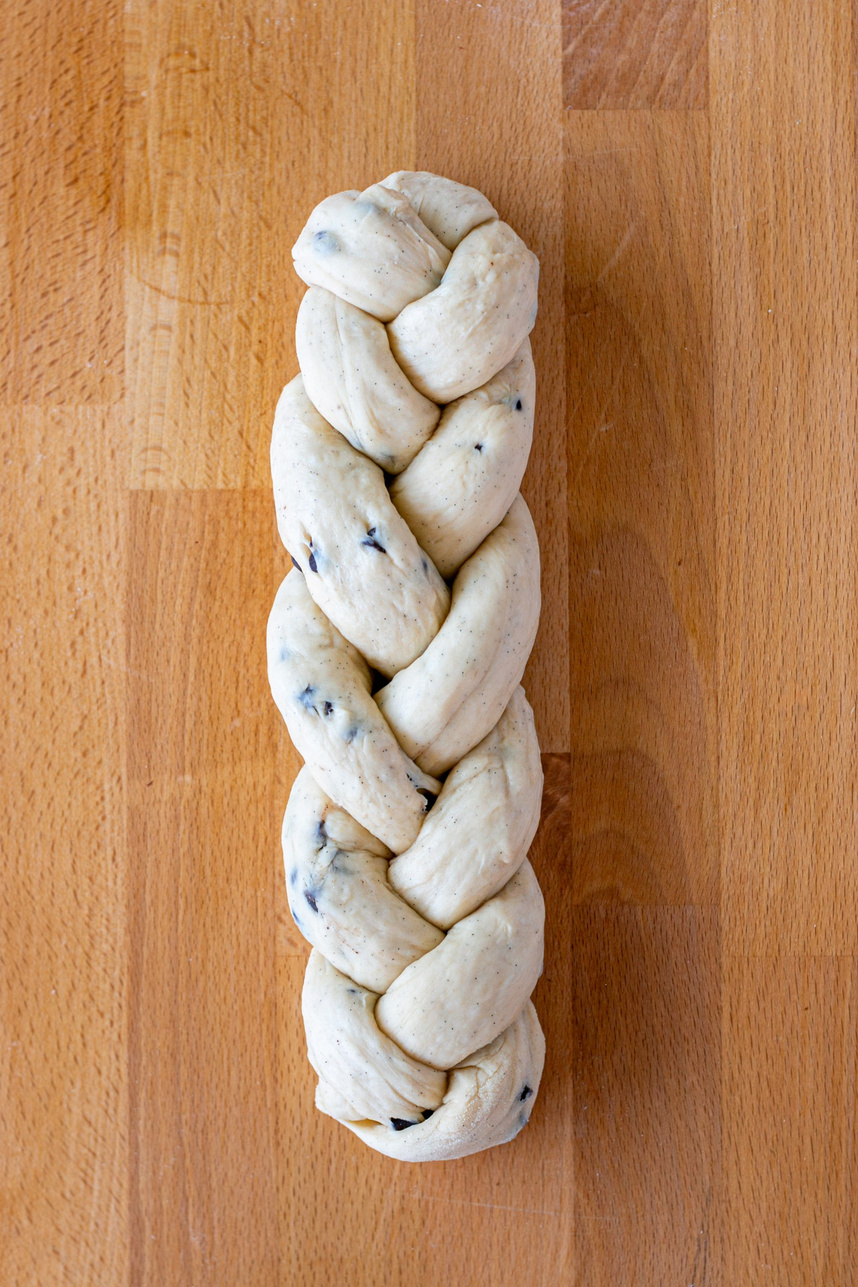
Pinch the dough together at the end of the braid and tuck both ends slightly under the brioche for a neat finish (the braid shouldn’t be too tight, as the brioche will still puff up while proofing).
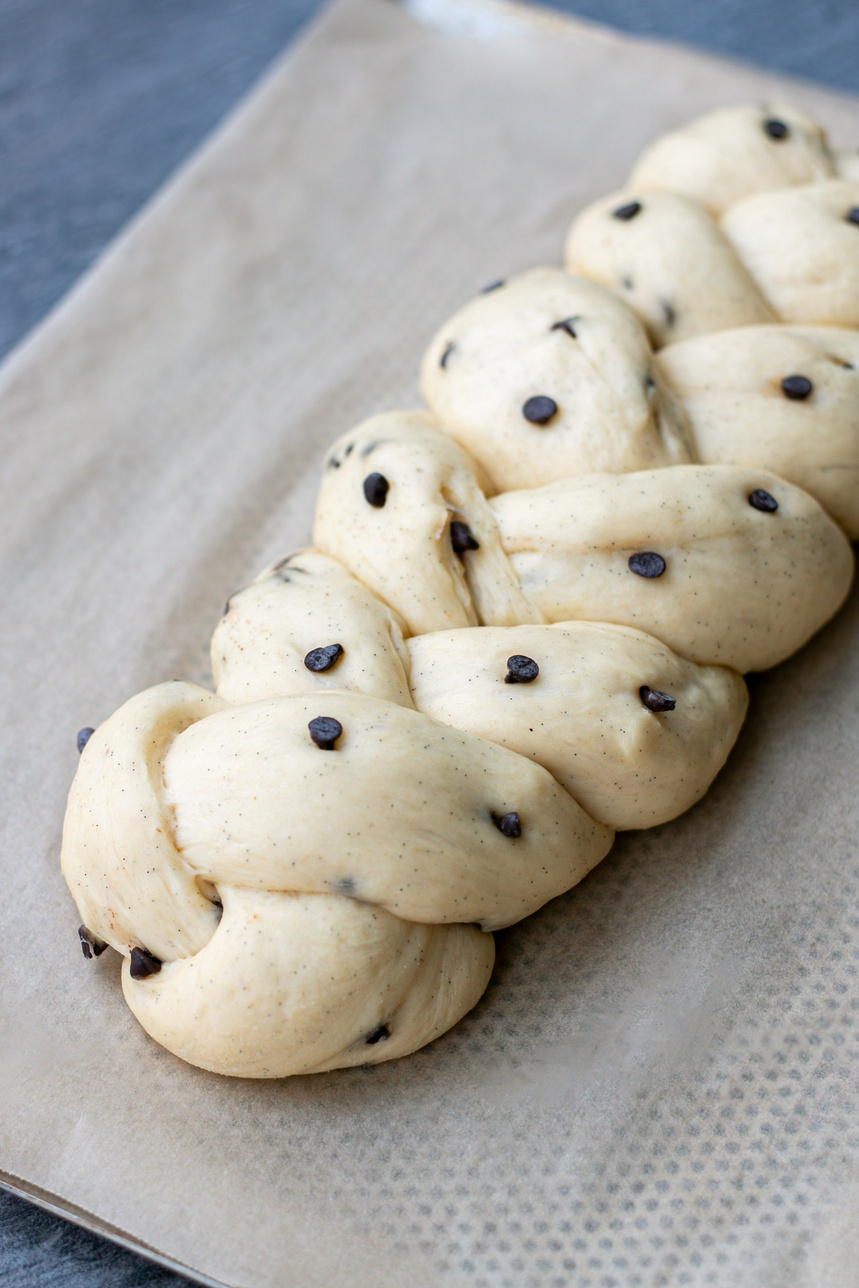
Place the brioche in the switched-off oven, with a glass of boiling water alongside it, and check that the temperature inside stays between 26 and 28°C (79-82°F). Let it proof for 1 hour 30 minutes to 2 hours, until the brioche has doubled in size.
Baking
- 1 egg yolk
- 1 tablespoon liquid cream
- a few Valrhona dark chocolate chips
Preheat the oven to 180°C (350°F).
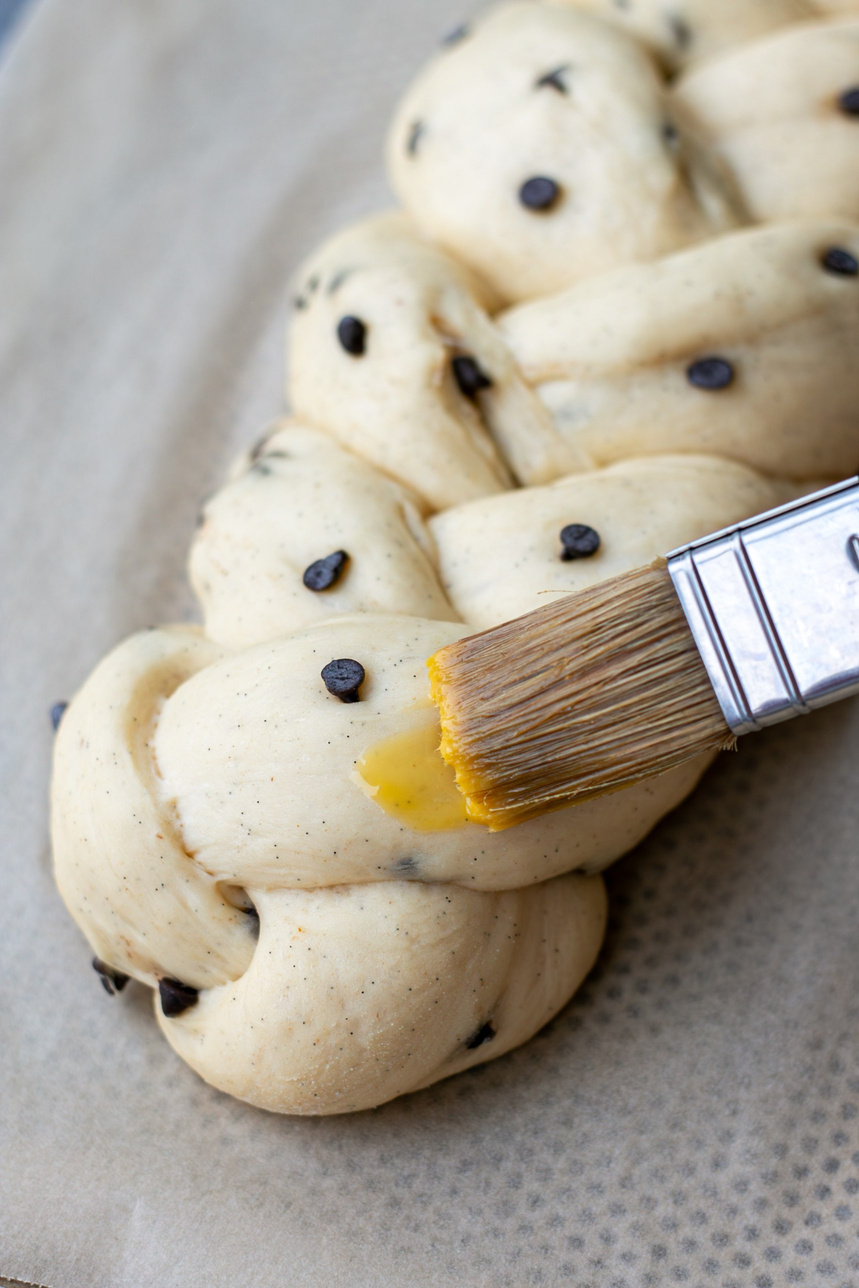
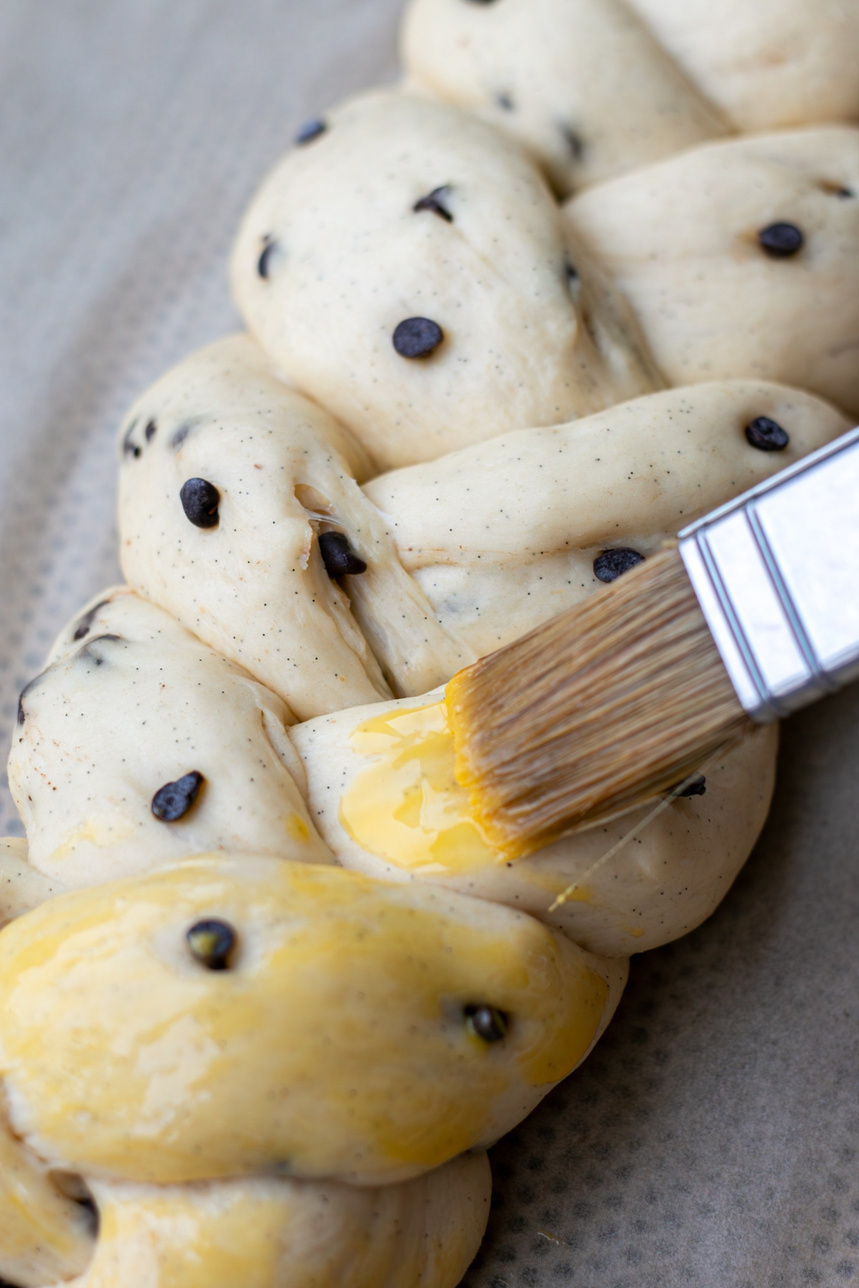
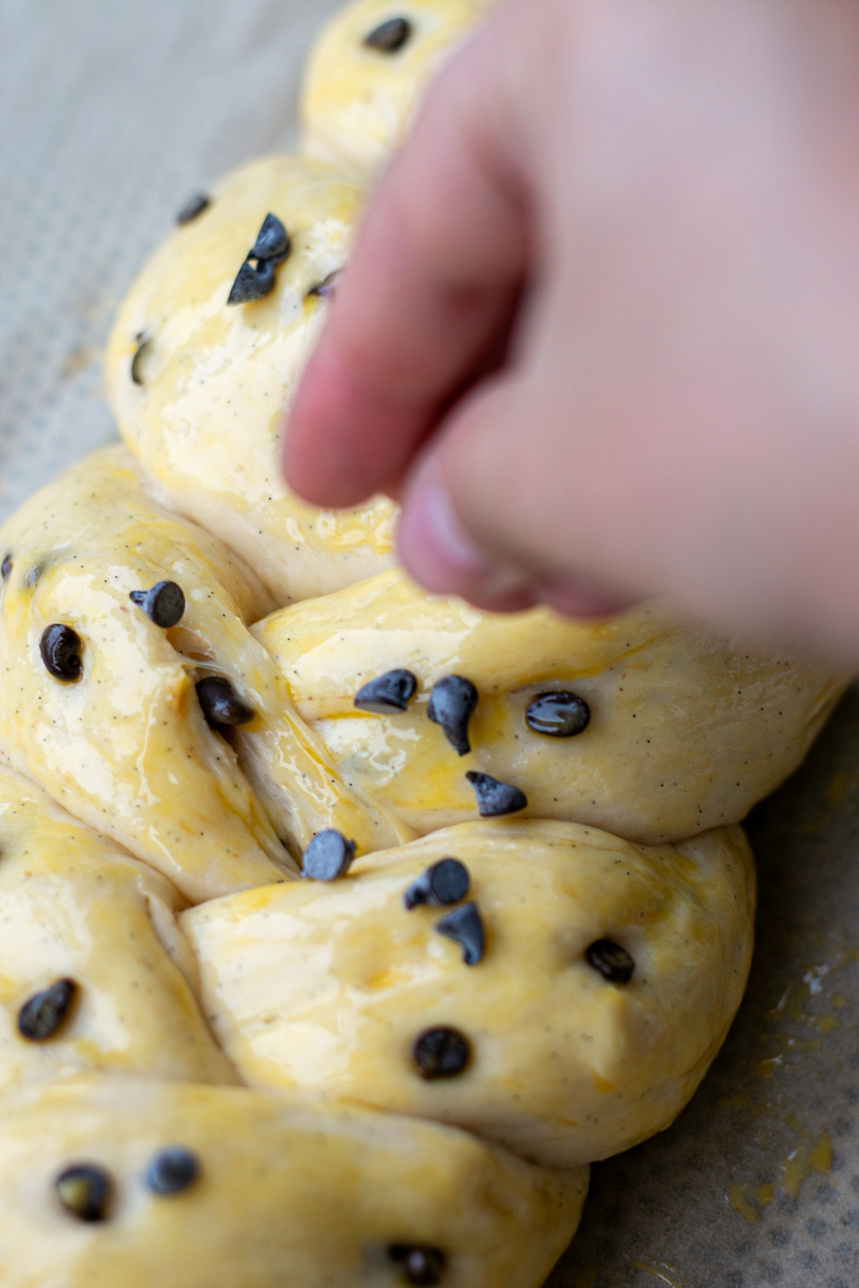
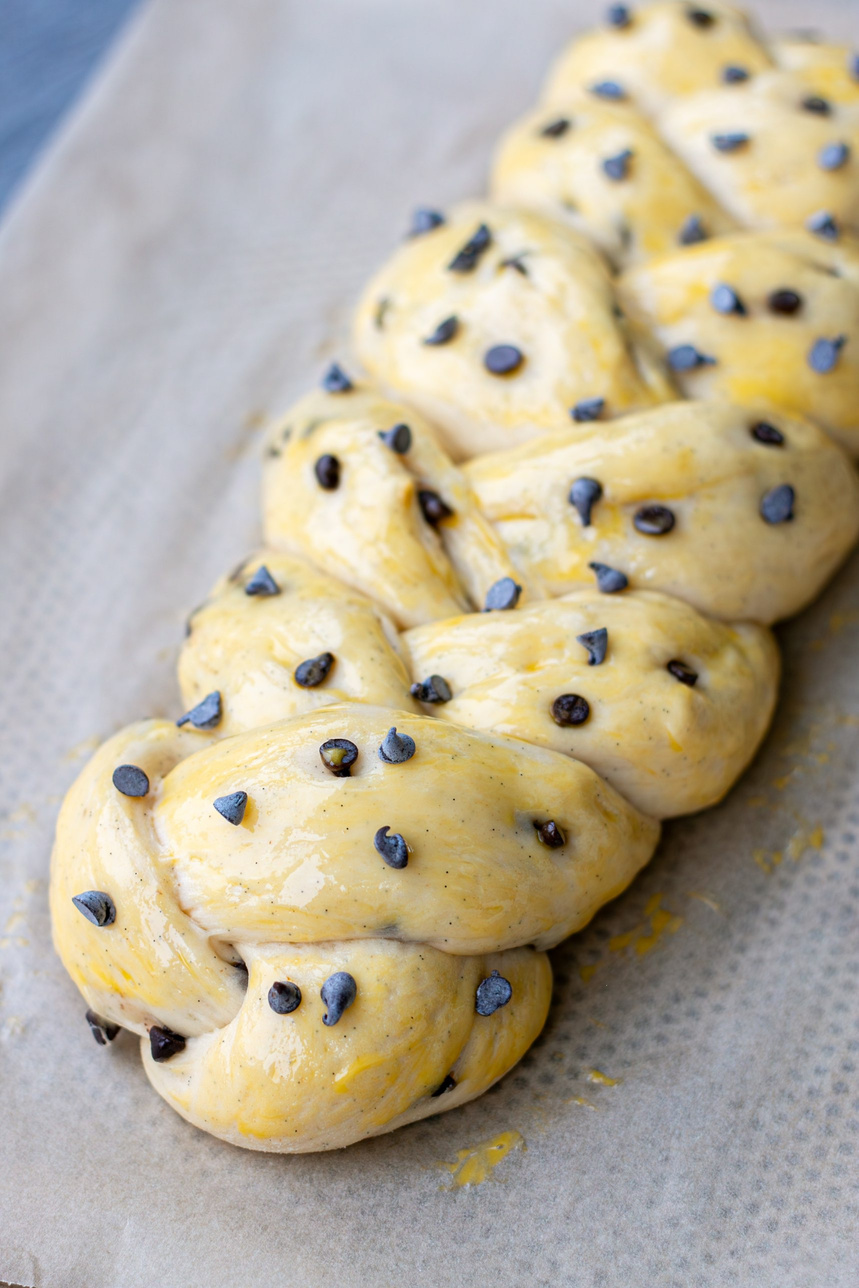
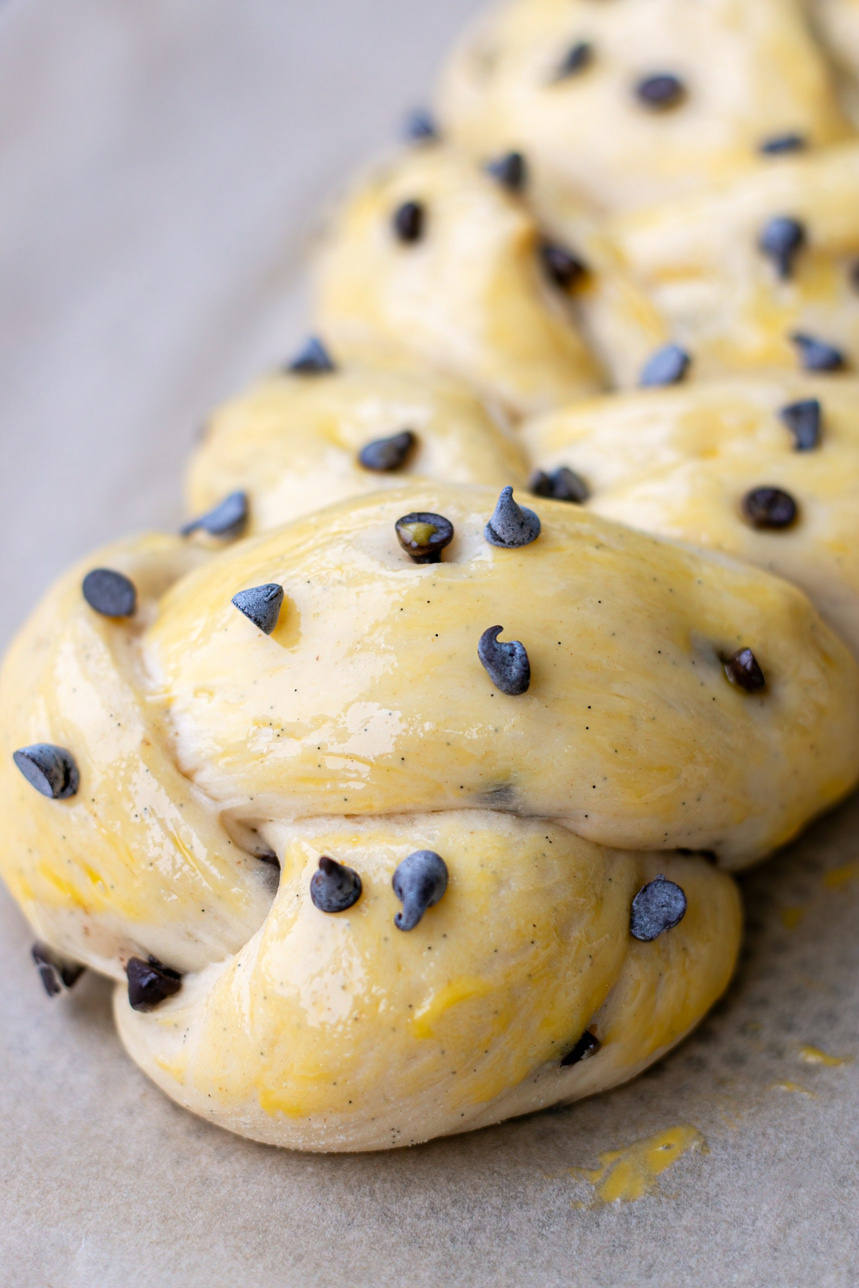
Mix the egg yolk with the liquid cream, then brush it over the brioche.
Scatter over a few more dark chocolate chips, then bake for about 25 minutes, covering with foil if the brioche browns too quickly.
Let it cool on a wire rack before serving.

Gallery