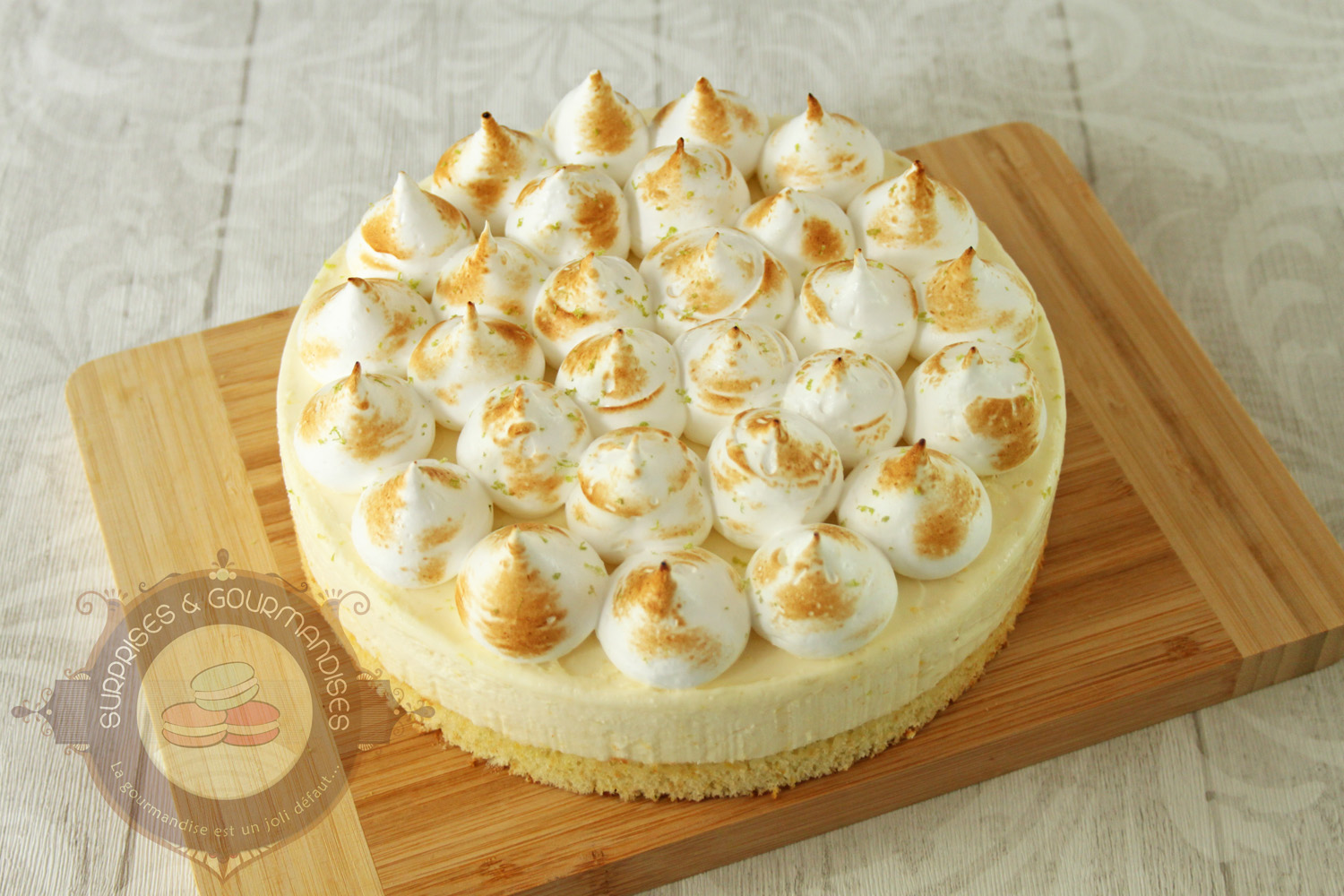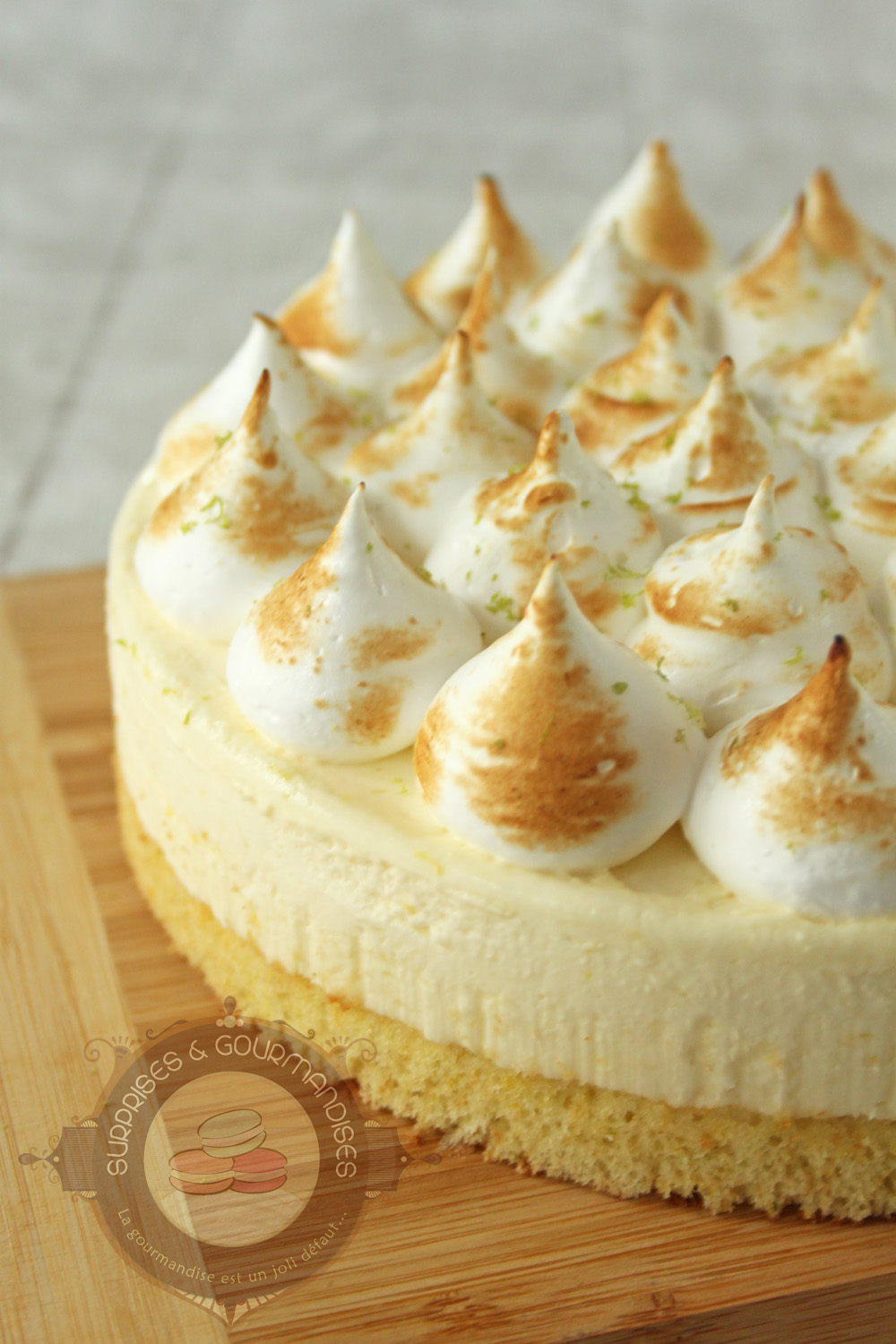



A month has gone by since the last recipe. Which shows how swamped I am! The start of the school year and the weeks that followed have been particularly gruelling (I have a mixed-age class for the first time, CE1/CE2, and it inevitably requires quite a lot of preparation work). But I haven’t forgotten you! In fact, tonight I’m offering you a brilliant recipe that I borrowed from Maman Pâtisse: a lemon cloud cake (for those interested, Maman Pâtisse has just published a book on “cloud cakes”). In this version, I used lemon AND lime, having a preference for the latter.
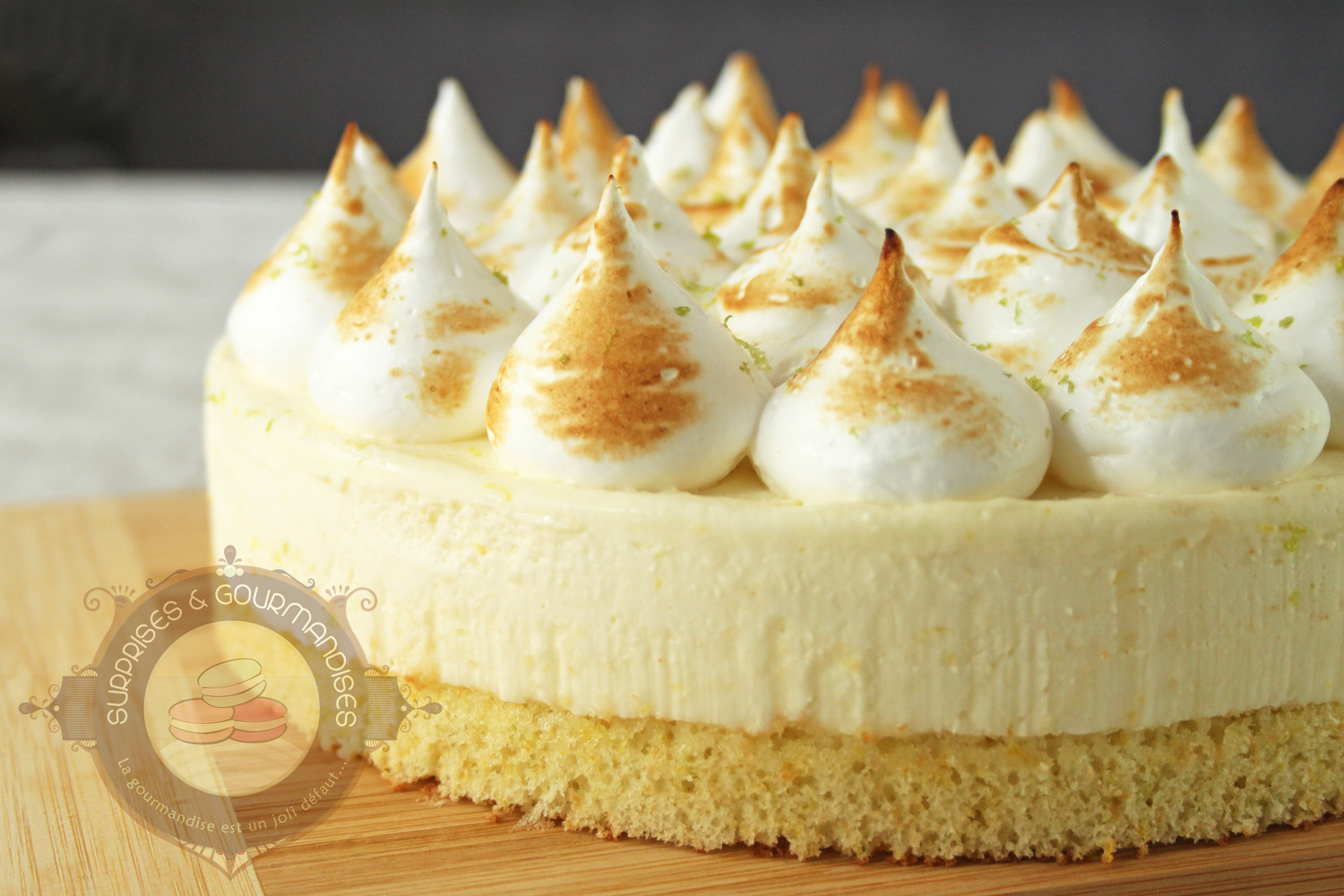
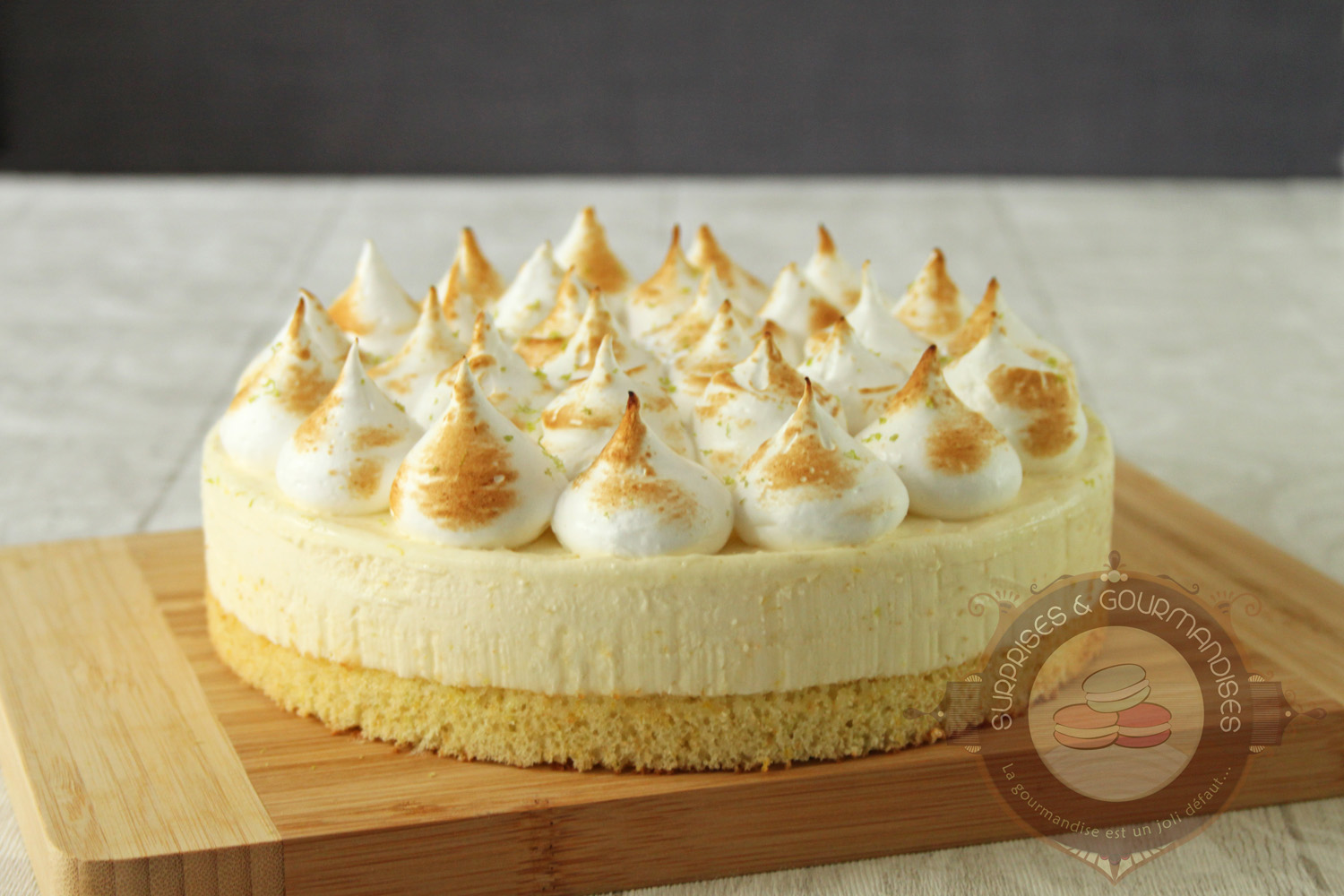
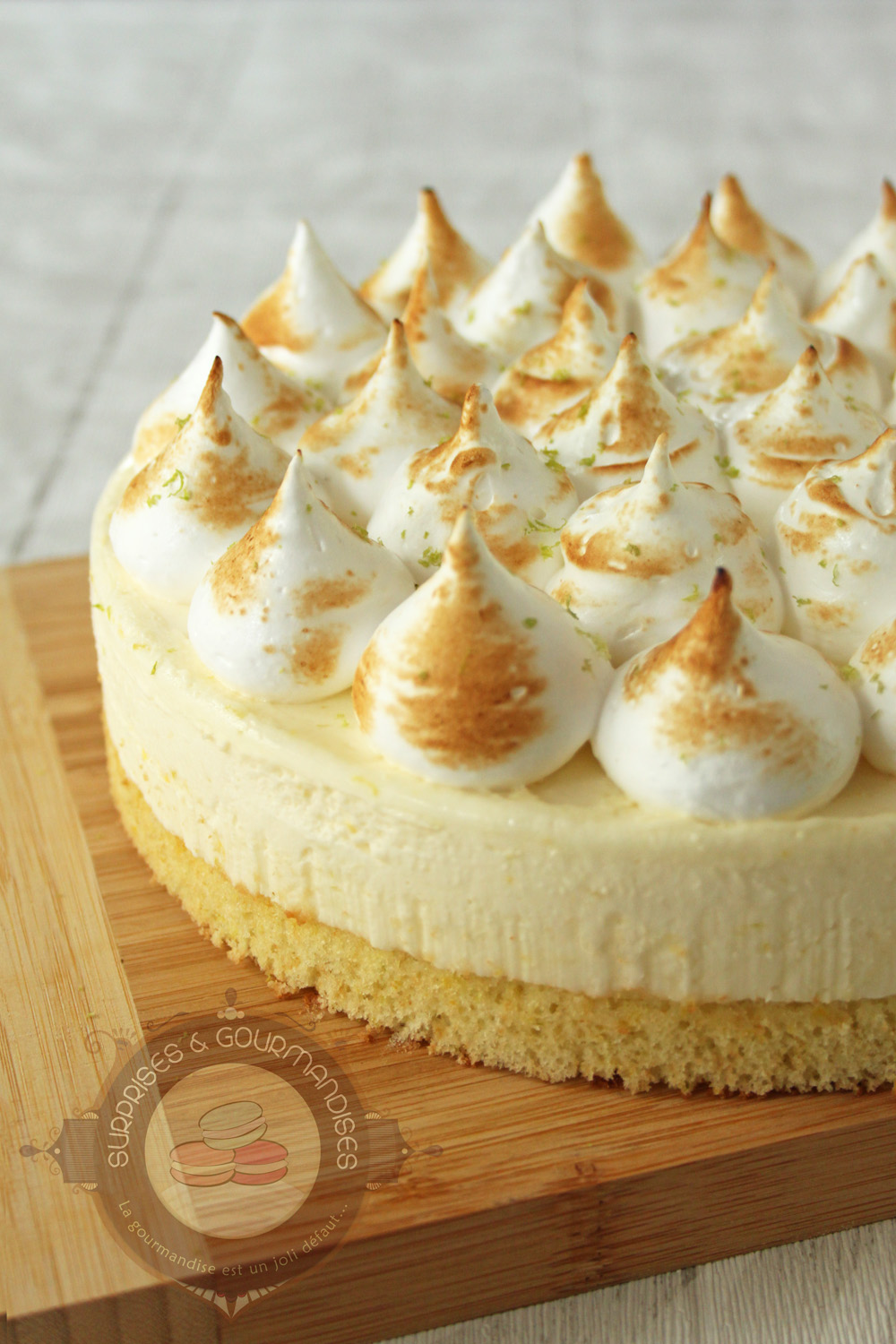
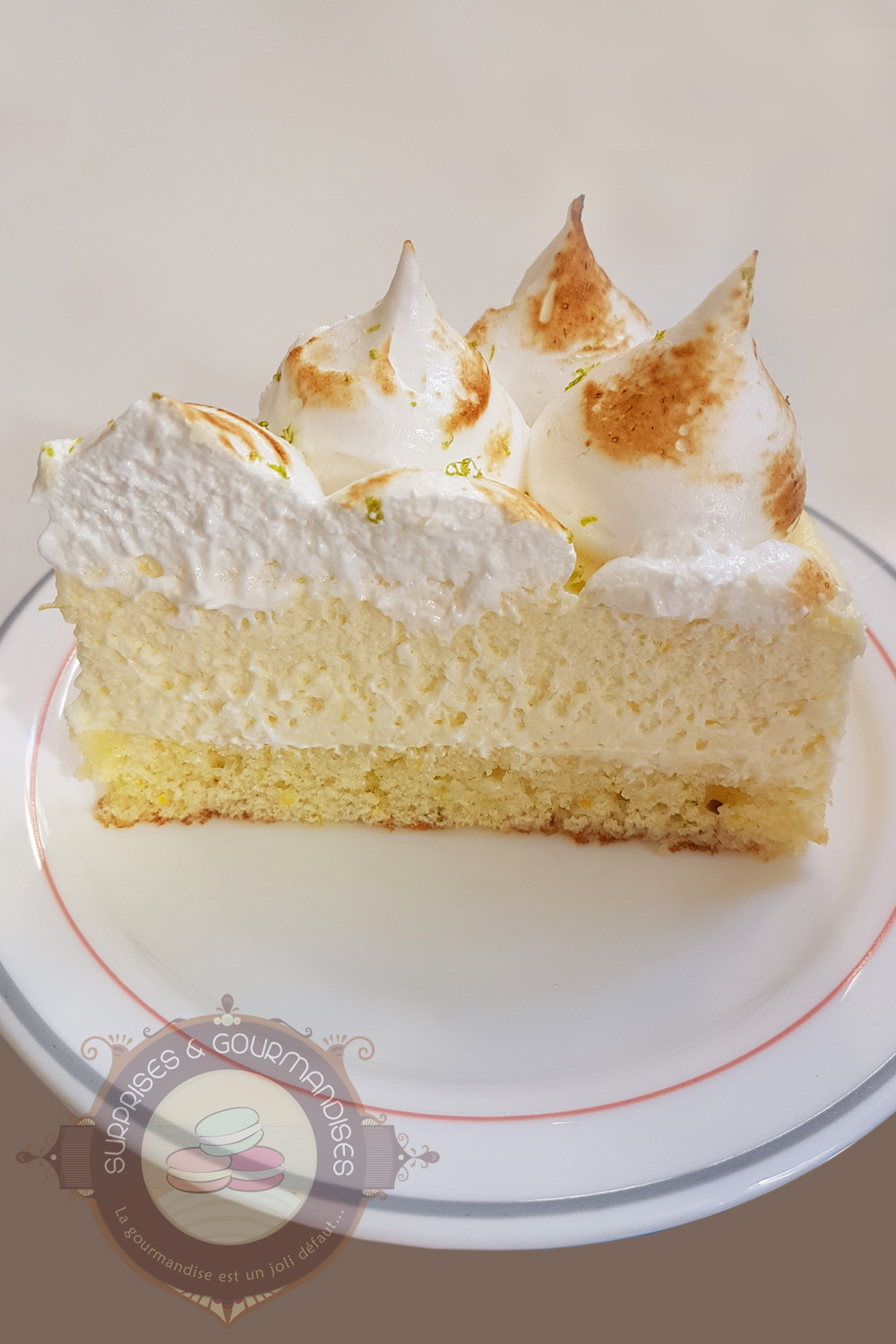
The cloud cake is a fairly simple concept: a soft sponge that serves as the base of the cake and a light mousse on top. You can add a layer of Italian meringue (or not). The recipe is really ultra simple! If making Italian meringue scares you (or you don’t have a thermometer), the cake will be very good without it too, don’t worry (tried and tested).
I wanted a slightly bigger cake than the original so I went for a 20 cm diameter ring instead of 18, and it’s just as good, both in terms of the balance of flavours and the quantities given. Verdict? It’s super fruity and super light, everyone loved it. The lemon mousse made with lemon curd is reminiscent of lemon meringue tart, so if you like that dessert, this lemon cloud is sure to please you!
Ingredients & Method
5 components · Full recipe
Lemon sponge (inspired by C. Michalak)
Ingredients
- 50 g (1.8 oz) egg
- 65 g (2.3 oz) sugar
- 45 g (1.6 oz) full-fat cream
- 60 g (2.1 oz) flour
- zest of one lemon
- 1 g (0 oz) baking powder
Method
1
Preheat the oven to 180°C / 350°F.
2
In a bowl, mix together the egg, sugar, and lemon zest.
3
Add the full-fat cream and mix.
4
Add the sifted flour and baking powder and mix one final time.
5
Pour the batter into a greased 18 or 20 cm (7.9 in) diameter ring.
6
Maman Pâtisse recommends using an 18 cm (7.1 in) springform tin for easy unmoulding. I tried this but wasn’t keen on the result (even a slight gap between the sponge and the lemon mousse). I suggest using a plain 18 or 20 cm (7.9 in) ring instead — the only constraint for a perfect unmould is going via the freezer. Your choice!
7
Bake for approximately 10 minutes. Once out of the oven, leave to cool on a rack with the ring still in place.
Lemon curd
Ingredients
- 2 eggs
- 30 g (1.1 oz) butter
- 70 g (2.5 oz) caster sugar
- juice and zest of one lemon
- juice and zest of one lime
Method
1
In a bowl, whisk together the eggs and sugar.
2
Add the juice of both citrus fruits.
3
In a saucepan, melt the butter then pour in the egg mixture. Whisk over medium heat until the curd thickens (this takes a few minutes).
4
Leave to cool.
Lemon mousse
Ingredients
- 200 g (7.1 oz) full-fat cream
- the lemon curd (above)
- 2 g (0.1 oz) gelatine (1 sheet)
Method
1
Soak the gelatine sheet in very cold water.
2
Gently heat a portion of the lemon curd, then off the heat, add the well-squeezed gelatine sheet and stir until dissolved.
3
Add the remaining lemon curd and mix.
4
Whip the cream to a light, airy consistency — don’t over-whip; it should be mousse-like rather than firm.
5
Once the lemon curd is lukewarm, fold in the whipped cream: first add a generous spoonful and whisk vigorously to loosen the mixture, then fold in the remaining cream gently with a whisk.
6
Pour the lemon mousse into the ring on top of the sponge and smooth with a small offset spatula. Freeze for at least 2–3 hours (you can also prepare this the day before).
Italian meringue
Ingredients
- 60 g (2.1 oz) egg whites
- 120 g (4.2 oz) caster sugar
- 45 g (1.6 oz) water
Method
1
A few hours later (or the next day), place the egg whites in the bowl of a stand mixer.
2
Combine the sugar and water in a saucepan. Heat over medium heat with a thermometer in place.
3
When the syrup reaches 110°C / 225°F, begin whisking the egg whites at low speed, allowing them to build gradually while the syrup continues to heat. Then increase the speed slightly.
4
When the syrup reaches 118°C / 244°F (do not exceed 120°C / 250°F), reduce the mixer speed and pour the syrup in a thin stream over the whites. Once all the syrup is incorporated, whisk at maximum speed until the meringue cools — this can take 5 to 10 minutes. The meringue should be just slightly warm, not fully cold. Transfer to a piping bag fitted with a 14 mm plain tip.
Assembly
Ingredients
- None
Method
1
Remove the entremet from the freezer and unmould carefully. I use a hairdryer to warm the sides of the ring — it makes it much easier.
2
Pipe balls of meringue over the entire surface of the cake, then lightly brûlée with a blowtorch.
3
Zest a lime over the top. Refrigerate for at least a few hours to allow the entremet to thaw completely before serving.

Gallery