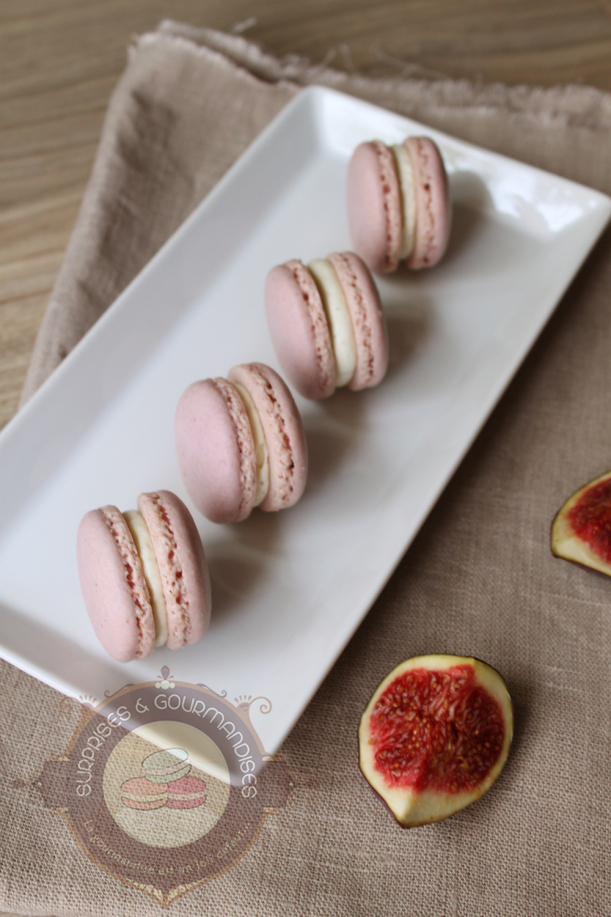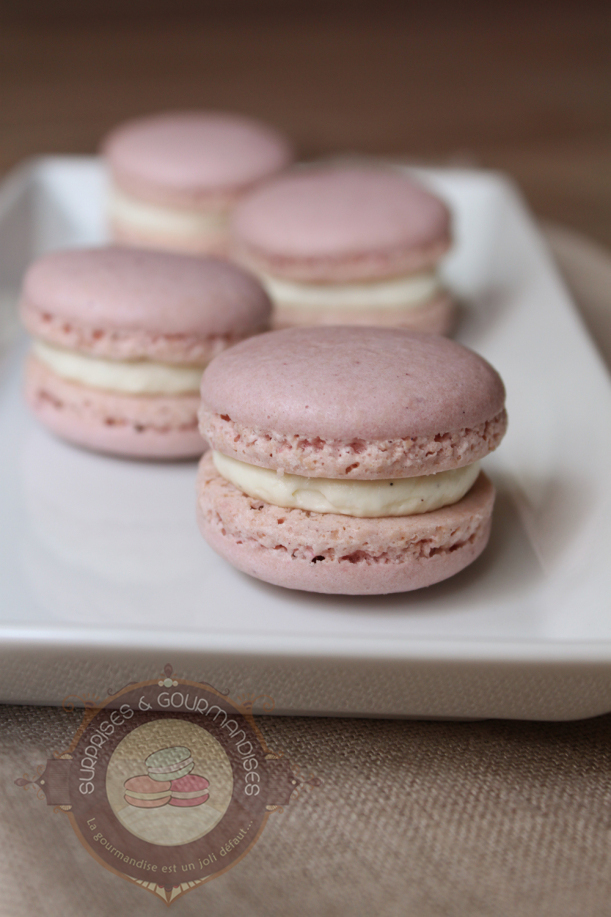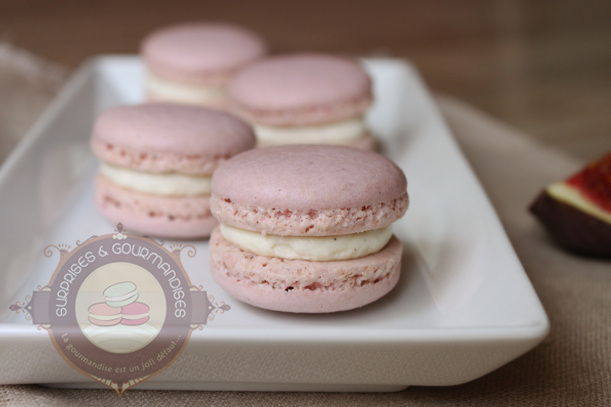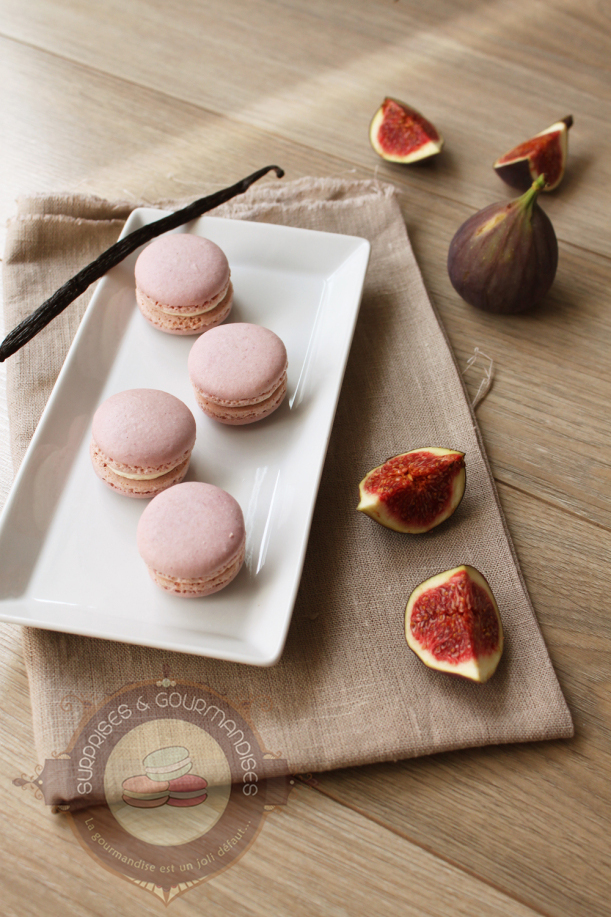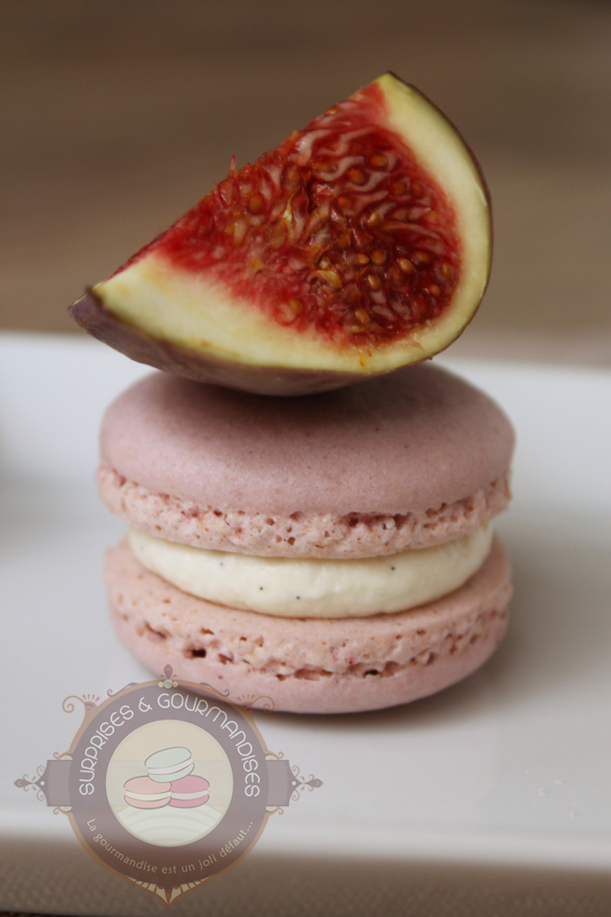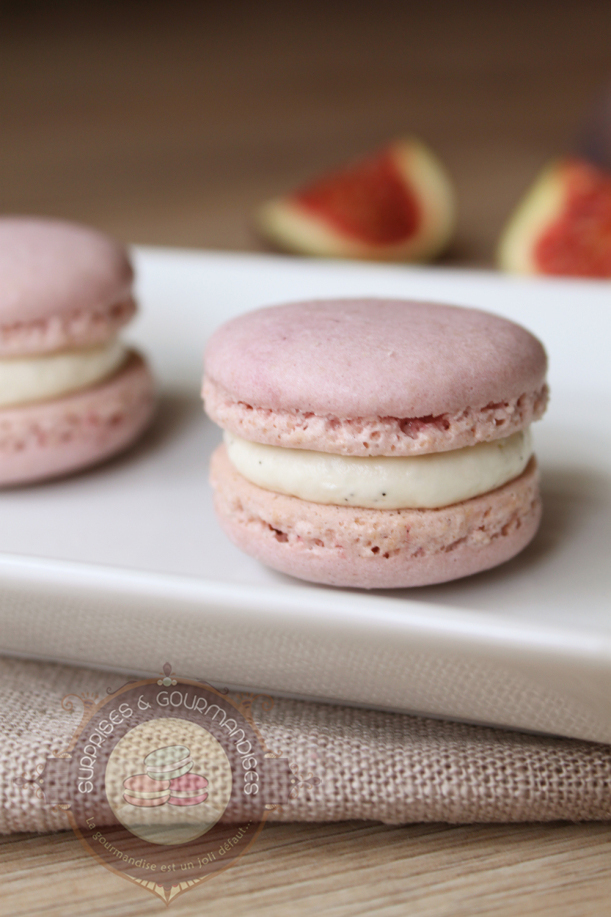



I recently rediscovered Emilie’s blog Pâtisserie & Gourmandise and I was really won over by her macaron recipes, which are a little out of the ordinary. Figs being in season, I set about preparing a vanilla and honey whipped ganache and a fresh fig jelly. It was the first time I’d made a fig-based dessert, but worse still, at 30 years old, it was also the first time I’d eaten one. Not yet being very used to the taste or texture of figs, I can’t say I particularly loved it. But it’s new, and my taste buds need a bit of work 😉
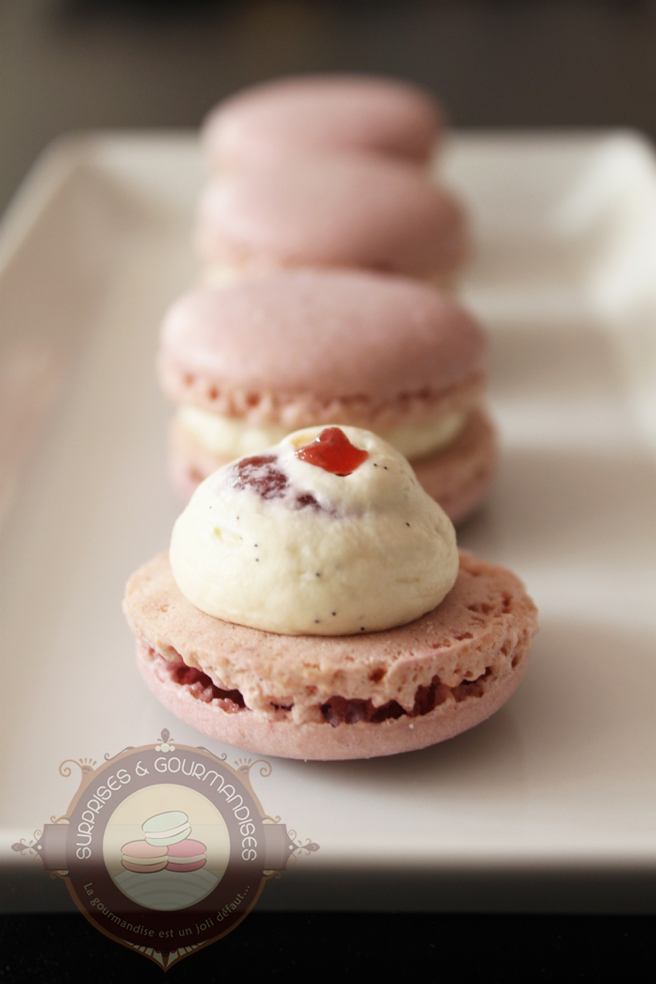
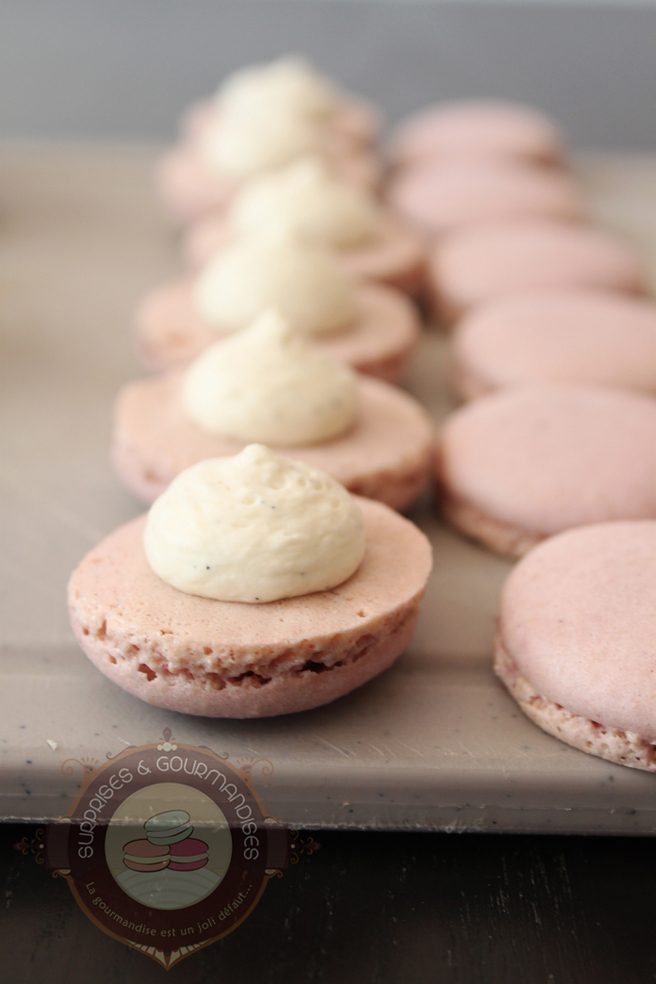
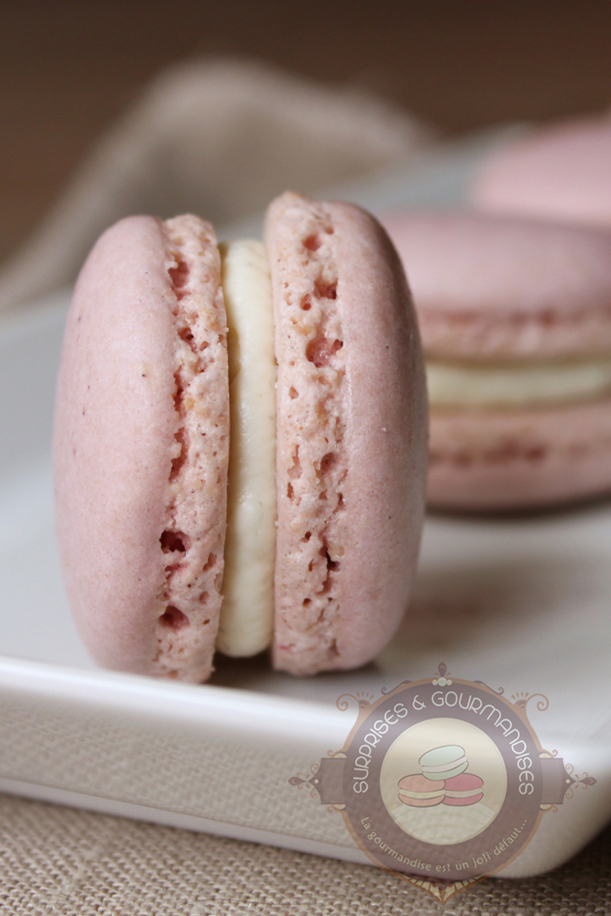
The shells, which I coloured mauve, were prepared in advance and frozen. Following Emilie’s recipe, I made a vanilla and honey whipped ganache. Emilie recommended a Corsican maquis honey, which I didn’t have at home. So I replaced it with a good honey from a local producer, a lime-blossom honey, but the honey flavour doesn’t really come through on the palate, which is a shame. In the centre of the macaron is a fresh fig jelly, not very sweet, to balance the whole thing.
I’m delighted with this recipe in any case — my other half really loved it! Next attempt: the rose and hibiscus macaron 🙂
Ingredients & preparation
4 components · Full recipe
Shells
Ingredients
- 70 g (2.5 oz) egg whites
- 140 g (4.9 oz) icing sugar
- 80 g (2.8 oz) ground almonds
- 20 g (0.7 oz) caster sugar
- parma violet food colouring
Preparation
1
Blitz the icing sugar and ground almonds together, then sift the whole mixture.
2
Whisk the egg whites to stiff peaks, add the caster sugar in two additions and whisk at maximum speed until you achieve the “bird’s beak” effect. Add a little parma violet food colouring powder and mix again.
3
Gradually fold in the almond and icing sugar mixture using a rubber spatula. The batter should be shiny, smooth and fall off the spatula in a ribbon. Once the right consistency is reached, transfer to a piping bag fitted with a plain tip. Don’t hesitate to use a tall glass to support your piping bag — that way you can use both hands.
4
Pipe small domes of about 3.5 cm (1.4 in) in a staggered pattern onto a sheet of baking paper. To get even macarons, I use a template downloaded from Pure Gourmandise. Leave to form a skin for about twenty minutes. If after an hour the surface of your macarons is still not dry, there’s a good chance they won’t form a skin at all. There are several possible reasons for this — in any case, there’s no point waiting any longer. Bake them anyway, but be prepared for the possibility that they won’t have a foot 😉
5
Bake at 120°C / 250°F for 20–22 minutes. Once out of the oven, leave to cool before peeling off the shells. The shells are done when they come off the paper very easily.
Step by step
Not quite comfortable with macaron shells yet? I’ve put together two full step-by-step picture guides to help you get it right every time:
Whipped Vanilla and Honey Ganache
Ingredients
- 50 g (1.8 oz) white chocolate
- 25 g (0.9 oz) full-fat liquid cream
- ½ vanilla pod
- 75 g (2.6 oz) very cold full-fat liquid cream
- 6 g (0.2 oz) maquis honey
Preparation
1
In a small saucepan, heat the 25 g (0.9 oz) of cream with the honey and the vanilla seeds. Stir until combined and bring just to the boil.
2
While the cream heats, break the white chocolate into pieces in a heatproof bowl (you can melt it slightly in a bain-marie or in the microwave).
3
As soon as the cream begins to simmer, pour it over the white chocolate and cover for 2 minutes. Stir to melt the chocolate and achieve a smooth, homogeneous mixture.
4
Add the remaining well-chilled cream and stir to combine.
5
Cover with cling film and refrigerate overnight. If you’re in a hurry, 30 minutes to 1 hour in the freezer can do the trick.
6
The next day (or a few hours later), place the whisk attachments of your electric mixer in the freezer for about 15 minutes.
7
Remove the ganache from the fridge and whip it like a whipped cream. You should obtain a thicker, creamier ganache.
Fig Jelly
Ingredients
- 250 g (8.8 oz) white figs
- ½ lemon
- 60 g (2.1 oz) sugar
- ½ level teaspoon agar-agar
Preparation
1
Wash and clean the figs thoroughly.
2
Blitz the fruit finely, skin and all, with the lemon juice to obtain a smooth purée.
3
Heat the purée in a saucepan with the sugar and agar-agar. Bring to the boil and cook for 3 minutes, stirring continuously.
4
Pour into a dish and leave to cool. Once the jelly has set and cooled, transfer to a piping bag.
Assembly
Ingredients
- None
Preparation
1
Sort your macaron shells so that the ones you pair together are the same size.
2
Using a piping bag fitted with a plain tip, pipe a small mound of whipped vanilla and honey ganache in the centre of one shell. Add a dot of fig jelly in the centre of the ganache, then sandwich with its matching shell.
3
Refrigerate and wait 24 to 48 hours before eating. The macarons should spend their first night in an uncovered container (to prevent them from becoming damp), then close the box and keep them in the fridge for a further 24 hours — they’ll only get better.
Gallery